
NBC Saturday mornings from the 1970s to the early 1990s mixed Sid and Marty Krofft live action with Hanna-Barbera and Disney cartoons and shows built on celebrities, toys and video games, with The Smurfs as the anchor through the 1980s. In 1992 the network gave up cartoons for TNBC, a live-action teen block led by Saved by the Bell, California Dreams and later Hang Time, and the two eras split the nostalgia between them.
- Recapped
- 16
- Watch time saved
- 484 hours
- Latest
- 1995
No. 01 · 1974 · Series
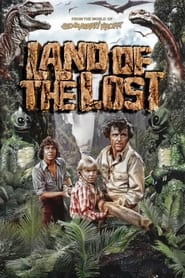
Land of the Lost recap
Land of the Lost (1974) strands a father and his two children in a strange world of dinosaurs and hostile Sleestak after a waterfall plunge on a camping trip. Sid and Marty Krofft produced it for NBC, combining live action with stop-motion dinosaurs. Rick Marshall (Spencer Milligan) and his children Will (Wesley Eure) and Holly (Kathy Coleman) make a home in a cave, keep clear of a Tyrannosaurus they call Grumpy and befriend Cha-Ka (Phillip Paley), a young Pakuni; Holly treats a tame young brontosaurus, Dopey, as a pet. The reptilian Sleestak are a constant threat, while Enik (Walker Edmiston), a castaway Altrusian, sometimes helps the family. Their aim throughout is to find a way home. Science-fiction writers including Larry Niven, Theodore Sturgeon, Ben Bova and Norman Spinrad wrote scripts, along with Star Trek writers D.C. Fontana, Walter Koenig and David Gerrold, the uncredited first-season story editor. Milligan left before season 3 in a dispute over pay; in "After Shock" an earthquake opens a pathway that returns Rick to Earth alone and brings in his brother Jack (Ron Harper). The show ran three seasons and 43 episodes, from September 7, 1974, to December 4, 1976.
How Land of the Lost ends
Land of the Lost ends with "Medicine Man", aired December 4, 1976, in which the Marshalls persuade Lone Wolf of the Nez Perce and Captain Diggs of the U.S. Cavalry that they must work together to survive and perhaps get back to 1877. It was not written as a finale, and Will, Holly and Jack are never shown escaping the Land. A remake ran for two seasons from 1991, a 2009 comedy film starred Will Ferrell, and Netflix and Legendary were reported in 2025 to be developing a new version.

No. 02 · 1981 · Series
Spider-Man and His Amazing Friends recap
Spider-Man and His Amazing Friends (1981) teams Peter Parker with two college-age heroes who share Aunt May's house and fight crime as the Spider-Friends. Marvel Productions made it for NBC, with Stan Lee credited as creator and Dennis Marks as producer. Peter (Dan Gilvezan) is Spider-Man; Bobby Drake (Frank Welker) is Iceman, borrowed from the X-Men; and Angelica Jones (Kathy Garver) is Firestar, a fire-powered mutant created for the show after licensing problems ruled out the Human Torch. Aunt May (June Foray) is their landlady and host, and Angelica's Lhasa Apso, Ms. Lion, lives with them. The trio take on villains from across the Marvel comics and meet other Marvel heroes along the way. Dick Tufeld narrates the first season; Stan Lee narrates from season 2, and his narration was later added to the first-season episodes. The show ran three seasons and 24 episodes, 13 in 1981, 3 in 1982 and 8 in 1983, and NBC kept repeating it until 1986. Firestar became popular enough to join the comics in Uncanny X-Men #193 in 1985.
How Spider-Man and His Amazing Friends ends
Spider-Man and His Amazing Friends ends with "Mission: Save the Guardstar", aired November 5, 1983. S.H.I.E.L.D. agent Buzz Mason hires the Spider-Friends to stop Lightwave, Iceman's half-sister Aurora Dante, who seems to be a traitor attacking the Guardstar satellite, but Mason turns out to be controlling her mind. It is a standalone adventure with no finale. The trio never reunited in a new series, though Firestar went on to a long life in Marvel's comics, including the New Warriors and the Avengers.
No. 03 · 1981 · Series
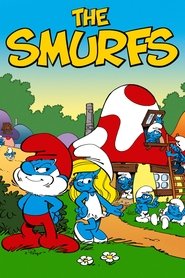
The Smurfs recap
Based on the Belgian comics by Peyo, the show follows the Smurfs, small blue creatures who live in mushroom houses in a hidden village in the forest. Each Smurf is named for his main trait: Brainy, Hefty, Handy, Clumsy, Jokey, Vanity, Grouchy, Greedy and Lazy. They are led by the wise, bearded Papa Smurf, who practises magic. Smurfette, the only female, was created by the evil wizard Gargamel to trap them, but Papa Smurf turns her into a real Smurf. Gargamel and his cat Azrael spend every episode trying to catch Smurfs, for food, for gold or for revenge, and always fail. Some stories take place in the human world with Johan, a young squire, and his friend Peewit. Over the years the village grows: a stork delivers Baby Smurf, Father Time turns four Smurfs into children, the Smurflings, and Grandpa Smurf returns from a long journey. In the ninth and last season NBC changed the format, and a group of Smurfs is lost in time, travelling through history and trying to get home. Hanna-Barbera made it for NBC from 1981 to 1989, for 256 episodes over nine seasons.
How The Smurfs ends
The Smurfs ended without a finale. The last episode, with the segments "The Golden Rhino" and "Hearts 'N' Smurfs", aired on December 2, 1989, during the time-travel season, and NBC cancelled the show in 1990 when it replaced its cartoons with live-action programming. The Smurfs returned in live-action and computer-animated films from 2011, Smurfs: The Lost Village (2017), a 2021 animated series and the film Smurfs (2025).
No. 04 · 1982 · Series
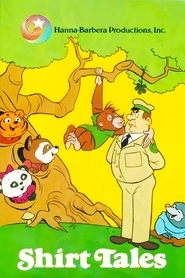
Shirt Tales recap
Shirt Tales (1982) follows a team of animals in message T-shirts who secretly fight crime from their home in an oak tree in a city park. Hanna-Barbera adapted the characters, which Hallmark Cards created for greeting cards in 1980, for NBC. The team lives in Oak Tree Park in Mid City and keeps its crime fighting hidden from the park custodian, Mr. Dinkel (Herb Vigran). Rick Raccoon (Ronnie Schell) leads at first, with Tyg Tiger (Steve Schatzberg), Pammy Panda (Patricia Parris), Digger Mole (Robert Allen Ogle) and Bogey Orangutan (Fred Travalena), who talks like Humphrey Bogart. Each half hour holds two 11-minute cases. The second season changes the format: Kip Kangaroo (Nancy Cartwright) joins without explanation, leadership moves from Rick to Tyg, and superhero touches arrive, with the team's shirts turning bright red during "Shirt Tale Time" and a vehicle, the STSST (Shirt Tales' SuperSonic Transport), that can turn into a car, jet, boat or submarine. The series ran two seasons and 23 episodes, 13 in 1982 and 10 in 1983, from September 18, 1982, to November 19, 1983.
How Shirt Tales ends
Shirt Tales ends with "Mayhem on the Orient Express", paired with "The Cuckoo Count Caper", aired November 19, 1983, the last of its 23 episodes. Both are standalone capers, and nothing in them closes the series; the gang is still hiding its crime fighting from Mr. Dinkel when the show stops. NBC ended the run after the second season, and the Hallmark characters have not had a new series since.
No. 05 · 1983 · Series
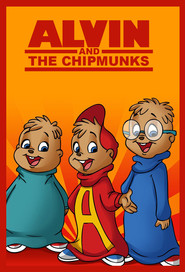
Alvin and the Chipmunks recap
Alvin and the Chipmunks (1983) brings back Alvin, Simon and Theodore, the singing chipmunks, as kids living with their adoptive father, Dave Seville. Ross Bagdasarian Sr. created the characters; Ross Bagdasarian Jr. and Janice Karman created the series for NBC through Bagdasarian Productions, first working with Ruby-Spears. Bagdasarian Jr. voices Alvin, Simon and Dave, and Karman voices Theodore and the Chipettes. Alvin is the mischievous leader, Simon the responsible brain and Theodore the sensitive youngest. The first episode introduces the Chipettes, Brittany, Jeanette and Eleanor, who argue with the boys over the band name and become their rivals and friends. In season 4's "Help Wanted: Mommy", social services finds the Chipettes living alone, and Alvin arranges for the neighbor Miss Beatrice Miller to become their guardian. Stories mix school, family trouble and the band's music career. The theatrical film The Chipmunk Adventure came out in 1987. From the 1988 season the show was renamed The Chipmunks, with DIC Enterprises producing, and the eighth season in 1990, The Chipmunks Go to the Movies, spoofs a Hollywood film in each episode. The series ran 8 seasons and 102 episodes on NBC, from September 17, 1983, to December 1, 1990.
How Alvin and the Chipmunks ends
Alvin and the Chipmunks ends with "Funny, We Shrunk the Adults", aired December 1, 1990, a spoof of Honey, I Shrunk the Kids in which Simon's invention shrinks Dave and Miss Miller while the kids run riot. It is a regular movie parody rather than a finale. The Chipmunks returned in the 1990 special Rockin' Through the Decades, in live-action and computer-animated films from 2007, and in the series Alvinnn!!! and the Chipmunks (2015 to 2023), which reused this show's theme song.

No. 06 · 1983 · Series
Mister T recap
Mister T (1983) casts the actor Mr. T as the coach of a gymnastics team that solves mysteries while travelling to competitions. Ruby-Spears Enterprises produced it for NBC, and each episode opens with Mr. T in a live-action introduction and closes with him narrating a moral. The team travels by bus, driven by Ms. Priscilla Bisby (Takayo Fischer), a polite, middle-aged fan of mystery novels. The gymnasts are Jeff Harris (Shawn Lieber), a wisecracker with a big ego; Woody Daniels (Phil LaMarr), his friendly rival; Robin O'Neill (Amy Linker), eager to jump into any situation; Kim Nakamura (Siu Ming Carson), who has a photographic memory; and Robin's younger brother Spike (Teddy Field III), who worships Mr. T. Mr. T's bulldog, Bulldozer, comes along too. Each stop puts the team up against crooks, and Mr. T often finishes the job with his strength. The series ran three seasons and 30 episodes, 13 in 1983, 11 in 1984 and 6 in 1985, on NBC from September 17, 1983, to October 19, 1985, while Mr. T was also starring in The A-Team on the same network.
How Mister T ends
Mister T ends with "The Cape Kennedy Caper", aired October 19, 1985. On a visit to the Kennedy Space Center, Robin spots two spies photographing the shuttle for terrorists who plan to destroy it once it reaches orbit. She is captured, and Mr. T and the team have to stop the launch, rescue her and catch the spies. It is an ordinary case with no farewell, and the series was not continued.
No. 07 · 1984 · Series
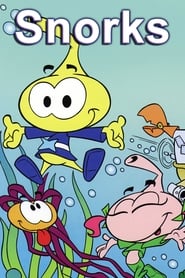
Snorks recap
Snorks (1984) follows small, colourful sea creatures who zip around the undersea realm of Snorkland using the snorkels on their heads. Nic Broca created the characters, and Hanna-Barbera produced the series with SEPP International. Allstar Seaworthy (Michael Bell), son of the inventor Dr. Galeo Seaworthy, is the adventurous lead, with his girlfriend Casey Kelp (B. J. Ward), Daffney Gillfin (Nancy Cartwright), Tooter Shelby (Frank Welker), who speaks by tooting his snorkel, and the bumbling Dimmy Finster (Brian Cummings). Junior Wetworth (Barry Gordon), the spoiled son of Governor Wellington Wetworth, is their rival, and Allstar's pet octopus, Occy, once belonged to Junior. Stories involve sea monsters, inventions and run-ins with the human world above, which the Snorks call dry space. NBC aired the first two seasons from September 15, 1984; seasons 3 and 4 moved to syndication from 1987 to 1989 as part of The Funtastic World of Hanna-Barbera. The series has a pilot and four seasons of 65 episodes: 13, 10, 13 and 29.
How Snorks ends
Snorks ends with "My Dinner with Allstar", aired March 15, 1989, in which Allstar and Bigweed get lost in a distant part of the ocean and must work together to escape while a magic genie complicates things. It is a regular episode, not a finale. A few weeks earlier, "The Day They Fixed Junior Wetworth" gave Junior his last speaking role, and "Wish or Wish Out" was Occy's final appearance. No new Snorks series has followed.

No. 08 · 1985 · Series
Disney's Adventures of the Gummi Bears recap
Disney's Adventures of the Gummi Bears (1985) follows hidden bears in a medieval kingdom who brew a magic juice and guard their people's old secrets. Jymn Magon created it for Disney. The bears live in Gummi Glen in the kingdom of Dunwyn: Zummi (Paul Winchell), the forgetful magician; Gruffi (Bill Scott, then Corey Burton), the grumpy craftsman; Grammi (June Foray), who makes the gummiberry juice; Tummi (Lorenzo Music), the food-loving cub; Sunni (Katie Leigh), who is fascinated by humans; and Cubbi (Noelle North), who dreams of becoming a knight. Cavin, a page who later becomes a squire, befriends them after finding Zummi's medallion, which unlocks the Great Book of Gummi lore, and Princess Calla becomes an ally, while King Gregor does not believe the bears exist. Duke Igthorn (Michael Rye), an exiled knight, and his ogres, led by Toadwart, attack from Castle Drekmore to get the juice. The artist Gusto joins in season 2. In season 5 the bears take the road to Ursalia, the old Gummi city, meeting Sir Thornberry, the sorceress Lady Bane and the Barbics. NBC aired four seasons from September 14, 1985, ABC one as part of the Gummi Bears-Winnie the Pooh Hour, and the last ran on The Disney Afternoon from 1990, for six seasons and 65 episodes.
How Disney's Adventures of the Gummi Bears ends
Disney's Adventures of the Gummi Bears ends with the two-part "King Igthorn", aired November 27 and 28, 1990. After a quiet year, Zummi hopes to contact the Great Gummies, but Igthorn has been planning all along: he wrecks Gummi Glen, seizes Dunwyn and holds Grammi and Tummi at Drekmore. Cavin, the other bears and the Barbics rescue them while Zummi recovers the Great Book. Igthorn is defeated, Drekmore is destroyed and the bears move to Ursalia. One more episode, "The Rite Stuff", aired after it in February 1991.

No. 09 · 1986 · Series
Kissyfur recap
Kissyfur (1986) follows a bear cub and his father who leave the circus and make a new home in a southern swamp. Phil Mendez created it, and NBC Productions made it with DIC Animation City. After their circus train derails, eight-year-old Kissyfur (R. J. Williams, later Max Meier) and his widowed father Gus (Ed Gilbert) settle in Paddlecab County, where Gus starts a boat business ferrying swamp folk and tourists. Kissyfur's mother had died in an accident during a circus performance. Kissyfur becomes leader of the swamp's young animals: Beehonie the rabbit, Duane the pig, Stuckey the porcupine, Toot the beaver, Lennie the young warthog, Ralph the pack rat and Flip the chameleon. Miss Emmy Lou (Russi Taylor), a bear who teaches school, is Gus's love interest. The alligators Floyd (Stu Rosen) and Jolene (Terence McGovern) are always plotting to catch the cubs, and Gus and Kissyfur protect the swamp from them. The story began with prime-time specials, starting with Kissyfur: Bear Roots in December 1985. The Saturday morning series premiered on September 13, 1986, and ran two seasons of 13 episodes each, 26 in all, until 1988.
How Kissyfur ends
Kissyfur ends with "The Great Swamp Taxi Race" and "Weight Not Want Not", aired December 3, 1988. Both are everyday swamp stories, and there is no finale: Floyd and Jolene are still trying to catch the cubs when the show stops. NBC did not order a third season, and Kissyfur has not returned in a new series. The prime-time specials and the 26 Saturday episodes make up the whole of the character's screen life.
No. 10 · 1987 · Series
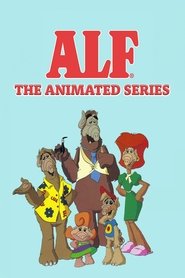
ALF: The Animated Series recap
ALF: The Animated Series (1987) is a prequel to the NBC sitcom ALF, showing Gordon Shumway's teenage life on his home planet, Melmac, before it explodes. Paul Fusco, who created ALF, voices Gordon, and DIC Animation City, Saban Productions and Alien Productions made the series. Each episode is framed by the puppet ALF talking to viewers from the Tanner family's garage on Earth. In the suburb of East Velcro, Gordon serves in the Melmacian Orbit Guard and lives with his father Bob, who works at a mayonnaise factory, his mother Flo and his younger sister Augie (Paulina Gillis). His friends are Skip (Rob Cowan) and Rick Fusterman (also Fusco). The villain is Larson Petty (Thick Wilson), an alien general who keeps trying to invade Melmac, assisted by his aide Sloop (Dan Hennessey). The show ran two seasons and 26 episodes on NBC from September 26, 1987, to January 7, 1989. A spinoff, ALF Tales, in which the characters act out fairy tales, began in September 1988, and the two aired together that season as the ALF & ALF Tales Hour.
How ALF: The Animated Series ends
ALF: The Animated Series ends with "Skipper's Got a Brand New Dad", aired January 7, 1989. Gordon and Rick learn that Skip is an orphan and set out to find his father, while Larson Petty claims Skip is the heir to a dead uncle's fortune meant for Petty's estranged son, Eggbert. Skip cares more about having a father than the money, Gordon discovers that Sloop is Petty's real son, and the fortune vanishes into medical bills after a hang-gliding accident. The sitcom ended in 1990, and the TV film Project: ALF followed in 1996.
No. 11 · 1989 · Series
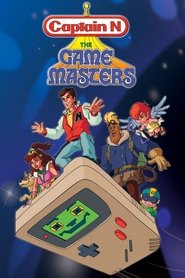
Captain N: The Game Master recap
Captain N: The Game Master (1989) pulls a teenage gamer through his TV into Videoland, a world built from Nintendo games. DIC Animation City produced it for NBC after Nintendo of America chose to make the cartoon; the character began in Nintendo Power magazine. Kevin Keene (Matt Hill), from Northridge, California, and his dog Duke are sucked through the Ultimate Warp Zone, and a prophecy names Kevin the hero Captain N. Armed with a Power Pad and a Zapper-like gun, he joins Princess Lana (Venus Terzo), Videoland's acting ruler, and the N Team: Simon Belmont (Andrew Kavadas), Mega Man (Doug Parker) and Kid Icarus (Alessandro Juliani), who all doubt him at first. Their enemy is Mother Brain (Levi Stubbs), who rules from the floating fortress of Metroid with King Hippo, the Eggplant Wizard and Dr. Wily. Game Boy (Frank Welker), a human-sized computer, joins in season 2, when the show shared an hour with The Adventures of Super Mario Bros. 3. In season 3 its episodes shrank to 11 minutes and shared a half hour with Super Mario World. The series ran three seasons and 34 episodes, from September 9, 1989, to October 26, 1991.
How Captain N: The Game Master ends
Captain N: The Game Master ends with "The Fractured Fantasy of Captain N", aired October 26, 1991, in which Kevin is hypnotized by Astos, a dark prince who wants to conquer the world of Final Fantasy. The series leaves things open, with Mother Brain defeated but vowing to return and Kevin still in Videoland. NBC did not renew it, and no follow-up was made, though the episodes were later collected on DVD alongside the Mario cartoons they aired with.
No. 12 · 1989 · Series
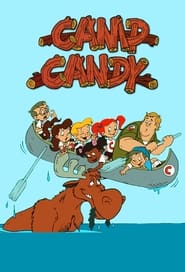
Camp Candy recap
Camp Candy (1989) stars John Candy as a cartoon version of himself running a summer camp full of kids. Joel Andryc, Ellen Levy and Phil Harnage created it, Candy helped develop it, and DIC Animation City produced the first two seasons for NBC, with Saban Entertainment making the third. Harry Nilsson wrote the theme song and sang it with Candy. The staff includes Nurse Molly March (Valri Bromfield) and Botch the cook, and the campers are Robin, Alex, Vanessa, Rick, Binky and Iggy, voiced by changing casts that include Cree Summer and E. G. Daily. The antagonist, Rex DeForest III (Lewis Arquette), and his dim-witted greaser henchman Chester keep scheming against the camp. Stories mix outdoor mishaps, camp rivalries and lessons for the kids. NBC aired two seasons from 1989 to 1991, and a third season of 13 new episodes ran in syndication in 1992, for three seasons and 40 episodes, 13, 14 and 13.
How Camp Candy ends
Camp Candy ends with "Bobby Bittman", the last episode of its syndicated third season in 1992, which brings in Candy's SCTV castmates Eugene Levy and Dave Thomas; the NBC run had closed earlier with "Scare Package" on January 19, 1991. Neither is a finale, and the camp simply stops after three seasons. John Candy died in 1994, and the series has not been revived.
No. 13 · 1989 · Series
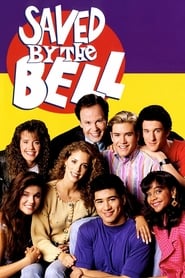
Saved by the Bell recap
Saved by the Bell (1989) follows a group of friends at Bayside High School in California and their exasperated principal, Mr. Belding. Created by Sam Bobrick and produced by Peter Engel, it grew out of Good Morning, Miss Bliss, a 1987 pilot that became a Disney Channel series in 1988 and 1989; NBC dropped the teacher and moved the focus to the students. Zack Morris (Mark-Paul Gosselaar) is the scheming charmer who talks to the camera and can freeze time; A.C. Slater (Mario Lopez) is the jock and his rival; Samuel "Screech" Powers (Dustin Diamond) is the nerdy inventor; Kelly Kapowski (Tiffani-Amber Thiessen) is the popular girl Zack loves; Jessie Spano (Elizabeth Berkley) is the activist and top student; and Lisa Turtle (Lark Voorhies) is the fashion-minded gossip. Mr. Belding (Dennis Haskins) runs the school, and the gang hangs out at The Max, run by Max (Ed Alonzo). Comedy plots mix with occasional serious issues. Late in the final season, Kelly and Jessie drop out of some episodes and Tori Scott (Leanna Creel) appears instead. The show became the flagship of NBC's TNBC block and ran four seasons and 86 episodes from August 20, 1989, to May 22, 1993, with a TV film, Hawaiian Style, in 1992.
How Saved by the Bell ends
Saved by the Bell ends with "Graduation", aired May 22, 1993. Zack finds he is one credit short and joins the school ballet recital to earn it, Screech steps aside so Jessie can be valedictorian, and Zack gives a speech about friendship before Mr. Belding hands out diplomas to the class of 1993. The College Years followed Zack, Slater, Screech and Kelly to university for one season, Wedding in Las Vegas (1994) married Zack and Kelly, The New Class ran from 1993 to 2000, and a Peacock revival in 2020 brought back much of the original cast.

No. 14 · 1990 · Series
The Adventures of Super Mario Bros. 3 recap
Based on the game Super Mario Bros. 3, the series follows Mario, Luigi, Princess Toadstool and Toad as they defend the Mushroom World from King Koopa and his seven children, the Koopalings. The stories are standalone. Many episodes send the heroes, or Koopa's gang, through warp pipes into the real world, to places such as Brooklyn, London, Paris, Venice, Washington and Los Angeles, where Koopa tries to take over Earth as well. In one story, the Koopalings split up to invade all seven continents. The game's power-ups, such as the Super Leaf and the Tanooki suit, appear throughout.
How The Adventures of Super Mario Bros. 3 ends
There is no finale. The show ends after one season of 26 short episodes in 1990, and the story picks up in Super Mario World, set in Dinosaur Land.
No. 15 · 1992 · Series
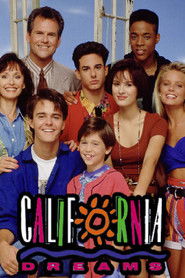
California Dreams recap
California Dreams (1992) follows a group of California teenagers who form a band and try to make it while getting through high school. Brett Dewey and Ronald B. Solomon created it, and Peter Engel produced it for NBC's TNBC block. The band starts with siblings Matt Garrison (Brent Gore) and Jenny Garrison (Heidi Noelle Lenhart), their friend Tiffani Smith (Kelly Packard) and Tony Wicks (William James Jones), with Sly Winkle (Michael Cade) as their manager; the Garrison parents, Richard and Melody, and younger brother Dennis round out the first season. In season 2 Jenny leaves after three episodes to study at a music conservatory in Italy, and Sam Woo (Jennie Kwan) replaces her as singer and keyboard player, while the motorcycle-riding loner Jake Sommers (Jay Anthony Franke) joins on guitar. After season 2 the Garrisons move away and Matt goes with them; Lorena Costa (Diana Uribe) takes Sam into her home, and Sly's cousin from New York City, Mark Winkle (Aaron Jackson), joins. That lineup carries the band through graduation. Episodes mix gigs and songs with dating, school and family trouble. The series ran five seasons and 78 episodes from September 12, 1992, to December 14, 1996.
How California Dreams ends
California Dreams ends with "The Last Gig", aired December 14, 1996. While the others plan for life after graduation, Jake chases a record contract and lands one for the whole band, but the rest turn it down because they are ready to move on and talk Jake into signing on his own. The band plays one final show and the friends say goodbye. No revival or reunion series has followed.

No. 16 · 1995 · Series
Hang Time recap
Hang Time (1995) follows Julie Connor, the first girl on the boys' basketball team at Deering High School in Indiana. It aired on NBC's TNBC block. Julie (Daniella Deutscher), a transfer from Chicago, impresses Coach Bill Fuller (Reggie Theus), a former NBA player, and joins the Deering Tornados. The first season also features Mary Beth Pepperton (Megan Parlen), Danny Mellon (Chad Gabriel), Chris Atwater (David Hanson) and Samantha Morgan (Hillary Tuck), along with teammates Michael Maxwell and Earl Hatfield. Half the main cast is replaced for season 2, which adds Josh Sanders, Vince D'Amata and Teddy Brodis (Anthony Anderson), while Deutscher, Parlen, Gabriel and Theus stay. Season 3 brings Michael Manning (Adam Frost) and the new head cheerleader, Kristy Ford (Amber Barretto). In season 4 the former NFL player Dick Butkus arrives as the new head coach, Mike Katowinski. Stories follow games, rivalries, dating and school trouble as players graduate and new ones join. The series ran six seasons and 104 episodes, 13, 13, 26, 26, 14 and 12, from September 9, 1995, to December 16, 2000.
How Hang Time ends
Hang Time ends with "Graduation On Three", aired December 16, 2000. The remaining students graduate and head to different colleges, except Eugene, who is offered a job while his college plans stay unclear. Coach Katowinski keeps coaching at Deering, where the team has gone back to an all-boys roster, though his own future is left open. NBC's teen block ended in 2002, and Hang Time has not been revived.
Common questions
What is the NBC Saturday Morning Cartoon story so far?
NBC Saturday mornings from the 1970s to the early 1990s mixed Sid and Marty Krofft live action with Hanna-Barbera and Disney cartoons and shows built on celebrities, toys and video games, with The Smurfs as the anchor through the 1980s. In 1992 the network gave up cartoons for TNBC, a live-action teen block led by Saved by the Bell, California Dreams and later Hang Time, and the two eras split the nostalgia between them.
Where did NBC Saturday Morning Cartoon leave off?
Hang Time (1995) is the latest. Hang Time ends with "Graduation On Three", aired December 16, 2000. The remaining students graduate and head to different colleges, except Eugene, who is offered a job while his college plans stay unclear. Coach Katowinski keeps coaching at Deering, where the team has gone back to an all-boys roster, though his own future is left open. NBC's teen block ended in 2002, and Hang Time has not been revived.
Keep reading
 Watch order guideHow to watch NBC Saturday Morning Cartoon in order16 titles · 484 hours
 Skip guideWhat can you skip in Game of Thrones?2 titles you can skip
 RecapChainsaw Man recap: the story so far2 titles recapped
 Watch order guideHow to watch the One Piece movies in order8 titles · 498 hours
 Skip guideWhich Star Wars movies can you skip?5 titles you can skip
 Watch order guideHow to watch the Star Trek movies in order26 titles · 735 hours