
Martin Scorsese's features run from 1967 to 2023, and this list covers 26 of them, from Who's That Knocking at My Door to Killers of the Flower Moon. His films keep returning to New York, organized crime, Catholic guilt and men undone by pride or violence, often with Robert De Niro, Joe Pesci, Harvey Keitel or Leonardo DiCaprio in the lead. Editor Thelma Schoonmaker has cut nearly all of them since Raging Bull, and Paul Schrader wrote several of the key scripts.
- Recapped
- 26
- Watch time saved
- 61 hours
- Latest
- 2023
No. 01 · 1967 · Film
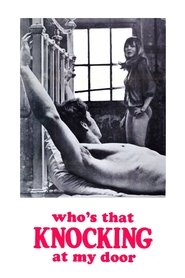
Who's That Knocking at My Door recap
Who's That Knocking at My Door (1967) follows J.R., a young Italian American in New York who falls for a woman he meets on the Staten Island Ferry. Martin Scorsese wrote and directed it as his first feature, and Harvey Keitel makes his screen debut as J.R., with Zina Bethune as the young woman, who is never given a name. J.R. spends his days drinking and fooling around with his friends in Little Italy, and the romance grows through long talks about movies. He wants to marry her and refuses to sleep with her before the wedding, believing she is a virgin. When she tells him she was once raped by a former boyfriend, he cannot accept it, rejects her, and goes back to wild nights with his friends. Scorsese began it in 1965 as a student short and expanded it into a feature. As the first entry in his filmography, it comes before his Roger Corman picture Boxcar Bertha and introduces the Catholic guilt of Mean Streets.
How Who's That Knocking at My Door ends
Who's That Knocking at My Door ends with J.R. returning to the woman at dawn to say he forgives her and will marry her anyway. She tells him that a marriage cannot work if her past weighs on him like that. He lashes out and calls her a whore, then takes it back, confused, and she sends him home. J.R. goes to confession at his church and finds no comfort there. Scorsese reworked the same themes, and Keitel, in Mean Streets six years later.
Post-credits scenes
No. Who's That Knocking at My Door has no mid- or post-credits scene.
No. 02 · 1972 · Film
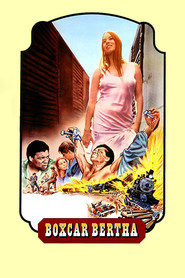
Boxcar Bertha recap
Boxcar Bertha (1972) follows Bertha Thompson, an orphan riding the rails in the Depression South, who falls in with a union man and his friends. Barbara Hershey plays Bertha and David Carradine plays Big Bill Shelly, a labor organizer she takes as a lover. Produced by Roger Corman on a low budget, it loosely adapts Sister of the Road, a supposed memoir. Bertha and Bill pick up Rake Brown (Barry Primus), a Yankee gambler, and Von Morton (Bernie Casey), who once worked for her father. Almost by accident the four start robbing trains and banks, aiming much of their anger at the railroad owned by H. Buckram Sartoris. They become wanted outlaws. Rake is shot dead, Bill and Von end up on a chain gang, and Bertha drifts into prostitution until a chance meeting with Von leads her back to Bill. This is Scorsese's second feature, made between Who's That Knocking at My Door and Mean Streets; Corman hired him for it, and John Cassavetes urged him afterward to make something more personal.
How Boxcar Bertha ends
Boxcar Bertha ends with Bill crucified on the side of a boxcar by Sartoris's men moments after his reunion with Bertha. The train pulls away with Bertha running after it, crying for him. Von arrives too late to save Bill but shoots the railroad men, while Bertha is left holding nothing but the memory of him. The image of a crucified man foreshadows Scorsese's later The Last Temptation of Christ, and Hershey, who gave him a copy of the Kazantzakis novel during the shoot, would play Mary Magdalene in it.
Post-credits scenes
No. Boxcar Bertha has no mid- or post-credits scene.
No. 03 · 1973 · Film
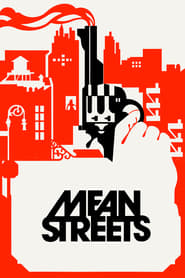
Mean Streets recap
Mean Streets (1973) follows Charlie Cappa, a small-time hood in Little Italy who tries to square his Catholic faith with his work for his mafioso uncle. Martin Scorsese directed and co-wrote it with Mardik Martin. Harvey Keitel plays Charlie and Robert De Niro plays John "Johnny Boy" Civello, his reckless friend who gambles, borrows from every loan shark in the neighborhood and pays none of them back. Charlie collects debts for his Uncle Giovanni (Cesare Danova), who expects to give him a restaurant and warns him to drop both Johnny Boy and Teresa (Amy Robinson), Johnny's cousin, who has epilepsy and with whom Charlie is secretly sleeping. Charlie looks for penance in the street rather than in church, protecting Johnny Boy as a kind of sacrifice. Michael Longo (Richard Romanus), owed money, loses patience, and Johnny Boy humiliates him in a bar and pulls a gun. The film is Scorsese's third feature and his first with De Niro; it follows Boxcar Bertha and precedes Alice Doesn't Live Here Anymore.
How Mean Streets ends
Mean Streets ends with gunfire: Charlie, Teresa and Johnny Boy try to leave town for a while, but Michael follows them, and his gunman Jimmy Shorts, played by Scorsese himself, shoots into the car. Johnny Boy is hit in the neck and Charlie in the arm, and the car crashes into a fire hydrant. Teresa is hurt. Johnny Boy staggers down an alley toward the lights of a police car, and Charlie kneels in the spray of water, bleeding. Paramedics take Charlie and Teresa away, and Johnny Boy's fate is left unknown.
Post-credits scenes
No. Mean Streets has no mid- or post-credits scene.
No. 04 · 1974 · Film
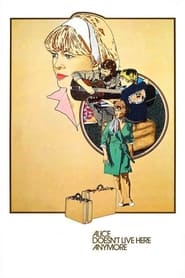
Alice Doesn't Live Here Anymore recap
Alice Doesn't Live Here Anymore (1974) follows Alice Hyatt, a widow who takes her young son across the Southwest to chase her old dream of becoming a singer. Ellen Burstyn plays Alice, written by Robert Getchell, and Martin Scorsese directs. After her husband Donald, a Coca-Cola driver, dies in a road accident in Socorro, New Mexico, Alice sells what she owns and sets off with Tommy (Alfred Lutter) for her hometown of Monterey, California. Money runs out in Phoenix, where she sings in a lounge and is drawn to Ben (Harvey Keitel), who turns out to be married and violent; he beats his wife in front of her and wrecks the apartment, and Alice and Tommy flee. In Tucson she takes a job waiting tables at Mel's diner alongside the brash Flo (Diane Ladd) and the timid Vera (Valerie Curtin), and meets David (Kris Kristofferson), a divorced rancher. Jodie Foster has a small part as Tommy's friend Audrey. The film is Scorsese's fourth feature, after Mean Streets and before Taxi Driver, and Burstyn won the Academy Award for Best Actress.
How Alice Doesn't Live Here Anymore ends
Alice Doesn't Live Here Anymore ends with Alice choosing to stay in Tucson with David. Their romance nearly breaks when he slaps Tommy for his mouth, but they make up, and David offers to sell his ranch and move to Monterey with her. In a scene in the diner, Alice decides she does not need to go that far after all. She and Tommy walk down the street together, joking. The film inspired the sitcom Alice, which ran on CBS from 1976 to 1985.
Post-credits scenes
No. Alice Doesn't Live Here Anymore has no mid- or post-credits scene.
No. 05 · 1976 · Film
Taxi Driver recap
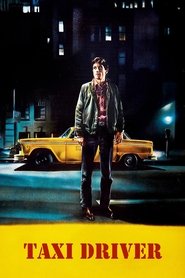
Taxi Driver (1976) follows Travis Bickle, a lonely Vietnam veteran driving a night cab in New York, as he comes apart and sets out to clean up the streets. Martin Scorsese directs from Paul Schrader's script, and Robert De Niro plays Travis, an insomniac who keeps a diary and spends his breaks in porn theaters. He asks out Betsy (Cybill Shepherd), a worker on Senator Charles Palantine's presidential campaign, then ruins their second date by taking her to a dirty movie. Rejected, he turns his loneliness into a mission. He trains his body, buys four handguns from a dealer named Easy Andy, rigs a sliding gun in his sleeve, and practices in the mirror. He meets Iris (Jodie Foster), a 12-year-old prostitute controlled by the pimp Sport (Harvey Keitel), and tries to persuade her to go home. With his head shaved into a mohawk, he goes to a Palantine rally to kill the senator. Bernard Herrmann wrote his last score for it. As Scorsese's fifth feature, it follows Alice Doesn't Live Here Anymore and precedes New York, New York.
How Taxi Driver ends
Taxi Driver ends with Travis, chased off from the Palantine rally by the Secret Service, going to Iris's brothel instead and killing Sport, the building's manager and a Mafia client in a bloody shootout. Badly wounded and out of bullets, he mimes shooting himself as the police arrive. Newspapers hail him as a hero, and Iris's parents write to thank him. Back driving, he picks up Betsy, refuses her fare and drives off, though a glance in the mirror suggests nothing has changed inside him.
Post-credits scenes
No. Taxi Driver has no mid- or post-credits scene.
No. 06 · 1977 · Film
New York, New York recap
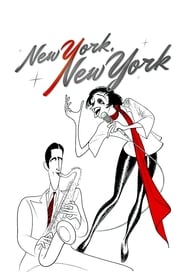
New York, New York (1977) follows saxophonist Jimmy Doyle and singer Francine Evans, who meet on V-J Day in 1945 and build a stormy marriage and act. Martin Scorsese directs this musical, and Robert De Niro and Liza Minnelli play the couple, with songs by John Kander and Fred Ebb. Jimmy hounds Francine for her number in a nightclub; the next day an audition he is wrecking turns into a duo act when she starts singing. She leaves to tour with a big band, and he follows and joins it, later taking it over when the leader retires. They marry, but Jimmy is jealous of her talent, fights with everyone, and cannot settle down. Francine becomes pregnant, the fights get worse, and after one violent row she goes into labor; and Jimmy walks out before seeing their son. The film is Scorsese's next film after Taxi Driver, and it comes before Raging Bull.
How New York, New York ends
New York, New York ends with Jimmy and Francine meeting again years later, both successful. He runs a jazz club and his recording of his song "New York, New York" has been a hit, while she is a film and recording star. He watches her sing the song with her own lyrics to a cheering crowd. Afterward he asks her to dinner by phone and she agrees, but at the stage door she turns back and leaves another way. Jimmy waits on the sidewalk, realizes she is not coming, and walks off alone.
Post-credits scenes
No. New York, New York has no mid- or post-credits scene.
No. 07 · 1980 · Film
Raging Bull recap
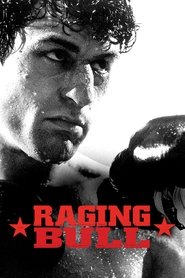
Raging Bull (1980) follows Jake LaMotta, a Bronx middleweight whose jealousy and rage wreck his family even as he fights his way to a world title. Martin Scorsese directs from Paul Schrader and Mardik Martin's adaptation of LaMotta's memoir. Robert De Niro plays Jake, and Joe Pesci plays his brother and manager, Joey LaMotta. He leaves his first wife for Vickie (Cathy Moriarty), a 15-year-old he spots at a pool, and marries her, but he becomes convinced she wants other men and controls her every move. He refuses help from local mobster Salvy Batts (Frank Vincent) and boss Tommy Como until he agrees to throw a fight against Billy Fox to get his shot. In 1949 he beats Marcel Cerdan for the championship. His paranoia peaks when he accuses Joey of sleeping with Vickie and beats him in front of his family. Raging Bull is the seventh of the 26 Scorsese films listed here, between New York, New York and The King of Comedy, and De Niro won the Academy Award for Best Actor.
How Raging Bull ends
Raging Bull ends in 1964 with an overweight Jake rehearsing a nightclub act in a dressing room mirror, reciting Marlon Brando's "I could have been a contender" speech from On the Waterfront. Before that he loses his title to Sugar Ray Robinson, retires to Miami, and opens a nightclub. Vickie divorces him, he is jailed for letting underage girls into the club, and he pounds the walls of his cell. On release he finds Joey and hugs him in the street. The film closes with a quote from the Gospel of John.
Post-credits scenes
No. Raging Bull has no mid- or post-credits scene.

No. 08 · 1982 · Film
The King of Comedy recap
The King of Comedy (1982) follows Rupert Pupkin, a would-be stand-up comic who stalks a late-night talk show host to get himself a spot on the show. Martin Scorsese directs from a script by Paul D. Zimmerman. Robert De Niro plays Rupert, a messenger who lives with his mother and rehearses fake interviews in his basement; Jerry Lewis plays Jerry Langford, the host. Rupert pushes his way into Jerry's car after a show, and Jerry, trying to get rid of him, tells him to call the office. The staff keep fobbing him off, but Rupert imagines himself as Jerry's friend and equal. He turns up uninvited at Jerry's country house with Rita (Diahnne Abbott), a bartender he wants to impress, and Jerry tells him exactly what he thinks of him. Rupert then teams up with Masha (Sandra Bernhard), another obsessed fan, and they kidnap Jerry, demanding that Rupert open that night's show. Eighth of the 26 films here, it comes between Raging Bull and After Hours; it premiered in December 1982 and opened in the United States in 1983.
How The King of Comedy ends
The King of Comedy ends with Rupert getting his wish. With Tony Randall hosting in Jerry's place, Rupert performs his routine, about his miserable childhood, to a laughing audience, then confesses he kidnapped Jerry to get there, and they laugh at that too. Jerry escapes from Masha. Rupert goes to prison, while his memoir becomes a bestseller and he walks onto the stage of his own TV special to applause. Scorsese leaves open whether the last scene is real or another fantasy.
Post-credits scenes
No. The King of Comedy has no mid- or post-credits scene.

No. 09 · 1985 · Film
After Hours recap
After Hours (1985) follows Paul Hackett, a Manhattan computer clerk who goes to SoHo for a date and spends one long night failing to get home. Martin Scorsese directs from Joseph Minion's script, and Griffin Dunne plays Paul. In a cafe he meets Marcy Franklin (Rosanna Arquette), who mentions her sculptor roommate Kiki Bridges (Linda Fiorentino) and her plaster bagel paperweights. In the cab to her loft, his only $20 bill blows out the window. Marcy behaves strangely and Paul, convinced she is hiding burns, leaves, only to find the subway fare has gone up at midnight. A bartender named Tom (John Heard) offers to lend him money if Paul will fetch his keys. From there everything goes wrong: a waitress, Julie (Teri Garr), takes offense when he backs away and puts up posters calling him a burglar, and an ice cream truck driver, Gail (Catherine O'Hara), leads a neighborhood mob after him. Ninth in this list, it follows The King of Comedy and precedes The Color of Money; he won Best Director at Cannes for it.
How After Hours ends
After Hours ends with Paul hiding from the mob in Club Berlin, where June (Verna Bloom), a sculptor living below, covers him in plaster to disguise him as a statue. The plaster sets. Two burglars who have been stealing art around the neighborhood carry him off as loot, and when their van takes a sharp turn uptown, Paul falls out the back and lands at the gates of his office building as dawn breaks. The plaster cracks off, and he walks in to his desk as his computer screen greets him for another day.
Post-credits scenes
No. After Hours has no mid- or post-credits scene.
No. 10 · 1986 · Film
The Color of Money recap
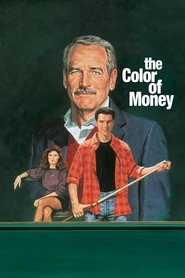
The Color of Money (1986) follows "Fast Eddie" Felson, the hustler from The Hustler, as he takes a cocky young pool player on the road. Martin Scorsese directs from Richard Price's script, based on a Walter Tevis novel. Paul Newman returns as Eddie, now a liquor salesman, and Tom Cruise plays Vincent Lauria, a toy store clerk with a gift for nine-ball. Eddie also recruits Vincent's girlfriend Carmen (Mary Elizabeth Mastrantonio), who sees the money in the deal faster than Vincent does. The plan is six weeks of pool halls ending in a big nine-ball tournament in Atlantic City, with Eddie staking them and taking a cut. Vincent hates losing on purpose and keeps showing off, scaring away marks, while Eddie works on both of them. Eddie has him dump a game to the hustler Grady Seasons to build up his odds, and is himself hustled by Amos (Forest Whitaker). In this list it sits tenth, between After Hours and The Last Temptation of Christ, and won Newman his Academy Award for Best Actor.
How The Color of Money ends
The Color of Money ends with Eddie, back in the game for himself, setting up a private match with Vincent. In Atlantic City Eddie beats Vincent in the tournament, then learns Vincent threw the match to cash a bet, with Vincent handing him $8,000 as his cut. Disgusted, Eddie forfeits his next game and returns the money, wanting to win honestly. He challenges Vincent to play him straight, breaks the rack and declares "I'm back!" The film was a sequel to The Hustler (1961), made 25 years later.
Post-credits scenes
No. The Color of Money has no mid- or post-credits scene.
No. 11 · 1988 · Film
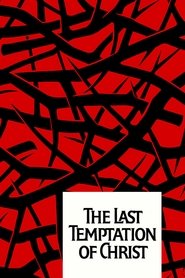
The Last Temptation of Christ recap
The Last Temptation of Christ (1988) follows Jesus of Nazareth, a carpenter torn between human desire and his sense that God has chosen him to die. Martin Scorsese directs from Paul Schrader's adaptation of the 1955 novel by Nikos Kazantzakis, which opens with a disclaimer that it is not based on the Gospels. Willem Dafoe plays Jesus, Harvey Keitel plays Judas Iscariot, Barbara Hershey plays Mary Magdalene, and David Bowie appears as Pontius Pilate. At first Jesus makes crosses for the Romans, and Judas, a Zealot, is sent to kill him for collaborating. Instead Judas follows him, pressing him to lead a revolt. Jesus saves Mary Magdalene from stoning, gathers disciples, is baptized by John the Baptist, and resists Satan in the desert. He raises Lazarus, drives the money changers from the Temple, and sees that he must die on the cross; he asks Judas to betray him. Christian groups protested the film heavily. It is the eleventh film in this list, following The Color of Money and preceding Goodfellas.
How The Last Temptation of Christ ends
The Last Temptation of Christ ends on the cross. A young girl claiming to be his guardian angel tells Jesus he is not the Messiah and leads him down to live an ordinary life: he marries Mary Magdalene, and after she dies, has a family with Mary and Martha of Bethany. Old and dying as Jerusalem burns, he is confronted by Judas, who reveals the angel is Satan. Jesus crawls back to Golgotha and begs God to let him finish, then finds himself back on the cross, cries "It is accomplished!" and dies.
Post-credits scenes
No. The Last Temptation of Christ has no mid- or post-credits scene.
No. 12 · 1990 · Film
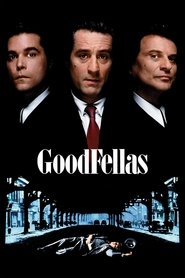
Goodfellas recap
Goodfellas (1990) follows Henry Hill from his teenage errands for the mob in 1950s Brooklyn to his drug-fueled collapse in 1980. Martin Scorsese directs and co-wrote the script with Nicholas Pileggi, based on Pileggi's book Wiseguy. Ray Liotta plays Henry, Robert De Niro plays the hijacker Jimmy Conway, Joe Pesci plays the volatile Tommy DeVito, Paul Sorvino plays the capo Paul Cicero, and Lorraine Bracco plays Henry's wife Karen. Henry starts parking cars for Paulie's crew and becomes a career thief, stealing from trucks at Idlewild Airport. Tommy beats a made man, Billy Batts, almost to death in Henry's club; they finish him in the woods and later have to dig him up. Henry keeps a mistress and serves prison time for an extortion job in Tampa, then builds a cocaine business behind Paulie's back. Jimmy pulls the Lufthansa heist and kills the crew to stop them talking, and Tommy is killed instead of being made. Twelfth of the 26 films listed, it falls between The Last Temptation of Christ and Cape Fear.
How Goodfellas ends
Goodfellas ends with Henry arrested on a frantic day of drug deals in 1980, paranoid and high, and Karen flushing their cocaine. Paulie cuts him loose with $3,200. Sure that Jimmy plans to kill him, Henry enters the witness protection program and testifies against Paulie and Jimmy. In the last scene he steps out of a plain suburban house to pick up the paper, complaining that now he has to live like a schnook. Onscreen text notes the real Henry Hill's later arrests and Paulie's death in prison.
Post-credits scenes
No. Goodfellas has no mid- or post-credits scene.
No. 13 · 1991 · Film
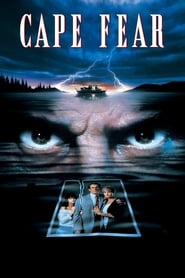
Cape Fear recap
Cape Fear (1991) follows Max Cady, a rapist freed after fourteen years in prison, as he stalks Sam Bowden, the lawyer who buried evidence in his case. Martin Scorsese directs this remake of the 1962 film, from Wesley Strick's script. Robert De Niro plays Cady, Nick Nolte plays Sam, Jessica Lange plays his wife Leigh, and Juliette Lewis plays their teenage daughter Danielle. Cady has taught himself to read and studied law in prison, and he knows Sam hid a report about the victim's history. He moves to the Bowdens' town in North Carolina and haunts them within the law. He attacks Lori Davis (Illeana Douglas), a court clerk Sam has been flirting with, and she refuses to testify. He seduces Danielle while posing as her drama teacher. Sam hires a private investigator, Claude Kersek (Joe Don Baker), and pays thugs to beat Cady, but Cady fights them off and uses the beating to get a restraining order against Sam. Next in the list after Goodfellas, it precedes The Age of Innocence.
How Cape Fear ends
Cape Fear ends on the Cape Fear River, where the Bowdens flee by houseboat after Cady kills Kersek and the housekeeper in their home. Cady has clung beneath their car. On board, he takes them hostage and holds a mock trial of Sam as a storm rises. Danielle sets him alight with lighter fluid, and the boat breaks up on the rocks. Sam handcuffs Cady to the wreck, and Cady sinks singing a hymn and speaking in tongues. Danielle narrates a final reflection about what the family has been through.
Post-credits scenes
No. Cape Fear has no mid- or post-credits scene.
No. 14 · 1993 · Film
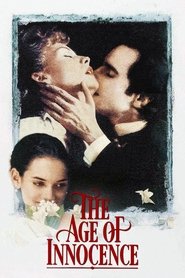
The Age of Innocence recap
The Age of Innocence (1993) follows Newland Archer, an engaged lawyer in 1870s New York society who falls for his fiancee's unconventional cousin. Martin Scorsese directs and co-wrote the script with Jay Cocks from Edith Wharton's 1920 novel, narrated by Joanne Woodward. Daniel Day-Lewis plays Newland, Winona Ryder plays his fiancee May Welland, and Michelle Pfeiffer plays Countess Ellen Olenska, who has left a cruel husband in Europe and returned to New York. Society shuns Ellen for her rumored past, and Newland helps restore her place by persuading the powerful van der Luydens to receive her. He finds her honesty about New York's hypocrisy thrilling. When she wants a divorce, the family asks him, as a lawyer, to talk her out of it to avoid scandal, and he does. Realizing he loves her, he pushes May to marry sooner, and confesses to Ellen, who refuses him. Their secret meetings continue after the wedding. It comes between Cape Fear and Casino in Scorsese's run of films.
How The Age of Innocence ends
The Age of Innocence ends with Newland, now a widower, sitting on a bench in Paris below Ellen's apartment, decades later. Years earlier Ellen left for Europe after May told her, before she was sure herself, that she was pregnant; the whole family had quietly worked to separate them. His son Ted reveals that May knew, and that she said Newland gave up what he most wanted when she asked him. Newland says she never asked. He sends Ted up alone, watches her window, and walks away.
Post-credits scenes
No. The Age of Innocence has no mid- or post-credits scene.
No. 15 · 1995 · Film
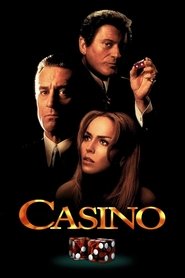
Casino recap
Casino (1995) follows Sam "Ace" Rothstein, a sports handicapper sent by the Chicago mob to run the Tangiers in Las Vegas while it skims the take. Martin Scorsese directs and co-wrote it with Nicholas Pileggi, from Pileggi's nonfiction book. Robert De Niro plays Ace, Joe Pesci plays his childhood friend Nicky Santoro, a made man sent to protect him, and Sharon Stone plays Ginger McKenna, a hustler Ace marries. Ace doubles the casino's profits, and the bosses get their cut in suitcases. Nicky, banned from the casinos, sets up a crew of burglars and extortionists and draws the attention Ace wants to avoid. Ginger cannot let go of her old pimp, Lester Diamond (James Woods), and slides into drink and pills. Ace fires a slot manager who turns out to be the brother-in-law of a county commissioner, who blocks Ace's gaming license, and Ace takes to hosting a TV show from the Tangiers. Ginger and Nicky begin an affair. In the filmography it falls between The Age of Innocence and Kundun, and his eighth with De Niro.
How Casino ends
Casino ends with the FBI taking down the skim and the bosses killing everyone who might testify. Ginger dies of an overdose in Los Angeles. Ace survives a car bomb he suspects Nicky planted. Nicky and his brother Dominick are beaten with baseball bats by their own crew and buried alive in a cornfield. The old casinos are demolished and replaced by corporate resorts. Ace, kept alive because he still earns, ends up in San Diego doing exactly what he did at the start: handicapping games for the mob.
Post-credits scenes
No. Casino has no mid- or post-credits scene.
No. 16 · 1997 · Film
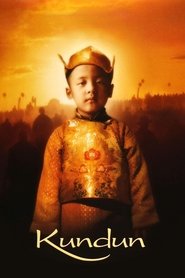
Kundun recap
Kundun (1997) follows the 14th Dalai Lama from his discovery as a small boy in eastern Tibet in 1937 to his escape into exile in India in 1959. Martin Scorsese directs from Melissa Mathison's script, and Tenzin Thuthob Tsarong, a grandnephew of the real Dalai Lama, plays him as an adult. Lamas following a vision find a farmer's son in Amdo who picks out the belongings of the previous Dalai Lama, and the boy is taken to the Potala Palace in Lhasa to be raised and taught. As he grows up he takes on leadership of the country, after the regent Reting is imprisoned and dies. Then the new People's Republic of China claims Tibet and invades. The Dalai Lama appeals abroad without success and travels to Beijing to meet Chairman Mao, who tells him that religion is poison. Back home he hears of more atrocities against his people. The cast is made up of Tibetan non-actors, and Philip Glass wrote the score. Kundun follows Casino and precedes Bringing Out the Dead.
How Kundun ends
Kundun ends with the Dalai Lama reaching India. After being told the Chinese mean to kill him, he consults the Nechung Oracle, disguises himself and slips out of Lhasa at night, falling ill on the hard journey through the mountains. At the border a guard asks if he is the Lord Buddha, and he answers that he is a reflection, like the moon on water. In exile he sets up his telescope and looks toward Tibet. A closing title says he has not yet returned.
Post-credits scenes
No. Kundun has no mid- or post-credits scene.
No. 17 · 1999 · Film
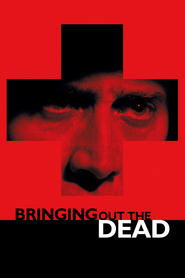
Bringing Out the Dead recap
Bringing Out the Dead (1999) follows Frank Pierce, a burned-out Hell's Kitchen paramedic haunted by patients he lost, across three night shifts. Martin Scorsese directs from Paul Schrader's adaptation of Joe Connelly's novel. Nicolas Cage plays Frank, who has not saved anyone in months and keeps seeing the ghost of Rose, a homeless girl who died on his watch. On the first night, with his partner Larry (John Goodman), he revives Mr. Burke after a heart attack and meets his daughter Mary (Patricia Arquette), a former addict. The second night he rides with Marcus (Ving Rhames), a preacher-like driver who prays over an overdose and crashes the ambulance. Mary relapses, and Frank finds her at the den of a dealer named Cy Coates (Cliff Curtis), where he takes pills and hallucinates the dead. In the hospital, he hears Burke begging to be let go. On the third night, he partners with the violent Tom Wolls (Tom Sizemore). Scorsese made it after Kundun and before Gangs of New York.
How Bringing Out the Dead ends
Bringing Out the Dead ends with Frank at peace for the first time. On the third night he saves Cy Coates, impaled on a railing above the street, his first rescue in months, and stops Tom from beating the drifter Noel with a bat. Then he goes to Burke's bedside and, hearing the old man's voice ask again, removes his breathing tube and lets him die. He tells Mary, who accepts it. The ghost of Rose forgives him, and he falls asleep beside Mary as morning comes.
Post-credits scenes
No. Bringing Out the Dead has no mid- or post-credits scene.
No. 18 · 2002 · Film
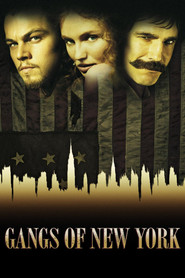
Gangs of New York recap
Gangs of New York (2002) follows Amsterdam Vallon, who returns to the Five Points slum in 1862 to kill the nativist gang boss who killed his father. Martin Scorsese directs from a script by Jay Cocks, Steven Zaillian and Kenneth Lonergan, inspired by Herbert Asbury's 1928 book. Leonardo DiCaprio plays Amsterdam, Daniel Day-Lewis plays William "Bill the Butcher" Cutting, Cameron Diaz plays the pickpocket Jenny Everdeane, and Liam Neeson plays Priest Vallon. In 1846, Bill kills Priest in a street battle and outlaws his gang, the Dead Rabbits; the boy is sent to an orphanage. Years later Amsterdam returns under a false identity and wins Bill's trust, becoming his protege and getting drawn into the politics of Boss Tweed (Jim Broadbent). He falls for Jenny, once Bill's ward. When his friend Johnny Sirocco betrays him, Bill scars him and lets him live. Amsterdam revives the Dead Rabbits and backs Monk McGinn (Brendan Gleeson) for sheriff. It is Scorsese's first film with DiCaprio, coming after Bringing Out the Dead and before The Aviator.
How Gangs of New York ends
Gangs of New York ends during the 1863 draft riots. After Bill murders the newly elected Sheriff McGinn, Amsterdam calls him out for a gang battle in Paradise Square, but before they can fight, Union troops and naval cannons fire into the crowd. Bill is wounded by shrapnel, and Amsterdam kills him with his father's knife. He buries Bill next to Priest in Brooklyn, and as he and Jenny leave, the Manhattan skyline rises over the decades to the present, while the graves are overgrown.
Post-credits scenes
No. Gangs of New York has no mid- or post-credits scene.
No. 19 · 2004 · Film
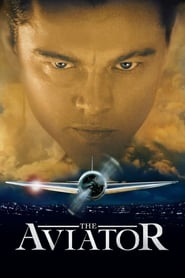
The Aviator recap
The Aviator (2004) follows Howard Hughes from 1927 to 1947 as he makes films, sets flying records and builds an airline while his compulsions worsen. Martin Scorsese directs from John Logan's script. Leonardo DiCaprio plays Hughes, Cate Blanchett plays Katharine Hepburn, Kate Beckinsale plays Ava Gardner, John C. Reilly plays his business manager Noah Dietrich, and Alan Alda plays Senator Owen Brewster. Hughes pours his inherited fortune into the war film Hell's Angels, reshooting it for sound. He dates Hepburn, who leaves him for Spencer Tracy. He sets a speed record in his H-1 racer, flies around the world, and buys TWA, which puts him in the sights of Pan Am chief Juan Trippe (Alec Baldwin). He takes wartime contracts for a spy plane and a huge wooden flying boat, the H-4 Hercules. Testing the XF-11, he crashes into Beverly Hills and is badly hurt. Blanchett won the Academy Award for Best Supporting Actress. It falls between Gangs of New York and The Departed.
How The Aviator ends
The Aviator ends just after Hughes's triumph. Recovering from a breakdown in which he locked himself in a screening room for months, he is groomed by Ava Gardner for a Senate hearing, turns the tables on Brewster and defeats his bill. He then flies the giant H-4 Hercules for a short hop. Talking with his engineers about jet airliners, he starts repeating "the way of the future" over and over, and is hidden in a washroom while he imagines his mother bathing him as a child.
Post-credits scenes
No. The Aviator has no mid- or post-credits scene.

No. 20 · 2006 · Film
The Departed recap
The Departed (2006) follows two moles in Boston: a cop undercover in an Irish mob crew, and a mobster's protege rising inside the state police. Martin Scorsese directs from William Monahan's script, a remake of the 2002 Hong Kong film Infernal Affairs. Leonardo DiCaprio plays Billy Costigan, who serves fake prison time to get inside the crew of Frank Costello (Jack Nicholson). Matt Damon plays Colin Sullivan, groomed by Costello since childhood. Martin Sheen and Mark Wahlberg play Captain Queenan and Sergeant Dignam, the only men who know Billy's identity, and Vera Farmiga plays Madolyn Madden, a police psychiatrist who dates Colin and treats Billy. Each side realizes it has a rat, and each mole is assigned to find the other. Colin tips off Costello to a meeting, and Costello's men throw Queenan from a rooftop. Billy learns Costello is also an FBI informant. It won Scorsese his only Academy Award for Best Director, along with Best Picture. In his filmography it follows The Aviator and precedes Shutter Island.
How The Departed ends
The Departed ends with almost everyone dead. Colin kills Costello, and Billy, spotting Costello's envelope on Colin's desk, arrests him on the rooftop. In the elevator Billy is shot dead by Trooper Barrigan, a second mole, and Colin kills Barrigan to cover himself. Madolyn, pregnant, leaves Colin after hearing the recordings Billy left. Colin comes home to find Dignam waiting, who shoots him dead and walks out. A rat crosses the balcony railing in the last shot.
Post-credits scenes
No. The Departed has no mid- or post-credits scene.

No. 21 · 2010 · Film
Shutter Island recap
Shutter Island (2010) follows Teddy Daniels, a federal marshal hunting a missing patient at an island asylum in Boston Harbor in 1954. Martin Scorsese directs from Laeta Kalogridis's adaptation of Dennis Lehane's 2003 novel. Leonardo DiCaprio plays Teddy, Mark Ruffalo plays his partner Chuck Aule, Ben Kingsley plays the chief psychiatrist Dr. John Cawley, Max von Sydow plays Dr. Naehring, and Michelle Williams plays Teddy's dead wife Dolores. The missing woman, Rachel Solando, drowned her three children. Teddy suffers migraines and visions of liberating Dachau and of Dolores, killed in a fire set by a man named Andrew Laeddis, whom he believes is held on the island. A patient in Ward C warns him that they perform experiments in the lighthouse, and a woman hiding in a cave says the doctors will drug him. When Chuck vanishes, Teddy forces his way into the lighthouse. Scorsese made it after The Departed and before Hugo, and is his fourth film with DiCaprio.
How Shutter Island ends
Shutter Island ends with the reveal that Teddy is Andrew Laeddis, a patient who shot his wife after she drowned their children, and the investigation was staged to break his delusion. Chuck is his psychiatrist, Dr. Sheehan. Andrew seems to accept the truth, but the next morning he calls Sheehan "Chuck" again, and Cawley orders a lobotomy. Before the orderlies take him, Andrew asks whether it would be worse to live as a monster or die as a good man, suggesting he may be choosing his fate.
Post-credits scenes
No. Shutter Island has no mid- or post-credits scene.
No. 22 · 2011 · Film
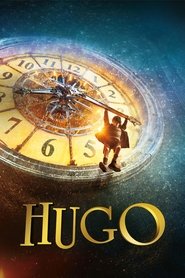
Hugo recap
Hugo (2011) follows Hugo Cabret, an orphan living in the walls of a Paris train station in 1931, who is trying to fix his late father's automaton. Martin Scorsese directs from John Logan's adaptation of Brian Selznick's book The Invention of Hugo Cabret, shot in 3D. Asa Butterfield plays Hugo, Ben Kingsley plays Georges, the grumpy toy seller in the station, Chloe Grace Moretz plays his goddaughter Isabelle, and Sacha Baron Cohen plays the Station Inspector, who hunts orphans with his dog. Hugo's father, a clockmaker, died in a museum fire, and his drunken uncle Claude has disappeared. Hugo steals parts from Georges, who confiscates his father's notebook. Isabelle wears a heart-shaped key that fits the automaton, and it draws a scene from A Trip to the Moon signed Georges Melies, her godfather. With the film historian Rene Tabard (Michael Stuhlbarg), they learn Georges is the forgotten pioneer of film magic. Hugo sits between Shutter Island and The Wolf of Wall Street.
How Hugo ends
Hugo ends with Georges Melies celebrated again. Rene screens his surviving copy of A Trip to the Moon at Georges's home, and Georges tells how he lost his studio and burned his films after the war. Hugo runs to fetch the automaton, is caught by the Inspector, escapes onto the clock face, and is saved from an oncoming train by the Inspector himself. Georges claims Hugo as his own. Later a gala restores Georges's films, and Isabelle starts writing Hugo's story.
Post-credits scenes
No. Hugo has no mid- or post-credits scene.

No. 23 · 2013 · Film
The Wolf of Wall Street recap
Jordan Belfort, a young stockbroker in New York, loses his first job on Black Monday in 1987 and finds work at a Long Island firm selling penny stocks for huge commissions. He sets up his own firm, Stratton Oakmont, with his neighbour Donnie Azoff, training a group of friends to push worthless stocks with high-pressure phone pitches, and runs pump-and-dump schemes. The firm grows rich and wild. Jordan leaves his first wife for Naomi, hides money in Swiss bank accounts through Naomi's aunt, and lives in a haze of drugs and parties. FBI agent Patrick Denham starts looking into him. After Naomi's aunt dies, Jordan sails to Italy to fix things; his yacht sinks in a storm. Arrested, he agrees to wear a wire. It is the fifth of Scorsese's films with Leonardo DiCaprio, after The Departed and Shutter Island, and comes between Hugo and Silence in his career.
How The Wolf of Wall Street ends
Jordan informs on his colleagues, serves a short sentence, and becomes a sales trainer. While wearing a wire, he warns Donnie with a note, which the FBI finds, so Jordan is thrown out of his cooperation deal. He is arrested again. Naomi leaves him, and in a drug haze he crashes his car with his daughter in it. He then testifies against his colleagues, serves 36 months in a comfortable prison, and later runs sales seminars, asking audience members to sell him a pen.
Post-credits scenes
No. There is no post-credits scene.
No. 24 · 2016 · Film
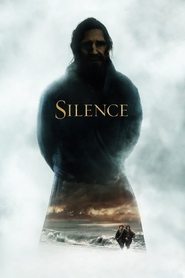
Silence recap
Silence (2016) follows two Portuguese Jesuits who travel into Japan, where Christianity is outlawed, to find a mentor said to have renounced his faith. Martin Scorsese directs and co-wrote it with Jay Cocks from Shusaku Endo's 1966 novel. Andrew Garfield plays Sebastiao Rodrigues, Adam Driver plays Francisco Garupe, and Liam Neeson plays Cristovao Ferreira, the missing priest. Their guide is Kichijiro (Yosuke Kubozuka), a drunken fisherman who once trampled on an image of Christ to save himself while his family died. In the coastal village of Tomogi the priests minister in secret to hidden Christians, until officials take hostages and the faithful are crucified in the surf. The priests separate. Kichijiro betrays Rodrigues to the authorities, and the Inquisitor Inoue (Issei Ogata) tries to make him apostatize, not by torturing him but by torturing Japanese believers in front of him. He sees Garupe drown trying to save prisoners. Silence comes after The Wolf of Wall Street and preceding The Irishman.
How Silence ends
Silence ends with Rodrigues giving up his faith outwardly. Ferreira, now living as a Japanese scholar, urges him to apostatize to stop the suffering of Christians hanging over a pit, and Rodrigues hears what he believes is Christ's voice permitting him to step on the fumi-e. He does. He lives the rest of his life in Japan under a Japanese name, helping the authorities find Christian objects. At his Buddhist funeral, his wife places a small cross, given to him in Tomogi, into his hand in the coffin.
Post-credits scenes
No. Silence has no mid- or post-credits scene.
No. 25 · 2019 · Film
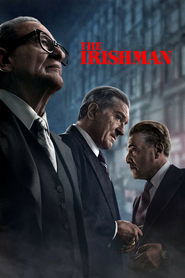
The Irishman recap
The Irishman (2019) follows Frank Sheeran, a truck driver turned hitman for the Bufalino crime family and bodyguard to Teamsters boss Jimmy Hoffa. Martin Scorsese directs from Steven Zaillian's adaptation of Charles Brandt's book I Heard You Paint Houses, using digital de-aging. Robert De Niro plays Frank, Al Pacino plays Hoffa, Joe Pesci plays Russell Bufalino, and Anna Paquin plays Frank's daughter Peggy. A lawyer, Bill Bufalino (Ray Romano), gets Frank out of a theft charge and introduces him to his cousin Russell, and Frank begins killing for the family. Russell connects him to Hoffa, and the two become close friends. Hoffa goes to prison after Robert Kennedy pursues him, and on release fights to retake the union from Frank Fitzsimmons, feuding with Tony Provenzano (Stephen Graham) and defying the mob. Peggy watches her father and says little, and the elderly Frank narrates it all from a nursing home. Released by Netflix, it falls between Silence and Killers of the Flower Moon, and his first film with Pacino.
How The Irishman ends
The Irishman ends with Frank alone in a nursing home. In 1975, ordered by Russell, he flies to Detroit, drives Hoffa to an empty house and shoots him, and Hoffa's body is cremated. The killers go to prison on other charges. Frank outlives them, and his daughters, Peggy above all, will not speak to him. He picks out his own coffin and crypt and talks with a priest. As the priest leaves, Frank asks him to leave the door open a little, the way Hoffa used to.
Post-credits scenes
No. The Irishman has no mid- or post-credits scene.
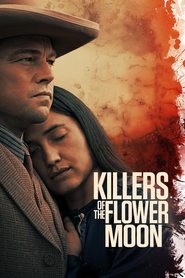
No. 26 · 2023 · Film
Killers of the Flower Moon recap
Killers of the Flower Moon (2023) follows Ernest Burkhart, who marries an Osage woman in 1920s Oklahoma while helping his uncle kill her family for oil money. Martin Scorsese directs and co-wrote it with Eric Roth from David Grann's 2017 nonfiction book. Leonardo DiCaprio plays Ernest, Robert De Niro plays his uncle William King Hale, a rancher who poses as the Osage's friend, and Lily Gladstone plays Mollie Kyle, an Osage woman whose family holds oil headrights. Oil on the reservation has made the Osage rich, though white guardians control much of their money. Ernest, back from the war, courts Mollie and marries her. Hale explains that the more of her family dies, the more Ernest stands to inherit. Mollie's sisters die one by one; her first husband is shot; her sister Reta's house is blown up. Mollie, diabetic, gets sicker as Ernest gives her poisoned insulin. Jesse Plemons plays Tom White, a federal agent who arrives to investigate. It is the latest film in this list, following The Irishman, and his tenth with De Niro.
How Killers of the Flower Moon ends
Killers of the Flower Moon ends with Hale and Ernest convicted. Ernest testifies against his uncle after his daughter dies, but when Mollie asks what he put in her insulin, he will not admit it, and she leaves him. The epilogue is staged as a radio show, with Scorsese himself reading Mollie's obituary, which does not mention the murders. It notes that Hale and Ernest were paroled despite Osage protests. The film moves the focus from Grann's book, which centers on the FBI investigation, to Ernest and Mollie.
Post-credits scenes
No. Killers of the Flower Moon has no mid- or post-credits scene.
Common questions
What is the Martin Scorsese story so far?
Martin Scorsese's features run from 1967 to 2023, and this list covers 26 of them, from Who's That Knocking at My Door to Killers of the Flower Moon. His films keep returning to New York, organized crime, Catholic guilt and men undone by pride or violence, often with Robert De Niro, Joe Pesci, Harvey Keitel or Leonardo DiCaprio in the lead. Editor Thelma Schoonmaker has cut nearly all of them since Raging Bull, and Paul Schrader wrote several of the key scripts.
Where did Martin Scorsese leave off?
Killers of the Flower Moon (2023) is the latest. Killers of the Flower Moon ends with Hale and Ernest convicted. Ernest testifies against his uncle after his daughter dies, but when Mollie asks what he put in her insulin, he will not admit it, and she leaves him. The epilogue is staged as a radio show, with Scorsese himself reading Mollie's obituary, which does not mention the murders. It notes that Hale and Ernest were paroled despite Osage protests. The film moves the focus from Grann's book, which centers on the FBI investigation, to Ernest and Mollie.
Keep reading
 Watch order guideHow to watch the Martin Scorsese movies in order26 titles · 61 hours
 Skip guideWhat can you skip in Game of Thrones?2 titles you can skip
 RecapChainsaw Man recap: the story so far2 titles recapped
 Watch order guideHow to watch the One Piece movies in order8 titles · 498 hours
 Skip guideWhich Star Wars movies can you skip?5 titles you can skip
 Watch order guideHow to watch the Star Trek movies in order26 titles · 735 hours