
Fox Kids was the Fox network's children's block from 1990 to 2002, filling Saturday mornings and weekday afternoons. It mixed Warner Bros. and Hanna-Barbera comedies with Marvel adaptations such as X-Men and Spider-Man, Saban's live-action Power Rangers and imported anime such as Digimon, and a large share of 1990s cartoon nostalgia traces back to its lineup. Disney bought Fox Kids Worldwide in 2001, and the block ended the following year.
- Recapped
- 22
- Watch time saved
- 830 hours
- Latest
- 2001
No. 01 · 1990 · Series
Peter Pan & the Pirates recap
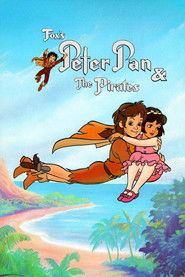
Peter Pan & the Pirates (1990) sends Peter Pan, Tinker Bell, the Darling children and the Lost Boys against Captain Hook's crew in Neverland. Fox made it as one of the first series for its new Fox Kids block, and it ran for a single season of 65 episodes from September 8, 1990, to September 10, 1991. An opening disclaimer says the show stands apart from J. M. Barrie's book, though it keeps his characters. Peter Pan (Jason Marsden) leads the Lost Boys, Nibs, Slightly, Curly, Tootles and the Twins, from their underground house, with Wendy, John and Michael Darling along for the adventures. Captain James Hook (Tim Curry) commands the Jolly Roger with Smee (Ed Gilbert) and a crew that includes Starkey, Alf Mason, Billy Jukes and the cook Cookson, and he still dreads the crocodile, whose ticking clock in this version controls the time of day in Neverland. Tiger Lily (Cree Summer), her brother Hard-to-Hit and their father, Great Big Little Panther, help Peter in many episodes. Most episodes are self-contained, built around magic objects, pirate schemes and rivalries between the two camps, with a few multi-part stories such as "Ages of Pan." Reruns stayed on Fox until 1992, returned on weekday mornings in 1996 and 1997, and moved to Fox Family in 1998. Ownership passed to Disney in 2001 with its purchase of Fox Kids Worldwide.
How Peter Pan & the Pirates ends
Peter Pan & the Pirates ends with "The Letter," aired September 10, 1991, a standalone story in which Starkey believes his mother is coming to visit him aboard the Jolly Roger. There is no series finale: Hook is never beaten for good, and the Darlings are never shown going home. Fox did not order a second season, and the show survived in reruns, on a THQ game for the Nintendo Entertainment System, and in select episodes on VHS in 1992 and on a UK DVD in 2004. No revival has been made.
No. 02 · 1990 · Series
Bobby's World recap
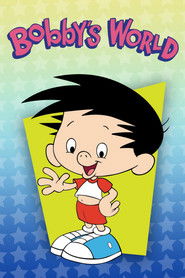
Bobby Generic is a four-year-old with a huge imagination, and every ordinary moment in his life turns into a fantasy. A trip to the dentist, a new babysitter or a day at the beach becomes an adventure in his head, often built from taking grown-up sayings literally. Howie Mandel created the show, voices Bobby and his father Howard, and appears in live-action segments at the start and end of each episode. Bobby lives with his parents, his older sister Kelly, his older brother Derek, who torments him, and his dog Roger, and he talks to his stuffed spider Webbly. Uncle Ted, Aunt Ruth and his best friend Jackie are regulars, and he idolises a TV superhero called Captain Squash. The show ran on Fox Kids for seven seasons and 81 episodes from 1990 to 1998. The format stayed the same throughout, though the family grew: twin baby brothers, Jake and Alex, arrive in the third season.
How Bobby's World ends
Bobby's World has no story finale. Each episode stands alone, and Fox Kids stopped making new ones after the seventh season, with the last episode airing in February 1998. Reruns continued on Fox Family until 2001. Bobby is still four years old in the last episode, and nothing in his family changes for good beyond the arrival of the twins. Howie Mandel talked several times about a revival, most recently around 2018, but none has been made.

No. 03 · 1990 · Series
Tom & Jerry Kids Show recap
Tom & Jerry Kids Show (1990) recasts the cat and mouse as a kitten and a baby mouse, chasing each other through gentler versions of the classic cartoons. It was the first program on Fox Kids when the block launched on September 8, 1990, and ran for four seasons and 65 half hours, each made of three segments, until December 1993. Hanna-Barbera, the studio of the characters' creators William Hanna and Joseph Barbera, produced it with Turner Entertainment, which had bought the Tom and Jerry library in 1986. Tom and Jerry stay silent, with Frank Welker supplying their sounds, and many gags are reworked from the old shorts with the violence toned down. Other segments star the bulldog Spike (Dick Gautier) and his son Tyke (Patric Zimmerman), who can now talk, and Droopy (Don Messick) with his tiny son Dripple (Charlie Adler), forever competing with McWolf for jobs, prizes and the attention of Miss Vavoom (Teresa Ganzel). Smaller characters such as Jerry's cousin Slowpoke Antonio, the exterminator Calaboose Cal (Phil Hartman) and Wild Mouse get cartoons of their own, and season 4 adds a talking Blast-Off Buzzard chasing Crazylegs. The title drops "Show" after the first season, and Droopy's detective segments later spin off into Droopy, Master Detective.
How Tom & Jerry Kids Show ends
Tom & Jerry Kids ends with its last fourth-season episode on December 4, 1993, made up of "Order in Volleyball Court," "King Wildmouse, 10th Wonder of the World" and "Space Chase," in which Tom and Jerry are sent into space to test whether they can live in peace and keep fooling around instead. There is no finale; the kitten and the mouse are still feuding. Fox ran repeats until September 4, 1994, and Cartoon Network and later Boomerang carried the show for years. The pair returned in Tom and Jerry Tales in 2006.

No. 04 · 1990 · Series
Attack of the Killer Tomatoes recap
Attack of the Killer Tomatoes (1990) is a cartoon sequel to the cult films, with a scientist breeding mutant tomatoes in the town of San Zucchini. It ran on Fox Kids for two seasons and 21 episodes, from September 8, 1990, to November 23, 1991, developed by Richard Mueller from characters created by John DeBello, J. Stephen Peace and Costa Dillon. The story picks up five years after the Great Tomato War, with tomatoes banned. Dr. Putrid T. Gangreen (John Astin), an "angry" rather than mad scientist, keeps experimenting with his dim assistant Igor Smith (Cam Clarke) and his tomato commander Zoltan (Maurice LaMarche). Ten-year-old Chad Finletter (Christian Guzek) delivers pizzas for his uncle Wilbur (Thom Bray), a war veteran who leads the Killer Tomato Task Force, and befriends Tara Boumdeay (Kath Soucie), one of Gangreen's experiments: a tomato in the form of a teenage girl who turns back into a tomato when touched by salt. Her fuzzy, harmless "brother" F.T. passes as an ugly dog. The humour leans on film and TV spoofs and on jokes about the franchise's low-budget origins. In the second season Gangreen conquers the world in the opening episode, only for Zoltan's upgraded Gang of Six to overthrow him and split the continents between them, forcing Gangreen to join Chad, Tara and Wilbur's resistance.
How Attack of the Killer Tomatoes ends
Attack of the Killer Tomatoes ends with "The Great Tomato Wars," aired November 23, 1991, as humanity slowly takes the Earth back from the tomatoes. Fang stages an uprising and ousts Zoltan from the Gang of Six, so Zoltan allies with Gangreen once more, and Gangreen creates five new caveman-themed tomatoes to fight Fang's crew in a story that turns on F.T. No third season was made, and repeats ran on Fox and then Fox Family until 2000. A documentary on the franchise, including the cartoon's cast and crew, was released on YouTube in 2023.

No. 05 · 1991 · Series
Taz-Mania recap
The Tasmanian Devil, who in the classic shorts was a spinning, grunting eating machine, gets his own sitcom in a version of Tasmania where the sky is always yellow. Taz still spins, eats everything and barely talks, but now he has a family: his calm father Hugh, his mother Jean, his teenage sister Molly and his little brother Jake. Taz has a job as a bellhop at a hotel. The supporting cast is full of Australian animals and oddballs: the scheming Digeri Dingo; the Platypus Brothers, a pair of bickering handymen; Francis X. Bushlad; Buddy Boar; Wendal T. Wolf; and Bull Gator and his sidekick Axl, a pair of hunters forever trying to catch Taz. The humour is fast and silly, with fourth-wall jokes and occasional musical numbers. Jim Cummings voiced Taz. The show ran on Fox Kids from 1991 to 1995, for 65 episodes over four seasons.
How Taz-Mania ends
Taz-Mania ended without a finale. The last episode, "One Saturday in Taz-Mania", aired on May 22, 1995: Taz tries to have a lazy Saturday and keeps getting interrupted by Jake, while the Platypus Brothers review their favourite films. The show was not renewed after four seasons. Taz carried on in later Looney Tunes projects, including Space Jam (1996), but the Taz-Mania family was not revisited.
No. 06 · 1992 · Series
Batman: The Animated Series recap
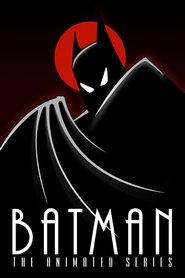
The series is mostly standalone episodes, aired from 1992 to 1995, about Batman protecting a 1940s-style Gotham City with Alfred, Commissioner Gordon and, in some episodes, Robin. Most of the classic villains get their own stories, many of them origin stories. In "Heart of Ice", Mr. Freeze is a scientist who froze his dying wife Nora and was turned into the cold man he is by a corporate executive he now hunts. In "Two-Face", district attorney Harvey Dent, a friend of Bruce's, is scarred in an explosion and splits into a second personality. Clayface is an actor who disfigured himself with a face cream. The Joker's assistant Harley Quinn, created for the show, becomes a regular, and the Penguin, the Riddler, Poison Ivy, Scarecrow, Ra's al Ghul and Catwoman all return. Dick Grayson works as Robin while studying at college, and Bruce wrestles with whether Batman can ever stop.
How Batman: The Animated Series ends
There is no single finale; the show ends after 85 episodes with its villains back in Arkham Asylum and Batman still on patrol. The same team continued in 1997 with The New Batman Adventures, which adds Batgirl, Nightwing and a new Robin, Tim Drake. Mask of the Phantasm, released in 1993, is the series' feature film, and the 1998 film SubZero continues Mr. Freeze's story. The same voice cast, led by Kevin Conroy and Mark Hamill, carried on into Justice League.
No. 07 · 1992 · Series
Eek! The Cat recap
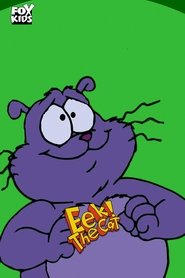
Eek is a cheerful purple cat who lives in the suburbs by one motto: "It never hurts to help." It always does. Every good deed he tries, from helping a friend to rescuing an animal, ends with him crushed, blown up or chased. His girlfriend Annabelle, a large cat, adores him, but her guard dog Sharky the Sharkdog wants to tear him apart. His friend Elmo the Elk is always raising money for his sick brother, and Eek's human family never quite understands him. Created by Savage Steve Holland and Bill Kopp, the show ran on Fox Kids from 1992 to 1997. From the second season it changed format, splitting each episode between Eek and a second segment, The Terrible Thunderlizards, about three dinosaur soldiers trying to kill two cavemen. The show was renamed Eek! and the Terrible Thunderlizards and then Eek! Stravaganza, and a third segment, Klutter!, about a dog made from junk, was added for a while.
How Eek! The Cat ends
Eek! The Cat has no story finale. Each episode stands on its own, and Fox stopped making it in 1997 after five seasons and 75 episodes, with the last run under the name Eek! Stravaganza. Eek ends as he began, still helping and still getting hurt for it. The rights later passed to Disney, and the show has never been revived or given a full home release.

No. 08 · 1992 · Series
X-Men: The Animated Series recap
The X-Men, led by Professor Charles Xavier and including Cyclops, Jean Grey, Wolverine, Storm, Rogue, Gambit, Beast and Jubilee, defend a world that hates mutants. In season 1, they fight the Sentinels, giant robots built to hunt mutants; Morph dies, Beast is jailed, and Apocalypse plots to turn humans against mutants by staging an attack on Senator Kelly. In season 2, Cyclops and Jean marry and are targeted by Mister Sinister, who sends a brainwashed Morph against them, the Friends of Humanity stir up hatred, and Xavier and Magneto are stranded together in the Savage Land. Season 3 tells the Phoenix and Dark Phoenix sagas, as a cosmic force takes over Jean and the alien Shi'ar Empire, ruled by Lilandra, tries to destroy her; Lady Deathstrike and the Shadow King also appear. Seasons 4 and 5 bring Apocalypse's war across time, the alien Phalanx and stories focused on single characters, before the show builds to a peace conference between humans and mutants.
How X-Men: The Animated Series ends
In the final episode, Graduation Day, Xavier is shot by an anti-mutant extremist at the peace conference. The wound is fatal on Earth, so Lilandra takes him into space to be healed by the Shi'ar, and he says goodbye to his X-Men. The team is left without its founder for the first time. The series ended there in 1997, and X-Men '97 picks up the story a year later.
No. 09 · 1993 · Series
Mighty Morphin Power Rangers recap
Zordon, a wise being trapped in a time warp, and his robot assistant Alpha 5 recruit five teenagers from Angel Grove: Jason, Zack, Billy, Trini and Kimberly. With their Power Coins, they become the Power Rangers and fight Rita Repulsa, a witch freed after 10,000 years in a space dumpster on the Moon. Each episode, Rita sends a monster, makes it grow giant, and the Rangers combine their dinosaur Zords into the Megazord. The action scenes come from the Japanese series Kyōryū Sentai Zyuranger; the American scenes are new. Rita's biggest plan is turning new student Tommy into the evil Green Ranger, until the Rangers free him and he joins. In season 2 Lord Zedd takes over from Rita, Tommy loses his green powers and returns as the White Ranger, and Jason, Zack and Trini are replaced by Rocky, Adam and Aisha. Rita and Zedd marry. In season 3, Rita's brother Rito destroys the Thunderzords, the Rangers gain ninja powers, and Katherine replaces Kimberly as the Pink Ranger.
How Mighty Morphin Power Rangers ends
The third season ends with Rita's father, Master Vile, turning back time and making the Rangers children again. This leads to the miniseries Mighty Morphin Alien Rangers, in which aliens from Aquitar protect Earth, and ends with the Command Center destroyed. The story continues straight into Power Rangers Zeo (1996) and the long-running franchise. A 1995 film was separate from the show.

No. 10 · 1993 · Series
Animaniacs recap
Yakko, Wakko and Dot, the Warner siblings, are cartoon characters from the 1930s who were locked in the Warner Bros. water tower for being too zany. Now loose, they run around the studio lot, tormenting the studio psychiatrist Dr. Scratchansniff and the guard Ralph, and singing songs about the countries of the world, the presidents and the US states. The show is a variety series made up of short segments. Besides the Warners, there is Pinky and the Brain, two lab mice trying to take over the world; Slappy Squirrel, a retired cartoon star; the Goodfeathers, pigeons spoofing gangster films; Rita and Runt, a cat and a dog; and Buttons and Mindy, a dog and a toddler who wanders into danger. The humour mixes slapstick with jokes aimed at adults. Produced by Steven Spielberg, it aired on Fox Kids from 1993 to 1995 and then on Kids' WB until 1998, with 99 episodes.
How Animaniacs ends
The original show has no story finale; it ended in 1998, and a direct-to-video film, Wakko's Wish, followed in 1999, in which the Warners compete for a wish from a falling star. Hulu revived Animaniacs in 2020 with the original voice cast. The revival ran for three seasons until 2023, with the Warners joking about their decades away, and Pinky and the Brain back as a regular segment.

No. 11 · 1994 · Series
Spider-Man: The Animated Series recap
Peter Parker, a college student, balances his life as Spider-Man with his science studies, his job selling photos to J. Jonah Jameson at the Daily Bugle, his Aunt May and his relationship with Mary Jane Watson. The series adapts many classic comics: the alien symbiote that becomes Venom and later Carnage; the Hobgoblin and Green Goblin; Kraven, the Lizard, Doctor Octopus; and the Kingpin, the crime boss behind many plots. Peter's blood mutation threatens to turn him into a giant spider-creature. Madame Web, a mysterious psychic, tests and guides him. The series ran on Fox Kids from 1994 to 1998 for five seasons, built around multi-episode arcs and the Secret Wars, where Spider-Man leads a team of heroes on an alien world. Mary Jane disappears into another dimension at the end of season 3, and the woman who returns turns out to be a clone. The final arc, Spider Wars, brings in Spider-Men from other universes.
How Spider-Man: The Animated Series ends
The finale, "Farewell, Spider-Man", ends the Spider Wars, in which several Spider-Men from parallel universes stop an evil, rampaging version of Spider-Man. Madame Web promises to help Peter find the real Mary Jane, and he leaves with her to search, meeting Stan Lee along the way. The show was cancelled without showing the rescue. Marvel's 2025 comic series Spider-Man '94 picked up the story and reunited them.
No. 12 · 1994 · Series
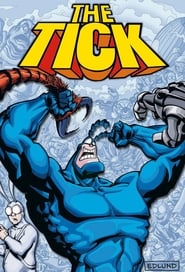
The Tick recap
The Tick (1994) follows a huge, nearly indestructible blue superhero with far more enthusiasm than sense as he protects a place known only as the City. Ben Edlund created the character in his own satirical comic book, and the cartoon ran on Fox Kids for three seasons and 36 episodes, from September 10, 1994, to November 1996. After passing tryouts at the National Super Institute in Reno, the Tick (Townsend Coleman) is assigned to the City, where he takes on Arthur, a former accountant in a moth suit, as his sidekick; Micky Dolenz voices Arthur in the first season and Rob Paulsen takes over after that. Their friends are a set of odd local heroes, including Die Fledermaus (Cam Clarke), American Maid (Kay Lenz) and Sewer Urchin (Jess Harnell). The villains are just as strange, from Chairface Chippendale, a gangster with a chair for a head, to the Breadmaster, Professor Chromedome and El Seed. Nearly every title pits the Tick against something, as in "Tick vs. Science," and the stories send up the conventions of superhero comics, from secret origins to team-ups and time travel. The series was nominated for Emmys and won two Annie Awards in 1995, and later reruns on Comedy Central widened its audience.
How The Tick ends
The Tick ends with "Tick vs. Education," which premiered on Comedy Central on November 24, 1996: the Tick and Arthur teach an extension class for would-be superheroes, and a field trip runs into Uncle Creamy, a disgruntled former ice cream company employee. It is a standalone episode, not a finale, and no fourth season was made. The character returned in a live-action Fox sitcom in 2001 starring Patrick Warburton, and again in an Amazon Prime Video series from 2016 to 2019 with Peter Serafinowicz.

No. 13 · 1995 · Series
Life with Louie recap
Life with Louie (1995) is comedian Louie Anderson's animated memory of being an eight-year-old in Cedar Knoll, Wisconsin, in the early 1960s. Anderson created it with Matthew O'Callaghan; after two episodes aired in primetime on Fox in late 1994, it moved to Fox Kids, running three seasons and 39 episodes from September 2, 1995, to March 2, 1998. Anderson voices both young Louie and his father Andy, a demanding World War II veteran full of war stories and firm opinions who cares more than he shows. Ora Anderson (Edie McClurg) is Louie's patient, kind mother, and Tommy (Miko Hughes) is the youngest brother Louie likes to tease, while most of his many older siblings stay in the background. Around town he has his best friend Jeannie Harper (Debi Derryberry), whom he has a crush on, the wealthy, sarcastic Mike Grunewald (Justin Shenkarow) and the bully Glen Glenn. From the second season each episode opens with the adult Anderson in live action saying, "Let me tell you about my family." When Mary Wickes, who voiced Ora's mother Henrietta, died during the second season, the writers built an episode around Louie coping with his grandmother's death. Anderson won Emmys for his performance in 1997 and 1998, and the series won the Humanitas Prize three times.
How Life with Louie ends
Life with Louie ends with "Project: Mother's Day," aired March 2, 1998, in which Andy's mother comes to visit for Mother's Day while Ora falls ill, and Louie, doing all of her jobs, runs out of time to buy her a present. The episode serves as the series finale but closes the run quietly, with the Andersons just as they were. Louie is still eight, and the family stays in Cedar Knoll. No revival or follow-up series was made.

No. 14 · 1995 · Series
Goosebumps recap
Goosebumps (1995) adapts R. L. Stine's horror books for children as a live-action anthology, with new kids caught in a new nightmare in each story. Fox Kids premiered it on October 27, 1995, and it ran four seasons and 74 episodes until November 16, 1998; Scholastic and Protocol Entertainment produced it, with Deborah Forte developing the books for television. Most episodes adapt a single book, often as two-parters: 43 of the original 62 novels were used, along with stories from Tales to Give You Goosebumps and Goosebumps Series 2000, plus an original three-part story, "Chillogy." The first episode, "The Haunted Mask," has Carly Beth Caldwell take a Halloween mask from a new store against the owner's warning, only for it to change her personality and bond to her face, and "Haunted Mask II" brings it back. The ventriloquist dummy Slappy terrorizes families in "Night of the Living Dummy II" and "Night of the Living Dummy III." The series was filmed mostly in Toronto, Markham and rural Ontario, using real houses and historic properties as sets, which gives it a suburban look that could pass for anywhere in America. In Canada it aired on YTV, and it later ran on Fox Family, Cartoon Network and The Hub.
How Goosebumps ends
Goosebumps ends with "Deep Trouble," a two-parter first aired November 16, 1998, in which Billy and Sheena Deep, visiting their uncle Dr. Deep in the Caribbean, find that his assistant Jacob Ritter plans to use Deep's formula to mutate fish; the mutants are cured, and Ritter is turned into a fish man himself. As an anthology, the series has no closing story. The franchise returned with the films Goosebumps (2015), starring Jack Black, and Goosebumps 2: Haunted Halloween (2018), and with a new Goosebumps series on Disney+ in 2023.

No. 15 · 1996 · Series
Big Bad Beetleborgs recap
Big Bad Beetleborgs (1996) turns three kids into the armored comic book heroes they love, thanks to a wish granted by a phantom in a haunted mansion. Saban Entertainment made it with Toei, cutting fight footage from the Japanese series Juukou B-Fighter into new American scenes, and it ran on Fox Kids for two seasons and 88 episodes from September 7, 1996, to March 2, 1998. On a dare from rich bullies Trip and Van, Drew McCormick (Wesley Barker), his younger sister Jo (Shannon Chandler, later Brittany Konarzewski) and their friend Roland Williams (Herbie Baez) enter Hillhurst Mansion outside Charterville. They free Flabber (Billy Forester), a phasm trapped in the pipe organ, who makes them the Beetleborgs, but the same magic releases the Magnavores, villains from the comic. The mansion's other monsters, Mums, Frankenbeans, Count Fangula and the werewolf Wolfie, carry much of the sitcom humour, and Art Fortunes, who draws the Beetleborgs comic, designs new powers for the kids. Late in the first season the villain Nukus is brought to life. The second season, retitled Beetleborgs Metallix and built on footage from B-Fighter Kabuto, opens with Nukus wiping out the kids' armor. Art designs new Metallix armor, Nukus breaks Art's brother Les out of prison to draw monsters called the Crustaceans, and the fight grows to include the giant Roboborg and the Astral Coins.
How Big Bad Beetleborgs ends
Big Bad Beetleborgs ends with "Mega Borg Power," aired March 2, 1998, in which Nukus uses Les Fortunes' drawings to create Repgillian, a monster that only Roboborg and the Crustaceans' giant robot Boron can beat together. The Beetleborgs win Boron over as an ally, stripping Nukus of his greatest weapon, and Les chooses to return to Charterville Prison, ending his ability to turn drawings into monsters. The series stopped there; no third season was made, and Saban did not revive the show.
No. 16 · 1997 · Series
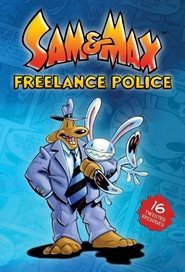
The Adventures of Sam & Max: Freelance Police recap
The Adventures of Sam & Max: Freelance Police (1997) follows a canine detective and a hyperkinetic "rabbity thing" who take bizarre cases in New York City. Steve Purcell created the pair in his comics, and Nelvana's cartoon, developed by J.D. Smith, ran for one season of 13 episodes (24 segments) on Fox Kids and Canada's YTV from October 4, 1997, to April 25, 1998. Sam (Harvey Atkin) is the calm, wordy six-foot dog; Max (Robert Tinkler) is the excitable three-foot rabbit. Missions from the mysterious Commissioner (Dan Hennessey) take them to the Moon, Mount Olympus, the centre of the Earth and the mutant waters of Bohunk Lagoon, between holiday episodes, time travel and Bigfoot hunting. The show adds Darla "The Geek" Gugenheek (Tracey Moore), a new sidekick created for television, and the clingy Lorne, the Friend for Life (Patrick McKenna). Fox's standards removed Sam's revolver and much of the comics' harder humour, but Purcell reviewed the scripts from California and wrote four episodes. The series won the 1998 Gemini Award for best animated series, yet it was cancelled after one season, with Purcell citing personnel changes at Fox and Atkin citing budget disputes between Fox and Nelvana.
How The Adventures of Sam & Max: Freelance Police ends
The Adventures of Sam & Max: Freelance Police ends with "The Final Episode," aired April 25, 1998, in which Mack Salmon gathers the Mad Thespian, the Uglion High Ruler, Herzog, Lactose the Intolerant and Deadly Dangly Deever to strap Sam and Max to a bomb and drop them into a volcano, while the pair relive flashbacks of their early life as they fight their way free. The show had already been cancelled. Sam and Max returned in Telltale Games' episodic adventure games, beginning with Sam & Max Save the World in 2006.

No. 17 · 1998 · Series
Godzilla: The Series recap
A sequel to the 1998 Godzilla film. After the monster is killed in New York, scientist Dr. Nick Tatopoulos finds one egg that survived. The baby Godzilla hatches, sees Nick first and treats him as its parent. Nick puts together H.E.A.T., a research team that investigates giant mutant creatures around the world. The team includes Elsie Chapman, a paleontologist; Mendel Craven, an anxious engineer; Randy Hernandez, a young hacker; and Monique Dupre, a French agent first sent to kill Godzilla, plus their battered robot N.I.G.E.L. Godzilla follows them and fights off giant mutant crabs, bats, cyborgs and others. Recurring threats include the alien Leviathans and an evil businessman, Cameron Winter. Nick's ex-girlfriend Audrey and cameraman Animal from the film also return. The show ran on Fox Kids for two seasons and 40 episodes from 1998 to 2000.
How Godzilla: The Series ends
Godzilla: The Series has no finale. It was cancelled after two seasons, with the last broadcast episode, "Ring of Fire", airing in April 2000. Shifting time slots during the Pokémon and Digimon era hurt it, and two finished episodes were never aired on American television. Godzilla and H.E.A.T. are still working together when it stops, and nothing has continued the series since.

No. 18 · 1998 · Series
Silver Surfer recap
Silver Surfer (1998) follows Norrin Radd, the silver herald of the planet-eating Galactus, as he crosses the cosmos searching for his lost home world, Zenn-La. Larry Brody developed it from the Marvel character created by Stan Lee and Jack Kirby, and Marvel and Saban produced one season of 13 episodes for Fox Kids, airing from February 7 to May 16, 1998, in a mix of cel-shaded and computer animation drawn in Kirby's style. The Surfer (Paul Essiembre) has had part of his memory as Norrin Radd restored by Thanos (Gary Krawford). In the opening story, adapted from the Galactus Trilogy without the Fantastic Four, he defends Earth from Galactus (James Blendick) because it reminds him of Zenn-La. From there the series is serialized, with the Surfer searching for Zenn-La and for Shalla-Bal (Camilla Scott), the woman he loves. Marvel's cosmic characters fill the episodes, including the Watcher, Ego the Living Planet, Pip the Troll, Drax the Destroyer, Adam Warlock and the Kree, many of them reworked; to meet Fox's standards, Thanos serves Lady Chaos rather than Death. Episodes deal with imperialism, slavery, non-violence and environmental damage, and several titles come from science fiction novels, including Isaac Asimov's The End of Eternity and Joe Haldeman's The Forever War.
How Silver Surfer ends
Silver Surfer ends with "The End of Eternity," aired May 16, 1998, on a cliffhanger. Eternity and Infinity summon the Surfer and warn him that Thanos has found a way to make time flow backward, which will end the universe. The Surfer races to stop him as the universe contracts around him, and he appears to die in the battle, leaving Eternity and Infinity to wonder whether all is lost. Eight scripts were written for a second season, but production shut down, which Larry Brody blamed on a legal dispute between Marvel and Saban, so the cliffhanger was never resolved.
No. 19 · 1999 · Series
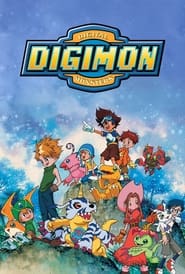
Digimon: Digital Monsters recap
At summer camp, seven kids are pulled into the Digital World by strange devices, called digivices, and each is paired with a Digimon partner. Tai is the brave leader with Agumon, and Matt is his rival with Gabumon. The others are Sora, Izzy, Mimi, Joe and young T.K., Matt's brother. Their Digimon can digivolve into stronger forms when the kids are in danger or show their crests: courage, friendship, love, knowledge, sincerity, reliability and hope. They fight Devimon, then Etemon, and learn they are the Digidestined, chosen to save the Digital World. The vampire Myotismon invades Tokyo hunting for the eighth child, who turns out to be Tai's little sister Kari, with Gatomon. Returning to the Digital World, they face the four Dark Masters, who have reshaped it, and lose friends along the way. The series aired on Fox Kids from 1999 to 2000, with the Japanese original changed for American audiences.
How Digimon: Digital Monsters ends
The final villain, Apocalymon, made from the data of lost Digimon, tries to destroy both worlds, and the kids defeat him using their crests' power. With the Digital World restored, the gate between worlds begins to close, and they say goodbye to their partners and return home. The sequel Digimon Adventure 02 (2000) and the film Last Evolution Kizuna (2020) continue their story.
No. 20 · 1999 · Series
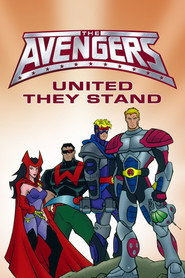
The Avengers: United They Stand recap
The Avengers: United They Stand (1999) sets an Avengers team led by Ant-Man against classic Marvel villains in a New York about 25 years in the future. Eric and Julia Lewald developed it for Marvel Studios and Saban, and it ran for 13 episodes on Fox Kids from October 30, 1999, to February 26, 2000. Hank Pym, as Ant-Man and Giant-Man, leads the Wasp (Linda Ballantyne), Wonder Man, Tigra, Hawkeye (Tony Daniels), the Falcon, the Scarlet Witch (Stavroula Logothettis) and the Vision. Licensing issues kept the core trio out: Captain America and Iron Man guest in one episode each, and Thor appears only in the opening titles. Fox commissioned the series after the success of Batman Beyond, which is why the producers moved the setting into the future. The team faces Ultron, Kang the Conqueror, Egghead, Baron Zemo's Masters of Evil, the Grim Reaper and the Zodiac, along with the Swordsman, the Circus of Crime, Namor and Attuma. A running thread pairs the Scarlet Witch with Wonder Man, whose fragile health she works to restore, while his brother, the Grim Reaper, attacks the Avengers in revenge for what happened to him. Late episodes take the Scarlet Witch and the Vision to Agatha Harkness and into a fight with Nicholas Scratch and the Salem's Seven.
How The Avengers: United They Stand ends
The Avengers: United They Stand ends with "Earth and Fire: Part 2," aired February 26, 2000. Someone is after an ancient meteorite buried beneath an island, the source of disruptions in the Earth's magnetic fields; the Wasp has to face her father's old business partner, Cornelius Van Lundt, and the Avengers have a final showdown with the Zodiac. It closes the season rather than the story, since Fox Kids cancelled the series after 13 episodes. Marvel's next Avengers cartoon, The Avengers: Earth's Mightiest Heroes, arrived in 2010.

No. 21 · 1999 · Series
Spider-Man Unlimited recap
Spider-Man Unlimited (1999) strands Spider-Man on Counter-Earth, a planet on the far side of the Sun ruled by the genetic tyrant called the High Evolutionary. Saban made it as a follow-up to Spider-Man: The Animated Series; Fox Kids pulled it after a few episodes in 1999, when it was overshadowed by Pokemon and Digimon, then aired the rest through March 31, 2001, for a single season of 13 episodes. Because of the deal for the Spider-Man film, the producers could not use the classic costume or adapt the early comics, so Peter Parker (Rino Romano) wears a new suit. Blamed by J. Jonah Jameson after Venom and Carnage hijack John Jameson's (John Payne) mission to Counter-Earth, Spider-Man follows to bring him back. He stays to help the human rebellion against the High Evolutionary (Richard Newman), his Knights of Wundagore and his Machine Men, rents a room from Dr. Naoko Yamada-Jones (Akiko Morison) and her son Shane, and meets Counter-Earth versions of familiar names, including heroic versions of the Green Goblin and the Vulture. John Jameson becomes Man-Wolf through the High Evolutionary's experiments, and Venom and Carnage turn out to be working for the Synoptic, which plans to flood the planet with symbiotes.
How Spider-Man Unlimited ends
Spider-Man Unlimited ends with "Destiny Unleashed," aired March 31, 2001, on a cliffhanger. Venom and Carnage reveal that the Synoptic means to join forces with the High Evolutionary and release millions of symbiotes on Counter-Earth. Spider-Man, John Jameson, the rebels, X-51 and the Goblin team up to stop the plan but arrive too late, and the symbiotes are unleashed. Several scripts were written for a second season, including the resolution, but none were produced. This version of Spider-Man reappears in Spider-Man: Across the Spider-Verse (2023).
No. 22 · 2001 · Series
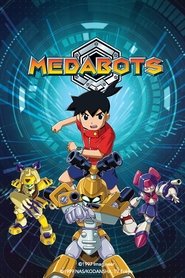
Medabots recap
Medabots (2001) is the English version of Medarot, a Japanese anime about kids who battle with customizable robots whose minds live in hexagonal medals. Based on the video game franchise created by Rin Horuma, the 52-episode original series aired on TV Tokyo in 1999 and 2000; Nelvana's dub split it into two seasons, with the first 26 episodes on Fox Kids from September 1, 2001, to April 27, 2002, and the rest on ABC Family later in 2002. In Robattles, the loser hands over one of its Medabot's parts. Ten-year-old Ikki Tenryou (Samantha Reynolds) cannot afford a Medabot until he buys an outdated model and fits it with a medal he finds in a river. The result is Metabee (Joseph Motiki), a hot-tempered beetle-type robot who argues with his owner but carries a rare medal that can summon the Medaforce. Ikki's best friend Erika (Lisa Yamanaka) chases stories for the school paper with her Medabot Brass, and the wealthy Koji, the gentle Karin and the bully Samantha of the Screws gang are rivals and friends. Henry, the clerk who sold Metabee, is secretly the Phantom Renegade and the champion Space Medafighter X. The story builds to the World Robattle Cup and a scheme by the Rubberobo Gang and Dr. Armond, while it emerges that the medals hold the memories of the Medalorians, an ancient civilization destroyed by war.
How Medabots ends
Medabots ends its original series with "Metabee's Last Stand," aired in English on ABC Family on November 2, 2002. Dr. Armond attacks with the giant Babbyblu, Ikki pilots a Giant Metabee crewed by his friends' Medabots, and Metabee ejects them before ramming Babbyblu to destroy it. An alien who saved Metabee takes Armond and Professor Hushi away, the Rubberobo Gang breaks up, and Victor promises Ikki an honest rematch. The 39-episode sequel, Medabots Spirits, aired on ABC Family in 2003 and 2004 and ends with "Into the Fire."
Common questions
What is the Fox Kids story so far?
Fox Kids was the Fox network's children's block from 1990 to 2002, filling Saturday mornings and weekday afternoons. It mixed Warner Bros. and Hanna-Barbera comedies with Marvel adaptations such as X-Men and Spider-Man, Saban's live-action Power Rangers and imported anime such as Digimon, and a large share of 1990s cartoon nostalgia traces back to its lineup. Disney bought Fox Kids Worldwide in 2001, and the block ended the following year.
Where did Fox Kids leave off?
Medabots (2001) is the latest. Medabots ends its original series with "Metabee's Last Stand," aired in English on ABC Family on November 2, 2002. Dr. Armond attacks with the giant Babbyblu, Ikki pilots a Giant Metabee crewed by his friends' Medabots, and Metabee ejects them before ramming Babbyblu to destroy it. An alien who saved Metabee takes Armond and Professor Hushi away, the Rubberobo Gang breaks up, and Victor promises Ikki an honest rematch. The 39-episode sequel, Medabots Spirits, aired on ABC Family in 2003 and 2004 and ends with "Into the Fire."
Keep reading
 Watch order guideHow to watch Fox Kids in order22 titles · 830 hours
 Skip guideWhat can you skip in Game of Thrones?2 titles you can skip
 RecapChainsaw Man recap: the story so far2 titles recapped
 Watch order guideHow to watch the One Piece movies in order8 titles · 498 hours
 Skip guideWhich Star Wars movies can you skip?5 titles you can skip
 Watch order guideHow to watch the Star Trek movies in order26 titles · 735 hours