
CBS Saturday mornings from the late 1960s to the late 1990s ran on Filmation and Hanna-Barbera cartoons, the Bugs Bunny and Road Runner package, and later licensed hits such as Muppet Babies, Teenage Mutant Ninja Turtles and Garfield and Friends. The network also made room for live action, from Shazam! in the 1970s to Pee-wee's Playhouse and Beakman's World, and that mix of cartoons and odd studio shows is most of the nostalgia the lineup still carries.
- Recapped
- 18
- Watch time saved
- 413 hours
- Latest
- 1995

No. 01 · 1968 · Series
The Bugs Bunny/Road Runner Hour recap
An hour-long Saturday morning show on CBS built from the classic theatrical shorts, hosted by Bugs Bunny with Road Runner and Wile E. Coyote cartoons alongside his own. It grew out of The Bugs Bunny Show, which began in prime time on ABC in 1960 with three shorts per episode joined by newly animated linking scenes of Bugs and the cast introducing them, and The Road Runner Show, which CBS had aired since 1966. CBS merged the two in 1968. Over the next three decades the package moved between CBS and ABC and kept changing names and lengths: The Bugs Bunny Show again, The Bugs Bunny/Road Runner Show, The Bugs Bunny/Looney Tunes Comedy Hour and The Bugs Bunny and Tweety Show. For many viewers it was where they first saw the shorts. Networks trimmed violent gags and scenes considered offensive, and some cartoons were left out entirely, so the versions shown on TV often differed from the theatrical originals.
How The Bugs Bunny/Road Runner Hour ends
The show had no finale. Its final form, The Bugs Bunny and Tweety Show on ABC, ended on September 2, 2000, after Warner Bros. made the Looney Tunes library exclusive to its own cable channels, Cartoon Network and later Boomerang. That closed a run of about forty years for Bugs Bunny on network TV. The classic shorts did not return to American broadcast TV until 2021, when MeTV began airing them.

No. 02 · 1968 · Series
The Archie Show recap
The Archie Show (1968) turns Archie Andrews and his Riverdale friends into a bubblegum pop band, The Archies, in a Filmation cartoon for CBS. Norm Prescott and Lou Scheimer produced it from the comics of John L. Goldwater and Bob Montana. Archie (Dallas McKennon, singing voice Ron Dante) plays lead guitar, joined by Jughead Jones (Howard Morris), Reggie Mantle (John Erwin), and Betty Cooper and Veronica Lodge (both spoken by Jane Webb and sung by Toni Wine), plus Jughead's dog, Hot Dog. Each half hour mixes two short comedy stories with a song by the band, a Dance of the Week and a Jughead joke segment. The first run of 17 episodes aired from September 14, 1968, to January 4, 1969. The band's single "Sugar, Sugar", sung by Dante and Wine, topped the pop charts for four weeks in 1969 and became the year's biggest hit. CBS kept the gang on Saturday mornings by reshaping the show: it grew into The Archie Comedy Hour in 1969, adding a Sabrina the Teenage Witch segment, then became Archie's Funhouse in 1970 with live-action pieces, before leaving CBS in 1971 after three seasons.
How The Archie Show ends
The Archie Show ends with "Jones Farm", its 17th episode, aired as the first run closed on January 4, 1969, with no series finale. The format carried straight on in The Archie Comedy Hour and Archie's Funhouse. Filmation kept making Archie cartoons until 1978, including Archie's TV Funnies, The U.S. of Archie and The New Archie and Sabrina Hour, the last of which moved to NBC. The characters later returned in live action in the drama Riverdale (2017).
No. 03 · 1969 · Series
Scooby-Doo, Where Are You! recap
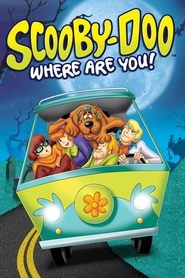
Fred, the leader; Daphne, the fashionable one who keeps getting captured; Velma, the brainy one who loses her glasses; and Shaggy, a hungry, nervous beatnik, travel in a painted van called the Mystery Machine with Scooby-Doo, a cowardly Great Dane who can almost talk. Wherever they stop, something supernatural is scaring people away: a black knight in a museum, a ghost clown, a phantom ship, a space kook. Shaggy and Scooby get chased, usually bribed with Scooby Snacks to act as bait, Fred sets a trap that half works, and Velma pieces together the clues. The monster is always a person in a costume, typically someone hiding a smuggling ring or trying to scare off buyers, who complains that they would have got away with it if it weren't for those meddling kids. The show began on CBS Saturday mornings in 1969 as a gentle alternative to the violent action cartoons parents had complained about. It ran for 25 episodes over 1969 and 1970, and in 1978 ABC aired 16 more new mysteries under the same title.
How Scooby-Doo, Where Are You! ends
Scooby-Doo, Where Are You! ended without a finale. The last original CBS episode, "Don't Fool with a Phantom", aired on October 31, 1970, and the 1978 ABC episodes closed with "The Beast Is Awake in Bottomless Lake". The format continued straight away in The New Scooby-Doo Movies (1972) and The Scooby-Doo Show (1976), and the original gang has been revived many times since, in TV series, direct-to-video films and two live-action movies.
No. 04 · 1970 · Series
Josie and the Pussycats recap
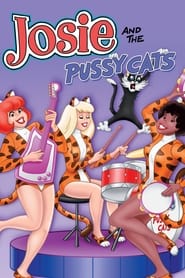
Josie and the Pussycats (1970) follows an all-girl pop trio whose world tour keeps running into spies, mad scientists and criminal masterminds. Hanna-Barbera made it for CBS from the Archie Comics characters of Dan DeCarlo. Josie (Janet Waldo) sings and plays guitar, Valerie (Barbara Pariot) is the clever, mechanically minded one, and Melody (Jackie Joseph) is the cheerful, scatterbrained drummer. Travelling with them are Alan (Jerry Dexter), the muscular roadie Josie likes; Alexander Cabot III (Casey Kasem), their cowardly manager; his jealous twin Alexandra (Sherry Alberoni), who wants both the spotlight and Alan; and her cat Sebastian. Each caper ends with a chase set to one of the band's songs, sung by Cathy Dougher, Patrice Holloway and Cherie Moor, later known as Cheryl Ladd, and closes on a gag about Alexandra's failed schemes. Sixteen episodes aired from September 12, 1970, starting with "The Nemo's a No No Affair". In 1972 Alexandra accidentally launches the group into orbit, and the sequel, Josie and the Pussycats in Outer Space, sends them to alien worlds for 16 more episodes, adding Melody's small alien pet, Bleep.
How Josie and the Pussycats ends
Josie and the Pussycats ends its original run with "Don't Count on a Countess", aired January 2, 1971, with no finale. The space sequel's last episode, "Warrior Women of Amazonia", aired December 23, 1972, and CBS cancelled that version on January 26, 1974, without ordering more. The show lived on in reruns on NBC, in syndication and on Cartoon Network and Boomerang. A live-action film starring Rachael Leigh Cook, Tara Reid and Rosario Dawson followed in 2001, and the characters reappeared in Riverdale and Katy Keene.

No. 05 · 1972 · Series
Fat Albert and the Cosby Kids recap
Fat Albert and the Cosby Kids (1972) follows a gang of friends in North Philadelphia who learn a lesson about growing up in every episode. Bill Cosby created, produced and hosted it, basing the gang on his own childhood friends, and Filmation animated it. Cosby also voices Fat Albert Robertson, whose greeting is "Hey hey hey!" The gang includes Mushmouth, Dumb Donald, Old Weird Harold, Rudy, Bucky, and Bill and his brother Russell. Cosby appears in live-action scenes framing each cartoon, and most episodes end with the friends' junkyard band playing a song about the lesson. The characters first appeared in a 1969 NBC prime-time special, Hey, Hey, Hey, It's Fat Albert, and the series premiered on CBS on September 9, 1972, with "Lying". CBS aired it until 1982, with production running in bursts. In 1979 it became The New Fat Albert Show and added The Brown Hornet, a superhero parody. The last new episodes came in first-run syndication in 1984 and 1985 as The Adventures of Fat Albert and the Cosby Kids, with more mature subjects, a Legal Eagle segment and, in the final season, no laugh track. The run totals 110 episodes plus specials.
How Fat Albert and the Cosby Kids ends
Fat Albert and the Cosby Kids ends with "Attitude of Gratitude", aired August 10, 1985, in which Fat Albert takes a job at the local zoo and struggles to keep up with school and homework. It is an ordinary lesson episode, not a farewell, and production stopped after that syndicated season. The characters returned once more in the live-action film Fat Albert (2004), with Kenan Thompson in the title role, in which the gang steps out of their TV show to help a lonely girl named Doris.

No. 06 · 1974 · Series
Shazam! recap
Shazam! (1974) is a live-action series in which teenage Billy Batson says a magic word and becomes the superhero Captain Marvel. Filmation made it for CBS Saturday mornings, adapting the Captain Marvel comics that began in Whiz Comics and were by then owned by DC. Billy (Michael Gray) travels the country in a motorhome with his guardian, Mentor (Les Tremayne), a character created for the show whose background is never explained. They stop wherever someone, usually a young person, is in trouble or about to make a bad choice, and Captain Marvel steps in when strength is needed. Jackson Bostwick plays Captain Marvel at first; John Davey takes over partway through, starting with the episode "Debbie". The show ran three seasons and 28 episodes: 15 in 1974, 7 in 1975 and 6 in 1976. From 1975 it formed the first half of The Shazam!/Isis Hour with The Secrets of Isis, and the two heroes cross over, with Joanna Cameron's Isis appearing in three Shazam! episodes and Davey's Captain Marvel in three of hers.
How Shazam! ends
Shazam! ends with "Out of Focus", aired October 16, 1976, in which two thieves try to get hold of a young filmmaker's footage of their crime, because he would rather enter it in a film festival than hand it to the police. Captain Marvel and Isis help him see that winning at any cost is wrong. There is no farewell for Billy and Mentor. The live-action version did not return, but the character, renamed Shazam, later led the films Shazam! (2019) and Shazam! Fury of the Gods (2023).
No. 07 · 1983 · Series
Dungeons & Dragons recap
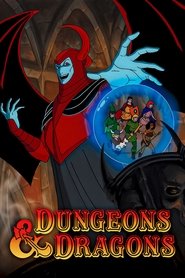
Dungeons & Dragons (1983) sends six friends on an amusement park ride that drops them into the realm of the role-playing game, where they hunt for a way home. Marvel Productions made it for CBS with the game's publisher, TSR, and Mark Evanier developed it. The Dungeon Master (Sidney Miller), a small mentor who speaks in riddles, gives each child a class and a magic item: Hank the Ranger (Willie Aames) and his energy bow, Eric the Cavalier (Don Most) and his shield, Diana the Acrobat (Tonia Gayle Smith) and her staff, Presto the Magician (Adam Rich) and his unreliable hat, Sheila the Thief (Katie Leigh) and her cloak of invisibility, and her younger brother Bobby the Barbarian (Teddy Field III) and his club. Bobby also looks after a baby unicorn, Uni. Their enemy is Venger (Peter Cullen), a sorcerer who wants their weapons, served by Shadow Demon; the five-headed dragon Tiamat is the one creature Venger fears. Chances to go home come and go, often given up so the kids can help someone. The series ran three seasons and 27 episodes, 13, 8 and 6, from 1983 to 1985.
How Dungeons & Dragons ends
Dungeons & Dragons ends with "The Winds of Darkness", aired December 7, 1985, and the children never get home on screen. Michael Reaves wrote a finale, "Requiem", which was never made because the show was cancelled. In it, Venger is revealed as the Dungeon Master's son and is redeemed, the people he trapped are freed, and the children face a last choice about going home. Reaves published the script, a DVD release included it as an audio drama, and a fan-made animated version built from that audio and recut footage appeared online in 2020.
No. 08 · 1984 · Series
Jim Henson's Muppet Babies recap
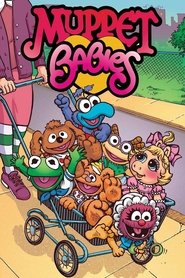
Jim Henson's Muppet Babies (1984) imagines the Muppets as toddlers in a nursery, where every game of pretend turns into a full adventure. Jim Henson came up with the idea and Jeffrey Scott developed it, and Marvel Productions made it for CBS with Henson Associates, later Jim Henson Productions. Baby Kermit (Frank Welker), Piggy (Laurie O'Brien), Fozzie (Greg Berg), Gonzo (Russi Taylor), Animal, Scooter and Rowlf are joined by Skeeter, Scooter's twin sister, created for the show; Howie Mandel voices both Animal and Skeeter in the first two seasons. Nanny (Barbara Billingsley) is seen only from the neck down. The fantasies travel to outer space or into the past and mix hand-drawn backgrounds with live-action footage, old films and photographs, including clips from movies such as Star Wars. Bunsen, Beaker and Gonzo's toy chicken Camilla are regulars, and Bean Bunny and Statler and Waldorf arrive in the last two seasons. For a short stretch in season 2 the program ran as Muppets, Babies and Monsters alongside Little Muppet Monsters. It lasted eight seasons and 107 episodes, from September 15, 1984, to November 2, 1991.
How Jim Henson's Muppet Babies ends
Jim Henson's Muppet Babies ends with "Eight Flags Over the Nursery", aired November 2, 1991, in which the babies, unwilling to wait five years for a new amusement park to open, build their own in their imaginations. It is a regular episode rather than a farewell. Bean Bunny, Bunsen and Beaker, and Statler and Waldorf make their last appearances in the episodes just before it. Disney revived the idea in 2018 with a computer-animated Muppet Babies for Disney Junior, aimed at younger children.

No. 09 · 1986 · Series
Pee-wee's Playhouse recap
Pee-wee's Playhouse (1986) follows Pee-wee Herman in a playhouse where the furniture talks, a genie lives in a box and every day has a secret word. Paul Reubens plays Pee-wee and created the show from his stage production, The Pee-wee Herman Show; it ran on CBS Saturday mornings for five seasons and 45 episodes, plus a Christmas special full of celebrity guests. The residents include Jambi the genie (John Paragon), Chairry the armchair, Conky the robot, Globey the globe (George McGrath), Pterri the pteranodon, Magic Screen and Mr. Window. Visitors include Miss Yvonne (Lynne Marie Stewart), Cowboy Curtis (Laurence Fishburne), Reba the Mail Lady (S. Epatha Merkerson) and, in the first season only, Captain Carl (Phil Hartman). The King of Cartoons screens old cartoons, and the Playhouse Gang of kids drops by. Episodes mix live action, puppetry, clay animation and chroma key effects. After a first season shot in New York, production moved to Los Angeles; several characters were dropped or recast and new ones such as Ricardo arrived. Seasons ran 13, 10, 2, 10 and 10 episodes, starting with "Ice Cream Soup" on September 13, 1986.
How Pee-wee's Playhouse ends
Pee-wee's Playhouse ends with "Playhouse for Sale", aired November 17, 1990. While Pee-wee is away, Miss Yvonne sees a for sale sign outside, and the friends look back on their best times in a clip show, until it turns out Pee-wee was only selling lemonade and that word had fallen off the sign. CBS and Reubens had agreed to end the show; reruns ran until July 1991, when CBS pulled them after Reubens was arrested in Florida. Reubens later played Pee-wee again in the Netflix film Pee-wee's Big Holiday (2016).

No. 10 · 1987 · Series
Mighty Mouse: The New Adventures recap
Mighty Mouse: The New Adventures (1987) revives the Terrytoons superhero in a loose, joke-heavy cartoon that spoofs films, comics and other cartoons. Ralph Bakshi produced it for CBS, which already owned the Terrytoons library, and John Kricfalusi supervised the first season. Mighty Mouse (Patrick Pinney) now has a secret identity, Mike Mouse, and an orphan sidekick, Scrappy Mouse (Dana Hill), who knows it. Pearl Pureheart (Maggie Roswell) is no longer just a damsel waiting to be rescued. Recurring villains include Big Murray, Petey Pate, the Cow and, from season 2, the original foe Oil Can Harry, while Bat-Bat and his sidekick Tick the Bug Wonder parody Batman. Each half hour holds two 11-minute segments. Season 1 ran 13 episodes from September 19 to December 12, 1987. Kricfalusi then left, and Kent Butterworth supervised a six-episode second season in fall 1988, for 19 episodes in all. In June 1988 Donald Wildmon of the American Family Association claimed that a scene in "The Littlest Tramp", in which Mighty Mouse sniffs a crushed flower, showed cocaine use. Bakshi cut about three and a half seconds from later airings, and CBS backed him.
How Mighty Mouse: The New Adventures ends
Mighty Mouse: The New Adventures ends with the segments "A Star Is Milked" and "Mighty's Tone Poem", aired October 22, 1988. In "A Star Is Milked", Mighty Mouse goes to Hollywood to become a star, the Cow tries to sabotage him, and the two end up sharing the bill. There is no finale. CBS kept reruns on the schedule through the 1988 to 1989 season, and no new episodes were made. Kricfalusi went on to create The Ren & Stimpy Show (1991).
No. 11 · 1987 · Series
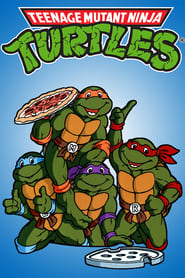
Teenage Mutant Ninja Turtles recap
Four turtles mutated by ooze and raised in the New York sewers by their rat sensei Splinter become ninjas: Leonardo leads, Donatello builds, Raphael wisecracks and Michelangelo loves pizza. Their friend April O'Neil is a TV news reporter. Their enemy is the Shredder, Splinter's old rival, working with Krang, a brain-shaped alien warlord from Dimension X who lives in a robot body, and their mutant henchmen Bebop and Rocksteady. Krang's rolling fortress, the Technodrome, ends up somewhere new every season: under the city, in Dimension X, in the Earth's core, in the Arctic. The show started as a five-part miniseries in 1987, ran in syndication and on CBS Saturday mornings, and lasted ten seasons and nearly 200 episodes. Season 7 included a trip around Europe. From season 8 the tone changes, with a red sky, a new theme and more serious villains; the Turtles banish Shredder and Krang to Dimension X, and an alien warlord, Lord Dregg, takes over as the main enemy.
How Teenage Mutant Ninja Turtles ends
The final episode, "Divide and Conquer" (1996), follows a season in which Shredder and Krang briefly return and turn on Dregg before being sent back to Dimension X for good. The Turtles take Krang's old robot body from the Technodrome, use it to beat Dregg and banish him to Dimension X, and Splinter tells them he has nothing left to teach them. The 1987 Turtles came back in the 2009 crossover film Turtles Forever.

No. 12 · 1988 · Series
Garfield and Friends recap
Garfield, a fat, lazy orange cat who loves lasagne and hates Mondays, lives with his hapless owner Jon Arbuckle and Odie, a cheerful, dim dog. Each half hour has two Garfield cartoons and, in between, a segment based on Jim Davis's other comic strip, U.S. Acres, set on a farm run by Orson, a book-loving pig. Orson's friends include Roy, a rooster who plays pranks; Wade, a nervous duck who wears an inflatable inner tube; Booker, a chick, and his brother Sheldon, who has not hatched yet; and the sheep Bo and Lanolin. Short gags called Garfield Quickies fill the gaps. The Garfield stories range from everyday fights over food and the TV to parodies of films, game shows and fairy tales, with Nermal, the cute kitten Garfield cannot stand, Binky the Clown and Jon's vet Liz as regulars. The humour often breaks the fourth wall, with Garfield talking to the audience and the cartoons joking about TV itself. Mark Evanier was head writer, and Lorenzo Music voiced Garfield. It aired on CBS Saturday mornings from 1988 to 1994, for 121 episodes over seven seasons.
How Garfield and Friends ends
Garfield and Friends ended without a story finale. The last episode, "Arbuckle the Invincible", aired on December 10, 1994, and its closing segment, "The Ocean Blue", sends Garfield, Jon and Odie on a beach holiday told entirely in song. CBS offered to renew the show with a smaller budget, and the producers chose to end it instead. Garfield returned in live-action films in 2004 and 2006, The Garfield Show (2008), with much of the same team, and The Garfield Movie (2024).

No. 13 · 1991 · Series
Back to the Future: The Animated Series recap
This cartoon picks up after Part III, in its own timeline, in 1991. Doc Brown lives on a farm in Hill Valley with his wife Clara, now a teacher, their sons Jules, a bookish boy who uses big words, and Verne, a popular, adventurous kid in a raccoon-skin cap, and their dog Einstein. Doc has a rebuilt DeLorean that folds into a suitcase and the time-travelling steam train. Marty McFly, now living in the present with his girlfriend Jennifer, joins the family on trips through history. In season 1, the Browns visit eras across the past and the future, usually meeting a Tannen ancestor or descendant who causes trouble, and a McFly relative. Biff Tannen and his son Biff Jr. remain the present-day bullies. Season 2 keeps the same formula of time-travel adventures. Christopher Lloyd appears in live-action scenes at the start and end of each episode as Doc, and Bill Nye performs a science experiment linked to the story.
How Back to the Future: The Animated Series ends
The show ends with the episode Verne Hatches an Egg, in which Verne brings home a dinosaur egg and the family hides the baby brontosaurus that hatches. When Biff and his son capture it and sell it to a scientist, the Browns rescue it and take it back to its mother in prehistoric times. There is no series finale; the show was cancelled after its second season in 1992.

No. 14 · 1991 · Series
Where's Waldo? recap
Where's Waldo? (1991) sends Waldo, the striped traveller from Martin Handford's picture books, and his dog Woof on quests through time and magical lands. DIC Enterprises animated it with The Waldo Film Co. for CBS; Rowby Goren developed it, Handford was an executive producer and Jim Cummings narrates. Waldo (Townsend Coleman) carries a magic walking stick that can take him anywhere, which makes it the constant target of Odlaw (Julian Holloway), his villainous opposite, whose name is Waldo spelled backwards. Woof (David Workman) is shy and easily frightened and tends to hide with only his tail showing. Wizard Whitebeard (Brad Garrett, doing a Rodney Dangerfield voice) hands out the scrolls that start each quest, and Wenda, Waldo's camera-carrying friend, appears in "The Living Exhibits". The show keeps the books' search game: twice an episode the action freezes for "Waldo's Minute", a full minute for viewers to find Waldo in a crowded picture. Thirteen episodes aired on CBS from September 14 to December 14, 1991, and on ITV in the UK, where the character is known as Wally.
How Where's Waldo? ends
Where's Waldo? ends with "The Land of the Lost Pyramid", aired December 14, 1991, in which Waldo and Woof match wits with Guanomuck, a cruel villain drawn from the Aztec scene in the book Find Waldo Now. CBS cancelled the series after that one season because of low ratings, so there is no finale. Four direct-to-video specials followed, two in 1992 and two in 1997, and a separate Where's Waldo? series premiered on Universal Kids in July 2019.
No. 15 · 1992 · Series
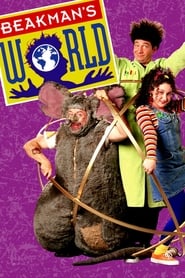
Beakman's World recap
Beakman's World (1992) is a live-action science show in which an eccentric scientist named Beakman answers viewer mail with loud, messy experiments. It is based on Jok Church's comic strip You Can with Beakman and Jax. Paul Zaloom plays Beakman, who shouts "Zaloom!" when an experiment works, and Mark Ritts plays Lester, a reluctant lab assistant in a rat suit. A teenage assistant changes over the years: Josie (Alanna Ubach) in season 1, Liza (Eliza Schneider) in seasons 2 and 3 and Phoebe (Senta Moses) in season 4. Two penguins, Herb and Don (voiced by Alan Barzman and Bert Berdis), watch the show and comment on it between segments. Each episode works through a few scientific questions with demonstrations, sketches and sight gags. The show premiered on TLC on September 16, 1992, and in syndication three days later, then joined the CBS Saturday morning lineup on September 18, 1993. It ran four seasons and 91 episodes, 26, 26, 13 and 26.
How Beakman's World ends
Beakman's World ends with "Protozoology, Beakmania & Movie Stunts", aired December 6, 1997, after which the series was cancelled. It is a regular episode with no farewell. Reruns returned to national syndication in 2006, aired on MeTV from 2016 and now stream on The Roku Channel and a YouTube channel. Paul Zaloom still performs as Beakman in live appearances, but no new series has been made.

No. 16 · 1994 · Series
Aladdin recap
Aladdin (1994) continues Disney's 1992 film in Agrabah, picking up after The Return of Jafar with Aladdin engaged to Princess Jasmine. Tad Stones and Alan Zaslove developed it. Scott Weinger returns as Aladdin, Linda Larkin as Jasmine and Gilbert Gottfried as Iago, with Dan Castellaneta as the Genie and Val Bettin as the Sultan; Abu and the Magic Carpet complete the group. Episodes are standalone adventures of treasure hunts, curses, monsters and mysteries, with Iago, reformed but still greedy, travelling with the heroes. The series builds its own set of villains: Abis Mal, an incompetent thief; Mechanicles, a mad Greek inventor; Mozenrath (Jonathan Brandis), a young, power-hungry sorcerer; and Mirage, a cat-like enchantress. The first season of 78 episodes was split between two outlets: 65 aired in syndication on The Disney Afternoon from September 5, 1994, while 13 aired on CBS Saturday mornings from September 17, 1994. A second season of 8 episodes ran only on CBS in fall 1995, for 86 episodes in all.
How Aladdin ends
Aladdin ends with the direct-to-video film Aladdin and the King of Thieves (1996), which serves as the series finale; the last TV episode aired on CBS on November 25, 1995. In the film, the Forty Thieves break up Aladdin and Jasmine's wedding, Aladdin learns that their leader is his long-lost father, Cassim, and Robin Williams returns as the Genie. The wedding finally takes place at the end. Aladdin later visits Hercules: The Animated Series in the episode "Hercules and the Arabian Night" (1998).

No. 17 · 1994 · Series
Skeleton Warriors recap
Skeleton Warriors (1994) is set on the planet Luminaire, where a broken crystal has turned an evil baron and his followers into living skeletons. Landmark Entertainment Group and Graz Entertainment made it for CBS alongside a Playmates Toys line. The Lightstar Crystal powers the city of Luminicity until Baron Dark (Philip Lewis Clarke) tries to steal it and it splits in two. His half makes him a skeleton who can turn anyone with an evil heart into a Skeleton Warrior; the other half goes to Prince Lightstar, Justin Steele (Jeff Bennett), giving him the power to fire energy beams. Justin leads the Legion of Light with his sister Talyn, Jennifer Steele (Jennifer Hale), who gains the power of flight, and their uncle Ursak (Kevin Schon), who mentors them and designs their weapons. Their brother Joshua Steele (Michael Corbett) becomes Grimskull, an undead figure who stays on the side of good and can travel through shadows. Baron Dark's warriors include Shriek, a former woman who is infatuated with Lightstar, and Aracula, a six-armed brute. The series ran one season of 13 episodes, from September 17 to December 10, 1994, with CBS rerunning it until September 1995.
How Skeleton Warriors ends
Skeleton Warriors ends with "Conflict and Consequences, Part 2", aired December 10, 1994. Baron Dark finally unites both halves of the Lightstar Crystal and pins down the Legion of Light until Grimskull comes to their rescue. Lightstar then fights Baron Dark, and the Baron and the crystal are both destroyed in a lava crater, closing the central conflict rather than leaving a cliffhanger. The series was not renewed after its single season, and no follow-up has been made.

No. 18 · 1995 · Series
Ace Ventura: Pet Detective recap
Ace Ventura: Pet Detective (1995) turns the Jim Carrey film into a cartoon about a goofy private eye who only takes cases involving animals. Duane Capizzi developed it, and Morgan Creek Productions, Funbag Animation Studios and Nelvana produced the first two seasons. Ace (Michael Hall) works out of Miami with his monkey partner, Spike (Richard Binsley). Characters from the film return around him, including Emilio (Bruce Tubbe), Aguado (Al Waxman) and Ace's landlord, Mr. Schickadance (Vince Corazza). The first episode, "The Reindeer Hunter", aired on December 9, 1995, and CBS aired two seasons of 13 episodes each through 1997. On August 30, 1997, a two-part crossover with The Mask aired: in "The Aceman Cometh", Stanley Ipkiss hires Ace to find his dognapped dog, Milo, and in "Have Mask, Will Travel", NASA recruits Ace to find a missing Elvis-loving hamster on a space station, and Stanley joins him as the Mask. A third season of 15 episodes, produced by Odyssey Entertainment, moved to Nickelodeon from October 29, 1999, bringing the total to three seasons and 41 episodes.
How Ace Ventura: Pet Detective ends
Ace Ventura: Pet Detective ends with "The Cat Who Paints", aired on Nickelodeon on February 4, 2000, in which Ace has to track down a cat that can paint. It is an ordinary case with no finale, and the series stopped after that third season. Nickelodeon reran the earlier episodes for a while afterward. The character carried on in the direct-to-video live-action film Ace Ventura Jr.: Pet Detective (2009), about Ace's son.
Common questions
What is the CBS Saturday Morning Cartoon story so far?
CBS Saturday mornings from the late 1960s to the late 1990s ran on Filmation and Hanna-Barbera cartoons, the Bugs Bunny and Road Runner package, and later licensed hits such as Muppet Babies, Teenage Mutant Ninja Turtles and Garfield and Friends. The network also made room for live action, from Shazam! in the 1970s to Pee-wee's Playhouse and Beakman's World, and that mix of cartoons and odd studio shows is most of the nostalgia the lineup still carries.
Where did CBS Saturday Morning Cartoon leave off?
Ace Ventura: Pet Detective (1995) is the latest. Ace Ventura: Pet Detective ends with "The Cat Who Paints", aired on Nickelodeon on February 4, 2000, in which Ace has to track down a cat that can paint. It is an ordinary case with no finale, and the series stopped after that third season. Nickelodeon reran the earlier episodes for a while afterward. The character carried on in the direct-to-video live-action film Ace Ventura Jr.: Pet Detective (2009), about Ace's son.
Keep reading
 Watch order guideHow to watch CBS Saturday Morning Cartoon in order18 titles · 413 hours
 Skip guideWhat can you skip in Game of Thrones?2 titles you can skip
 RecapChainsaw Man recap: the story so far2 titles recapped
 Watch order guideHow to watch the One Piece movies in order8 titles · 498 hours
 Skip guideWhich Star Wars movies can you skip?5 titles you can skip
 Watch order guideHow to watch the Star Trek movies in order26 titles · 735 hours