
ABC's Saturday morning cartoons ran from the 1960s until Disney's One Saturday Morning (1997 to 2002) gave way to ABC Kids. Through the 1970s and 1980s the lineup carried Hanna-Barbera's Super Friends and Scooby-Doo, the Schoolhouse Rock! songs between shows, and series such as The Real Ghostbusters and Beetlejuice; after Disney bought ABC in 1996, the schedule became almost entirely Disney, with Doug, Recess and Pepper Ann. That mix of three-minute songs and Disney school comedies is a large part of many viewers' Saturday morning nostalgia.
- Recapped
- 22
- Watch time saved
- 572 hours
- Latest
- 2002

No. 01 · 1973 · Series
Schoolhouse Rock! recap
Schoolhouse Rock! (1973) is a series of three-minute animated songs teaching grammar, math, history, science and civics between ABC's cartoons. Advertising executive David McCall came up with it after noticing that his son could memorize Rolling Stones lyrics but not his multiplication tables; he hired jazz musician Bob Dorough to write "Three Is a Magic Number," and illustrator Tom Yohe drew pictures for it. Multiplication Rock launched the series in January 1973, with Dorough singing most of the songs. Grammar Rock followed from 1973 to 1975, with "Conjunction Junction" and "A Noun Is a Person, Place, or Thing" introducing Jack Sheldon and Lynn Ahrens as regular singers, and America Rock was timed to the 1976 Bicentennial with songs such as "I'm Just a Bill" and "Preamble." Science Rock arrived in 1978 and 1979, and a short Computer Rock set starring Scooter Computer and Mr. Chips covered home computers in the early 1980s. George Newall and Tom Yohe produced every segment, with Dorough as musical director. ABC dropped the shorts in August 1985 for a fitness show, then brought them back in 1993 after a student's campaign, adding new Grammar Rock songs and, in 1995, Money Rock. Disney acquired the series with ABC in 1996, and it kept airing through Disney's One Saturday Morning. In all, 65 segments were made across seven sets.
How Schoolhouse Rock! ends
Schoolhouse Rock! ends with no finale: every segment stands alone, and ABC simply stopped airing them in 2000, after 27 years on and off the schedule. New songs went straight to home video instead, starting with "I'm Gonna Send Your Vote to College" and "Presidential Minute" for the 30th anniversary releases from 2002, and then the 11 environmental songs of Schoolhouse Rock! Earth on DVD in 2009. In 2019 the 1996 box set of the songs was added to the Library of Congress National Recording Registry.

No. 02 · 1973 · Series
Super Friends recap
Superman, Batman and Robin, Wonder Woman and Aquaman work together from the Hall of Justice, where the TroubAlert computer calls them to emergencies around the world. In the first season, in 1973, they are joined by two teenage trainees, Wendy and Marvin, and Marvin's dog, Wonder Dog. Because of the era's limits on violence in children's TV, the early threats are mostly disasters, aliens and misguided scientists rather than supervillains, and the heroes often talk them round. The show was reworked many times on ABC over the next twelve years. In 1977 the Wonder Twins, Zan and Jayna, shape-changing aliens from the planet Exxor, replaced Wendy and Marvin, with their space monkey Gleek. In 1978 Challenge of the Superfriends brought in the Legion of Doom, thirteen villains led by Lex Luthor who meet in their swamp headquarters, the Hall of Doom, and the Flash, Green Lantern and Hawkman joined the team alongside new heroes such as Black Vulcan, Apache Chief and Samurai. Later seasons ran shorter adventures, then in 1984 added Firestorm and Darkseid as the main villain, and in 1985 Cyborg, as The Super Powers Team: Galactic Guardians.
How Super Friends ends
Super Friends ended without a finale. Its last version, The Super Powers Team: Galactic Guardians, finished its single season with "Escape from Space City" on October 26, 1985, after which ABC did not renew it. The Justice League did not have another animated team series until Justice League (2001) on Cartoon Network, and the Wonder Twins and the Hall of Justice have since been revived in comics, parodies and later DC cartoons.
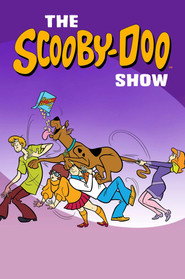
No. 03 · 1976 · Series
The Scooby-Doo Show recap
After moving from CBS to ABC, the gang returns to half-hour mysteries in the style of the original show: a stop in a new town, a monster scaring off the locals, a chase, a trap and an unmasking. The difference is that the cast grows. Scooby's goofy country cousin, Scooby-Dum, joins the gang on several cases, and his slow-witted enthusiasm adds to Shaggy and Scooby's panic. Velma is now voiced by Pat Stevens. The 40 episodes first aired as segments inside larger packages: The Scooby-Doo/Dynomutt Hour in 1976, Scooby's All-Star Laff-A-Lympics in 1977, and in 1978 Scooby's All-Stars and a new run under the old Scooby-Doo, Where Are You! title. The episodes were collected as The Scooby-Doo Show in reruns from 1980.
How The Scooby-Doo Show ends
The Scooby-Doo Show ended without a finale. Its last new mysteries aired on ABC in December 1978, and each case simply closed with another unmasking, with no wrap-up for the gang or Scooby-Dum. The next series, Scooby-Doo and Scrappy-Doo (1979), kept the full gang but added Scooby's nephew Scrappy, who would change the franchise's format for the next several years.

No. 04 · 1986 · Series
The Real Ghostbusters recap
This animated series continues the adventures of Peter, Ray, Egon and Winston after the first film, with Janine running the office and Slimer, the green ghost from the hotel, now living in the firehouse as a mischievous pet. Episodes are mostly standalone: the team traps ghosts, demons and monsters around New York and the world, from bogeymen and ancient gods to creatures from the works of H. P. Lovecraft, often with Peter cracking jokes, Ray explaining the lore and Egon inventing new gear. An EPA inspector, Walter Peck, returns in some episodes. From the fourth season the show was retitled Slimer! and the Real Ghostbusters, adding shorter comic segments starring Slimer, and Louis Tully joins the cast as the team's accountant. Later seasons tie in to Ghostbusters II.
How The Real Ghostbusters ends
The series has no single finale: it ran from 1986 to 1991, ending with more standalone ghost-busting episodes rather than a closing story. Its events sit loosely alongside the films, and Extreme Ghostbusters (1997) later continued the idea with Egon training a new team.

No. 05 · 1986 · Series
Pound Puppies recap
Pound Puppies (1986) follows a pack of talking dogs at the city pound and Holly, the girl who protects them from her dog-hating aunt. Hanna-Barbera made it from Tonka's toy line as a sequel to a 1985 television special, and ABC aired two seasons and 26 episodes from September 13, 1986, to December 19, 1987, the second season under the title All New Pound Puppies. Holly (Ami Foster) looks out for Cooler (Dan Gilvezan), the laid-back leader of the pups, and his friends Nose Marie (Ruth Buzzi), Bright Eyes (Nancy Cartwright), Howler and Whopper. Her aunt Katrina Stoneheart (Pat Carroll), Katrina's daughter Brattina (Adrienne Alexander) and their cat Catgut (Frank Welker) come up with elaborate schemes to sabotage the pound or get rid of the puppies, sometimes with help in the first season from the monstrous Captain Slaughter (Peter Cullen). The pups and Holly always come out on top. In the second season most episodes split into two 11-minute stories, and the run includes the show's only musical episode, "Garbage Night: The Musical," in which the pups try to reform a gang of dogs who live on junk food. Hoyt Curtin wrote the music, including the theme song, "We're Pound Puppies."
How Pound Puppies ends
Pound Puppies ends with "Cooler, Come Back," aired December 19, 1987, in which Katrina kidnaps Cooler and leaves him at a pound elsewhere in the country, where he meets a stubborn dog who refuses to be adopted while his friends search for him. It is a regular episode rather than a planned finale, coming a week after "Peter Pup," a fairy tale Holly tells the pups, and ABC did not order more. The franchise was rebooted with a new Pound Puppies series in 2010.

No. 06 · 1988 · Series
The New Adventures of Winnie the Pooh recap
The New Adventures of Winnie the Pooh (1988) brings A. A. Milne's bear and his Hundred Acre Wood friends into everyday adventures with Christopher Robin. Walt Disney Television Animation made it as the first series to star a major Disney character, developed by Karl Geurs and Mark Zaslove; it premiered on The Disney Channel on January 17, 1988, moved to ABC's Saturday mornings that fall, and ran four seasons and 50 episodes until October 26, 1991. Jim Cummings voices Pooh, John Fiedler Piglet, Paul Winchell Tigger, Peter Cullen Eeyore, Ken Sansom Rabbit and Hal Smith Owl, alongside Christopher Robin (Tim Hoskins), Kanga, Roo and Disney's own Gopher (Michael Gough). Fiedler, Winchell and Smith had voiced the characters in the 1960s featurettes, and Cummings, who replaced Sterling Holloway as Pooh, also covers Tigger in many episodes. The stories are more American than Milne's and built around lessons in honesty, responsibility and friendship, often helping young viewers tell fantasy from reality. Christopher Robin's mother appears with her face hidden, and Heffalumps and Woozles are seen on screen for the first time, as the honey thieves Heff Heffalump and Stan Woozle. ABC ordered 25 half hours for the first season instead of the usual 13 to 17. The series won back-to-back Daytime Emmys for Outstanding Animated Program and two Humanitas Prizes.
How The New Adventures of Winnie the Pooh ends
The New Adventures of Winnie the Pooh ends with its episode of October 26, 1991, "Piglet's Poohetry" and "Owl's Well That Ends Well," in which Tigger intrudes on Piglet's poetry and Owl's terrible singing upsets Rabbit but scares off the crows. There is no finale; Christopher Robin and the animals carry on as before. The show stayed in reruns for years, and Disney continued the characters with Pooh's Grand Adventure: The Search for Christopher Robin (1997), The Book of Pooh (2001) and My Friends Tigger & Pooh (2007).
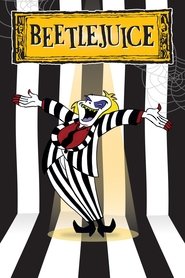
No. 07 · 1989 · Series
Beetlejuice recap
Beetlejuice (1989) turns Tim Burton's ghost comedy into a friendship between the con-man ghost and Lydia Deetz, a goth girl who visits him in the Neitherworld. Burton developed it and served as executive producer with David Geffen; Nelvana animated it in Canada, and Danny Elfman adapted his film theme. It ran on ABC for three seasons from September 9, 1989, to October 26, 1991, and a fourth season of 65 episodes aired weekdays on Fox Kids in late 1991, for 94 episodes in all. Beetlejuice (Stephen Ouimette) is still a prankster with shapeshifting magic, but gentler and more sympathetic than in the film, and he and Lydia (Alyson Court) are best friends; she summons him or crosses over by saying his name three times. In the New England town of Peaceful Pines, her father Charles (Roger Dunn) and stepmother Delia (Elizabeth Hanna) are frequent targets of his pranks, and the spoiled Claire Brewster is Lydia's school rival. The Neitherworld supplies Jacques LaLean, a French skeleton bodybuilder, Ginger the tap-dancing spider, the Monster Across the Street, Mayor Maynot, the car Doomie and the feared Sandworms. The humour runs on sight gags and wordplay, and later episodes increasingly parody films. The show shared the 1990 Daytime Emmy for Outstanding Animated Program and became one of the first cartoons to air on two broadcast networks at once.
How Beetlejuice ends
Beetlejuice ends with "Not So Peaceful Pines," the last of the Fox weekday episodes, aired December 6, 1991. Beetlejuice does the mayor of Peaceful Pines a favor, and when the mayor refuses to pay, Beetlejuice splits in anger into his good and bad sides, Posijuice and Negajuice; Negajuice wrecks the town until Lydia and Posijuice bring in Dr. Zigmund Void to fix things. It is not a finale, and the friendship stays as it was. The characters returned on film in the live-action sequel Beetlejuice Beetlejuice (2024).
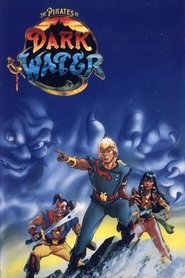
No. 08 · 1991 · Series
The Pirates of Dark Water recap
On the ocean world of Mer, a living black liquid called Dark Water is spreading and swallowing everything it touches. Ren, a young lighthouse keeper, learns he is the son of the dying King Primus of Octopon. Before he dies, his father tells Ren that only the Thirteen Treasures of Rule, scattered across the world, can stop the Dark Water. Ren sets off on the ship Wraith with Niddler, a talking monkey-bird; Tula, a fierce young woman who turns out to be an ecomancer, able to command nature; and Ioz, a selfish pirate who joins for the money and slowly grows loyal. Their enemy is Bloth, a huge pirate lord, whose warship Maelstrom chases them across the seas. Each episode brings a new island, a new trap and usually a new treasure. Hanna-Barbera produced it in 1991 as a five-part miniseries on ABC, then continued it in syndication as part of The Funtastic World of Hanna-Barbera. It ran for 21 episodes.
How The Pirates of Dark Water ends
The Pirates of Dark Water never ends. The show stopped abruptly in 1993 after 21 episodes, with the quest far from finished: Ren has eight of the thirteen treasures, Bloth is still at large and the Dark Water still covers much of Mer. It was cancelled without a finale, and no revival or closing film has ever been made, so what happens to Ren, Octopon and the rest of the treasures is never shown.
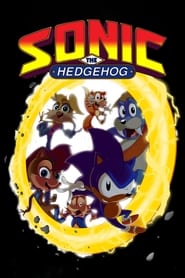
No. 09 · 1993 · Series
Sonic the Hedgehog recap
The planet Mobius has been conquered by Dr. Robotnik, who turned its capital into a polluted industrial city called Robotropolis. With his Roboticizer, he turns its animal citizens into robot slaves, including Sonic's Uncle Chuck. A group of Freedom Fighters fights back from the hidden village of Knothole: Sonic the Hedgehog, who is fast and reckless; Princess Sally Acorn, the leader and planner, with her pocket computer Nicole; Bunnie Rabbot, who is part robot; Antoine, a cowardly coyote; Rotor, the mechanic; and the young fox Tails. Robotnik's sniveling nephew Snively works under him. Season 1 is mostly separate missions. Season 2 adds more ongoing threads: Sally's search for her father, King Acorn, who is trapped in another dimension; Uncle Chuck, whose mind is restored so he can spy on Robotnik; and the Deep Power Stones. It aired on ABC for two seasons, 1993 and 1994, and is darker in tone than the games.
How Sonic the Hedgehog ends
The final episode, "The Doomsday Project", has Robotnik build a machine to wipe out all organic life. Sonic and Sally destroy it using the Deep Power Stones, and Robotnik disappears in the wreckage. In the last scene, Snively takes over with an unseen ally, meant to be the sorcerer Naugus in a third season. That season was never made; the show was cancelled on a cliffhanger.

No. 10 · 1994 · Series
Bump in the Night recap
Bump in the Night (1994) is a stop-motion comedy about Mr. Bumpy, a small green monster who lives under a boy's bed and eats dirty socks and dust bunnies. Ken Pontac and David Bleiman created and directed it through Danger Productions and Greengrass Productions, and ABC aired two seasons and 27 episodes from September 10, 1994, to December 1995. The concept is said to have grown out of a set of bumpers made for ABC's Saturday morning lineup, which explains the name. Mr. Bumpy (Jim Cummings) is greedy and full of schemes; his best friends are Squishington (Rob Paulsen), an anxious blue monster who lives in the toilet tank, and Molly Coddle (Gail Matthius), a rag doll stitched together from seven of the dolls belonging to the boy's sister. Destructo, the boy's toy robot, sees himself as a cop and hounds Bumpy, and the Closet Monster, made from a pile of the boy's clothes, chases him. Each half hour usually holds two stories set around the house at night, and it closes with a music video starring the main trio that replays clips and spells out the lesson of the episode. Stories range from Vikings looting the house to an alien plot by Sleemoth and Gloog.
How Bump in the Night ends
Bump in the Night ends its regular run on December 2, 1995, with "It Sang from Beyond the Stars," in which the aliens Sleemoth and Gloog stage a musical invasion of Earth until Bumpy, posing as a booking agent, sends them to the toughest gigs in town, and "Journey to the Center of the Lungfish," in which Bumpy, Squish and Molly are swallowed by the boy's pet lungfish. A Christmas special, "Twas the Night Before Bumpy," followed on December 9, 1995. No new episodes were made after that.
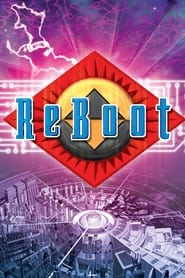
No. 11 · 1994 · Series
ReBoot recap
ReBoot was one of the first fully computer-animated TV series. It is set inside Mainframe, a computer system, where Guardian Bob protects the city with his tool Glitch, helped by his friend Dot Matrix, who runs a diner, and her little brother Enzo. Their enemies are two viruses, the power-hungry Megabyte and the unstable Hexadecimal. The User regularly drops games into Mainframe as cubes, and Bob and the others must enter them and beat the User, or the trapped part of the city is nullified. At the end of season 2, Megabyte sends Bob out into the Web. In season 3, Enzo loses a game, is trapped in the game cubes, and grows up into Matrix, a hardened gunslinger, travelling with his friend AndrAIa until they find Bob and return. Season 4 brings the Daemon, a virus spreading through the whole Net.
How ReBoot ends
ReBoot ends on a cliffhanger. Season 4 was cut to eight episodes, and its last episode was rewritten to end with Megabyte in control of Mainframe's Principal Office, a situation that was never resolved on TV; the creators have never said how it would have ended. Webcomics later carried the story on, and Netflix's live-action reboot ReBoot: The Guardian Code (2018) followed new characters.
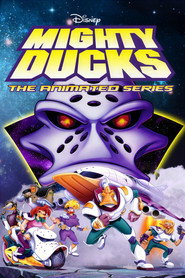
No. 12 · 1996 · Series
Mighty Ducks recap
Mighty Ducks (1996) recasts Disney's hockey franchise with alien ducks from another universe who play hockey in Anaheim and fight lizard invaders. Marty Isenberg, Robert N. Skir and David Wise created it, and it ran for one season of 26 episodes on ABC and The Disney Afternoon from September 6, 1996, to January 17, 1997, loosely tied to the films and the NHL's Mighty Ducks of Anaheim. On Puckworld, a planet where hockey is a way of life, the reptilian Saurians escape from Dimensional Limbo under Lord Dragaunus (Tim Curry) and enslave the planet. Resistance leader Canard Thunderbeak sacrifices himself in a dimensional portal after handing the Mask of Drake DuCaine, and the leadership, to Wildwing Flashblade (Ian Ziering). Stranded on Earth, Wildwing leads his younger brother Nosedive (Steve Mackall), the reformed jewel thief Duke L'Orange (Jeff Bennett), former special forces soldier Mallory McMallard (Jennifer Hale), the genius Tanya Vanderflock (April Winchell) and the Zen strongman Grin Hardwing (Brad Garrett). They play home games at the Pond under their manager Phil Palmfeather (James Belushi) and keep Dragaunus and his minions Siege, Chameleon and Wraith from conquering Earth, while police captain Klegghorn (Dennis Franz) doubts the Saurians even exist. Mickey Thomas of Starship sings the theme.
How Mighty Ducks ends
Mighty Ducks ends with "To Catch a Duck," aired January 17, 1997, in which Dragaunus sends the Puckworld thief Falcone after jewels for his newest weapon, and Mallory questions Duke's loyalty because Falcone once belonged to his gang. The series stops without a finale: Dragaunus is still on Earth, Puckworld is still occupied, and Canard remains lost. No second season was made, and the franchise next returned in live action with The Mighty Ducks: Game Changers on Disney+ in 2021.

No. 13 · 1996 · Series
Brand Spanking New! Doug recap
Brand Spanking New! Doug (1996) is Disney's continuation of the Nickelodeon cartoon about Doug Funnie, a shy, imaginative boy who keeps a journal. Jim Jinkins created Doug, and after Nickelodeon declined to order more episodes, Disney bought Jinkins's company Jumbo Pictures in February 1996 and moved the show to ABC. The Disney run lasted from September 7, 1996, to April 1999, adding 65 episodes over three seasons to the 52 made for Nickelodeon. Doug, now 12, starts seventh grade at the new Beebe Bluff Middle School, named after his rich friend Beebe Bluff (Alice Playten). His family has a new baby, Cleopatra, his older sister Judy (Becca Lish) is nearing college, and his dog Porkchop (Fred Newman) has traded his igloo-shaped doghouse for a tipi. Skeeter Valentine, also voiced by Newman, remains his best friend, Patti Mayonnaise (Constance Shulman) is still the girl he likes, and Roger Klotz (Chris Phillips) still plays pranks on him. Production moved from New York to Los Angeles, and Billy West, the original voice of Doug and Roger, did not return. On ABC the show became the highest-rated cartoon of the Saturday morning lineup, and the theatrical film Doug's 1st Movie opened on March 26, 1999, shortly before production ended.
How Brand Spanking New! Doug ends
Brand Spanking New! Doug ends with "Doug's Marriage Madness," first aired April 12, 1999, as seventh grade ends and Patti's father, Mr. Mayonnaise, marries Ms. Krystal. Doug loses the wedding ring and races around town with Skeeter to find it; after the ceremony, Judy drives off toward college, Cleopatra says her first word, and Patti asks Doug on a real date. Doug reaches the last page of his journal, and Porkchop gives him a new one. Disney has made no further Doug series, and Jinkins says a pitched revival was turned down.

No. 14 · 1997 · Series
Recess recap
At Third Street School, recess is its own society, with rules, a king and a class system. TJ Detweiler is the leader of a tight group of fourth graders: the athlete Vince, the tough Spinelli, the genius Gretchen, the gentle giant Mikey and Gus, the shy new kid from a military family. They face off against the playground monitor Miss Finster, Principal Prickly, the snitch Randall and the tattling Ashley clique, while King Bob rules the playground from his jungle gym throne. Across four seasons, from 1997 to 2001, the episodes are mostly standalone stories about loyalty, fairness and staying true to friends. The theatrical film Recess: School's Out (2001) has the gang stop a former principal from abolishing summer vacation.
How Recess ends
The TV series ended without a true finale; its last broadcast episodes in 2001 were the Halloween anthology "Terrifying Tales of Recess" and ordinary leftover stories. The 2003 direct-to-video film Recess: Taking the Fifth Grade works as the ending, sending the gang into fifth grade, where TJ takes on the school board and Spinelli worries she is too old for trick-or-treating.

No. 15 · 1997 · Series
Pepper Ann recap
Pepper Ann Pearson is a bespectacled 12-year-old at Hazelnut Middle School whose everyday problems play out as big imaginary fantasies. She lives with her mother Lydia, who is divorced from her father Chuck, and her skateboarding little sister Moose. Her best friends are Nicky Little, an overachieving perfectionist, and Milo Kamalani, a laid-back artist. Her crush is the eighth-grader Craig Bean, and her rivals include the rich Trinket St. Blair and the academic Alice Kane. Principal Hickey runs the school, and Pepper Ann's schemes to look mature or popular usually fall apart by the end of the episode, leaving her a little wiser. Over four seasons, from 1997 to 2001, which aired on ABC, UPN and finally Disney Channel, the show deals with crushes, popularity, body worries and family life with an honesty unusual for a Saturday morning cartoon.
How Pepper Ann ends
The episode written as the finale, "The Finale," jumps fifteen years ahead: Pepper Ann, now 27 and making educational toys, goes to a Hazelnut Middle School reunion and tries to stop her old classmates from opening a time capsule holding an embarrassing letter she wrote at 12. It was not the last episode to air. There has been no revival.

No. 16 · 1997 · Series
101 Dalmatians: The Series recap
101 Dalmatians: The Series (1997) moves the Dearlys and their 99 puppies to a farm, where three young siblings get into trouble and dodge Cruella De Vil. Jim Jinkins and David Campbell, the team behind Doug, developed it from the 1961 Disney film and its 1996 live-action remake, and Walt Disney Television Animation and Jumbo Pictures made 65 episodes, most of them first shown in weekday syndication from September 1, 1997, and the rest on ABC Saturdays, through March 4, 1998. The focus is on Lucky (Pamela Adlon and Debi Mae West), a TV-obsessed puppy with a horseshoe of spots who leads his siblings; Rolly (Kath Soucie), always hungry; and Cadpig (also Soucie), the clever runt. They are joined by Spot (Tara Strong), a chicken who wants to be a Dalmatian. Roger (Jeff Bennett) and Anita Dearly run the Dearly Farm with Nanny (Charlotte Rae), Pongo and Perdita watch over the pups, and the sheepdog mix Mooch leads a gang of bullies that includes Two-Tone, Dipstick and Wizzer. Cruella (April Winchell) is now a corporate criminal and Anita's boss who wants the farm, dictating schemes into her recorder with the catchphrase "Memo to myself," helped by Horace and Jasper. The Colonel and Sergeant Tibbs run the Bark Brigade.
How 101 Dalmatians: The Series ends
101 Dalmatians: The Series ends with the three-part "Dalmatian Vacation," aired March 2 to 4, 1998. Roger and Anita take the Dalmatians on a spring road trip, and Cruella insists on coming along. When they stop at the church where they married to renew their vows, they learn they were never legally married; Cruella tries to split them up by making it look as if Roger has signed with a baseball team in Venezuela, and the pups work together to reunite the couple and get Roger to the church in time. ABC kept the show in reruns until September 1999.

No. 17 · 1998 · Series
Hercules recap
Hercules (1998) is a prequel to Disney's 1997 film, following the hero as an awkward teenager in training at the Prometheus Academy. Tad Stones, who had produced Disney's Aladdin series, developed it for Walt Disney Television Animation; 52 episodes ran in syndication from August 31, 1998, and 13 more on ABC's One Saturday Morning from September 12, 1998, for 65 in all, ending March 1, 1999. Most of the film's cast returns: Hercules (Tate Donovan), his trainer Phil (Robert Costanzo), Hades (James Woods) and his imps Pain and Panic (Bobcat Goldthwait and Matt Frewer), with Zeus (Corey Burton) and Pegasus (Frank Welker). Since the series takes place before Hercules meets Meg, he has two new friends: Icarus (French Stewart), a hippie "brain-fried" from flying too close to the Sun, and Cassandra (Sandra Bernhard), a gloomy prophet nobody believes. The snobbish Prince Adonis mocks him at school while Hades keeps scheming to seize Olympus. Episodes, nearly all titled "Hercules and the...," mix Greek myth with school life, with guest figures from Medusa to Theseus, and "Hercules and the Arabian Night" crosses over with Aladdin as Jafar teams up with Hades. The series often contradicts events of the film it leads into.
How Hercules ends
Hercules ends with "Hercules and the Tiff on Olympus," aired March 1, 1999. Zeus forgets his anniversary with Hera, Hades exploits the fight to split up the gods' duties, and Hercules, sure his parents are disappointed in him, takes on his first real hero task: the man-eating mares of King Diomedes, while Hades' new minion Neurosis saps his confidence. The gods arrive to scatter the mares, Zeus and Hera make up and send Hades back to the Underworld, and they apologize to their son. The direct-to-video film Hercules: Zero to Hero (1999) repackages episodes of the series.

No. 18 · 2000 · Series
The Weekenders recap
The Weekenders (2000) follows four 12-year-old seventh graders through their weekends, with school barely mentioned. Doug Langdale created it for Walt Disney Television Animation, and it premiered on ABC's Disney's One Saturday Morning on February 26, 2000, running two seasons and 39 episodes, with the later ones airing on Toon Disney. Each story runs from Friday to Sunday: Friday sets up the problem, Saturday makes it worse and Sunday resolves it. Tino Tonitini (Jason Marsden) is the observant leader who talks to the audience; Lor MacQuarrie (Grey DeLisle) is a tough tomboy raised among brothers; Carver Descartes (Phil LaMarr) is the fashion-minded one; and Tish Katsufrakis (Kath Soucie) is the bookish intellectual with a new passion every week. Tino's single mother (Lisa Kaplan) feeds them tofu and seaweed sandwiches and gives sensible advice. Their hangout is a pizzeria whose name and theme change every week, from "Pizzas of Eight" to "Deep Dish Nine," run by the Pizza Guy (Jeff Bennett). The show is set in Bahia Bay, a fictional California city based on San Diego, where Langdale lived, and its theme song, "Livin' for the Weekend," is performed by Wayne Brady. It later became the first Disney animated series released in full on DVD.
How The Weekenders ends
The Weekenders ends with "Tino's Dad," aired in the US on February 29, 2004, after first airing in Canada in 2002. Tino's father visits for the first time in eight years, and Tino tries to plan the perfect weekend so the two of them can bond. The episode closes the series without a wider finale; the four friends are still in seventh grade and still meeting at the pizzeria. The show began streaming on Disney+ in May 2026.

No. 19 · 2000 · Series
Teacher's Pet recap
Teacher's Pet (2000) is about Spot, a dog who wants to be a boy so badly that he puts on clothes and enrolls in his owner's fourth-grade class. Gary Baseman, Bill Steinkellner and Cheri Steinkellner created it for Walt Disney Television Animation, and ABC aired two seasons and 39 episodes from September 9, 2000, before the run finished on Toon Disney in 2002. Nine-year-old Leonard Helperman (Shaun Fleming) is teased as a teacher's pet because his teacher is his mother, Mary Lou Helperman (Debra Jo Rupp). On the first day of school Spot (Nathan Lane) arrives disguised as Scott Leadready II and becomes the most popular kid in class; Leonard learns the secret and, after objecting, lets him keep going. At home, the neurotic cat Mr. Jolly (David Ogden Stiers) and the wisecracking canary Pretty Boy (Jerry Stiller) react to each scheme, while at school Principal Strickler (Wallace Shawn), who hates dogs, never catches on. Leslie Dunkling, the girl next door, is Leonard's crush, and the class weirdo Ian is always nearby. Spot often closes an episode by comparing its lesson to a moment in history. Lane won a Daytime Emmy in 2001 for the role, and the series won the Daytime Emmy for Outstanding Special Class Animated Program in 2002 and 2003.
How Teacher's Pet ends
Teacher's Pet ends with "A Breed Apart," aired May 10, 2002, in which Spot drags Leonard to a dog show to find out what breed he is, while Mr. Jolly's father pays an unwelcome visit. The television series stops there, but the theatrical film Teacher's Pet, released January 16, 2004, serves as its finale: on summer vacation, Spot hopes to become a real boy with help from a mad scientist who claims he can turn animals human, while Leonard just wants him to act like a normal dog.

No. 20 · 2001 · Series
Lloyd in Space recap
Lloyd in Space (2001) follows Lloyd Nebulon, a 13-year-old green alien growing up on a space station where his mother is in charge. Recess creators Joe Ansolabehere and Paul Germain made it for Walt Disney Television Animation, and it premiered on ABC's One Saturday Morning on February 3, 2001, running three seasons and 39 episodes until February 2004. Lloyd (Courtland Mead), a Verdigrean, lives on the Intrepidville space station with his little sister Francine, who is telekinetic and telepathic, and his single mother, Commander Nora Li Nebulon (April Winchell), who runs the station. At Luna Vista Middle School, he and his friends are written off as dorks: Eddie Horton (Justin Shenkarow), a red-haired human whose father is a police officer; Douglas McNoggin (Pamela Hayden), a Cerebellian who looks like a brain with limbs; and Kurt Blobberts (Bill Fagerbakke), a huge one-eyed blob whose head comes off. The station's neurotic computer, Station (Brian George), the mechanic Boomer and the popular six-armed cheerleader Brittany Boviak, who secretly likes Lloyd, fill out the cast. Episodes treat middle school worries in a science fiction setting, from time-travel watches and friends fused into a bully to monster outbreaks and space pirates.
How Lloyd in Space ends
Lloyd in Space ends with "The Ride Along," aired February 27, 2004, in which Lloyd and Eddie spend an evening riding along with Eddie's policeman father and find the job is not what they expected, as Eddie recalls the time his dad caught a pickpocket. It closes the series quietly, with nothing changed on Intrepidville. The show was not renewed after its third season, and no revival has followed.

No. 21 · 2001 · Series
House of Mouse recap
House of Mouse (2001) puts Mickey Mouse in charge of a Toontown dinner club whose audience is made up of characters from Disney's animated films. Developed by Bobs Gannaway and Tony Craig as a follow-up to Mickey Mouse Works, it aired on ABC's One Saturday Morning from January 13, 2001, to May 18, 2002, and finished on Toon Disney in October 2003, for three seasons and 52 episodes. Each episode follows a crisis during one night at the club, wrapped around cartoons, both new shorts and classics from the 1930s to the 1950s. Mickey (Wayne Allwine) hosts the show, Minnie (Russi Taylor) plans it and keeps the books, Donald (Tony Anselmo) is the envious deputy manager, Daisy (Tress MacNeille) takes reservations while hoping to become a star, and Goofy (Bill Farmer) is the head waiter. Max (Jason Marsden) parks cars, Huey, Dewey and Louie are the house band under a new name each time, Gus Goose eats the food he cooks, and the Magic Mirror (Tony Jay) advises Mickey. Pete (Jim Cummings), the club's landlord, keeps trying to shut it down, because his contract says he can if there is ever no show going on. Two direct-to-video films grew out of the series, Mickey's Magical Christmas: Snowed in at the House of Mouse (2001) and Mickey's House of Villains (2002).
How House of Mouse ends
House of Mouse ends with "Mickey and the Culture Clash," aired on Toon Disney on October 24, 2003. Mickey thinks Minnie wants a more sophisticated boyfriend and lets Mortimer Mouse "help," only to find out that Mortimer was the one looking for a new pal. There is no finale, and the club stays open. Reruns continued on Disney Channel and Toon Disney until the show left US television in February 2009.

No. 22 · 2002 · Series
Fillmore! recap
Fillmore! (2002) turns a middle school safety patrol into a parody of 1970s police dramas, with a reformed delinquent as its best investigator. Scott M. Gimple created it, and it ran two seasons and 26 episodes from September 14, 2002, first on ABC Kids and later on Toon Disney; it was the last series Walt Disney Television Animation made for ABC. Cornelius Fillmore (Orlando Brown), a seventh grader with a record, is caught raiding the school's new chalk shipment and given a choice by safety patrol officer Wayne Liggit: help solve a case or spend the rest of middle school in detention. He joins the patrol at X Middle School, in the suburbs of Minneapolis and Saint Paul, and partners with Ingrid Third (Tara Strong), a goth newcomer sent home from a reform school in Nepal, after he clears her name. Their boss is Junior Commissioner Horatio Vallejo (Horatio Sanz), who backs Fillmore while scolding him for wrecking school property, and the patrol includes crime scene investigator Karen Tehama (Lauren Tom), Joseph Anza (Danny Tamberelli) and photographer Danny O'Farrell (Kyle Sullivan). Principal Dawn Folsom (Wendie Malick) threatens to shut the office down when cases go unsolved. The crimes are kid-sized versions of adult ones, from stolen scooters and smuggled tartar sauce to illegal frog races and counterfeit collector cards. Every character is named after a San Francisco street.
How Fillmore! ends
Fillmore! ends with "This Saviour, a Snitch," aired January 30, 2004. Under Principal Folsom's new "three strikes, you're expelled" rule, Fillmore is framed for destroying a giant statue of Folsom made from 12,000 pieces of macaroni and has to protect the one witness who can clear him, Augie Sansome, who testifies at a student council hearing. The series ends there after two seasons, and no revival has been made.
Common questions
What is the ABC Saturday Morning Cartoon story so far?
ABC's Saturday morning cartoons ran from the 1960s until Disney's One Saturday Morning (1997 to 2002) gave way to ABC Kids. Through the 1970s and 1980s the lineup carried Hanna-Barbera's Super Friends and Scooby-Doo, the Schoolhouse Rock! songs between shows, and series such as The Real Ghostbusters and Beetlejuice; after Disney bought ABC in 1996, the schedule became almost entirely Disney, with Doug, Recess and Pepper Ann. That mix of three-minute songs and Disney school comedies is a large part of many viewers' Saturday morning nostalgia.
Where did ABC Saturday Morning Cartoon leave off?
Fillmore! (2002) is the latest. Fillmore! ends with "This Saviour, a Snitch," aired January 30, 2004. Under Principal Folsom's new "three strikes, you're expelled" rule, Fillmore is framed for destroying a giant statue of Folsom made from 12,000 pieces of macaroni and has to protect the one witness who can clear him, Augie Sansome, who testifies at a student council hearing. The series ends there after two seasons, and no revival has been made.
Keep reading
 Watch order guideHow to watch ABC Saturday Morning Cartoon in order22 titles · 572 hours
 Skip guideWhat can you skip in Game of Thrones?2 titles you can skip
 RecapChainsaw Man recap: the story so far2 titles recapped
 Watch order guideHow to watch the One Piece movies in order8 titles · 498 hours
 Skip guideWhich Star Wars movies can you skip?5 titles you can skip
 Watch order guideHow to watch the Star Trek movies in order26 titles · 735 hours