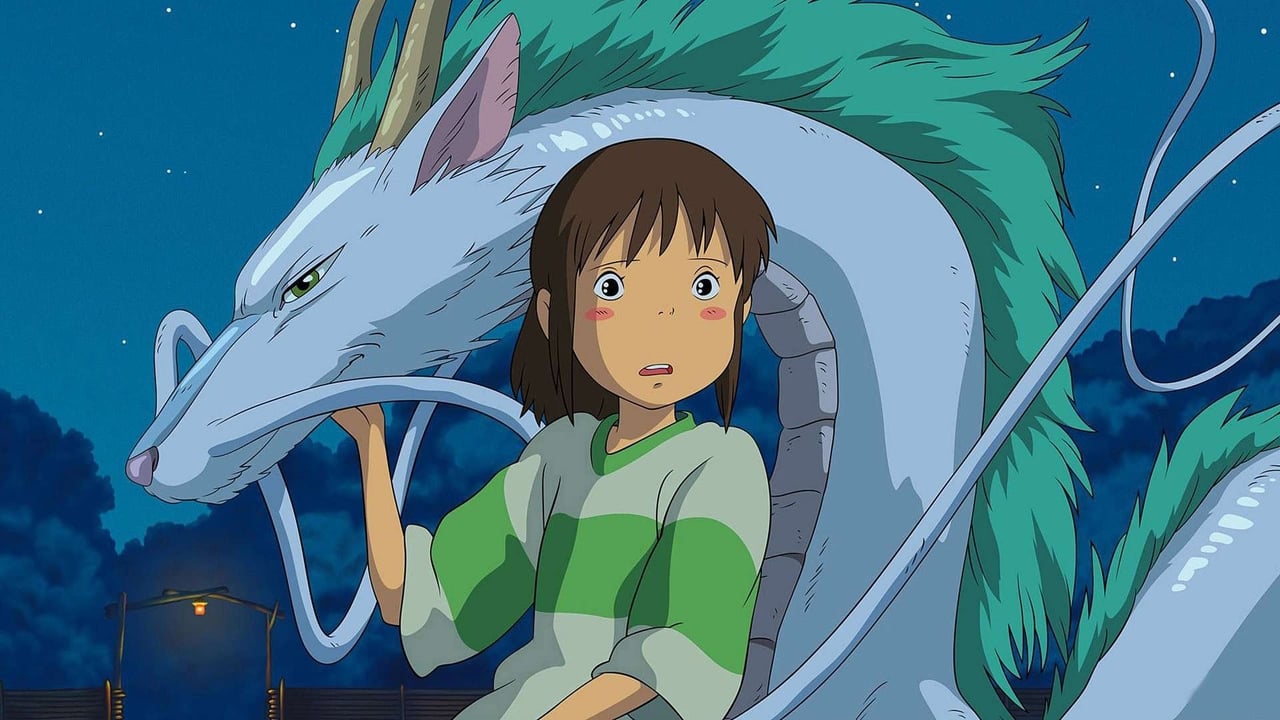
Studio Ghibli was founded in Tokyo in 1985 by directors Hayao Miyazaki and Isao Takahata with producer Toshio Suzuki, and this list covers 25 films from Nausicaä of the Valley of the Wind (1984), made just before the studio existed, to The Boy and the Heron (2023). Every film stands alone: Miyazaki's fantasies about flight, war and the damage people do to nature sit beside Takahata's grounded dramas of ordinary Japanese life, with later features from younger directors such as Gorō Miyazaki and Hiromasa Yonebayashi. Spirited Away and The Boy and the Heron both won the Academy Award for Best Animated Feature.
- Recapped
- 25
- Watch time saved
- 44 hours
- Latest
- 2023
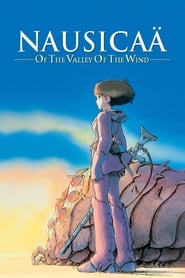
No. 01 · 1984 · Film
Nausicaä of the Valley of the Wind recap
Nausicaä of the Valley of the Wind (1984) follows a princess who studies a toxic jungle of giant insects as warring kingdoms plan to burn it with a bioweapon. Hayao Miyazaki wrote and directed this adaptation of his own manga at Topcraft, a year before he co-founded Studio Ghibli; it is usually counted among the studio's films. A thousand years after the Seven Days of Fire ended civilisation, Nausicaä (Sumi Shimamoto) explores the jungle and calms its armoured Ohm. A Tolmekian cargo plane crashes in her valley carrying the embryo of a Giant Warrior, one of the bioweapons that destroyed the old world. Princess Kushana (Yoshiko Sakakibara) invades, Nausicaä's father is killed, and Kushana plans to hatch the Warrior to burn the jungle. Shot down with the Pejite pilot Asbel (Yōji Matsuda), Nausicaä finds clean air beneath the jungle and learns that its trees are purifying the poisoned soil.
How Nausicaä of the Valley of the Wind ends
Nausicaä of the Valley of the Wind ends with the Pejites luring a stampede of enraged Ohm toward the valley with a wounded baby. The half-formed Giant Warrior melts after one blast, and Nausicaä returns the baby and stands in the stampede's path. She is trampled, then revived by the Ohm's golden tendrils, fulfilling the prophecy of a figure in blue walking on a golden field. The manga, which Miyazaki finished in 1994, carries the story much further and darker.
Post-credits scenes
No. Nausicaä of the Valley of the Wind has no mid- or post-credits scene.
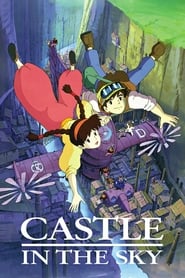
No. 02 · 1986 · Film
Castle in the Sky recap
Castle in the Sky (1986) follows a mining-town boy and a girl who falls from an airship as they race pirates and the army to Laputa, a legendary floating city. Hayao Miyazaki wrote and directed Studio Ghibli's first production. Sheeta (Keiko Yokozawa) escapes the government agent Muska (Minori Terada) when her glowing crystal pendant lowers her gently into the arms of Pazu (Mayumi Tanaka), an orphan whose late father photographed Laputa. The air pirate Dola (Kotoe Hatsui) and her sons want the crystal too. The army captures the children, Muska reveals that Sheeta is heir to the Laputan throne, and her recited charm wakes a giant robot that wrecks the fort. Pazu joins Dola's crew to rescue her, and they follow the crystal's light into a storm, where the floating island waits, overgrown and guarded by a gentle robot gardener.
How Castle in the Sky ends
Castle in the Sky ends in Laputa's throne room, where Muska, also of the royal line, seizes control of the city's weapons. Pazu and Sheeta hold the crystal together and speak the spell of destruction, "Balse". The lower city falls away, Muska is lost, and the great tree carries Laputa's garden up into the sky while the children reunite in the sky with Dola's gang on their gliders.
Post-credits scenes
No. Castle in the Sky has no mid- or post-credits scene.
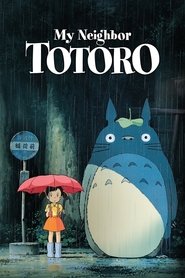
No. 03 · 1988 · Film
My Neighbor Totoro recap
My Neighbor Totoro (1988) follows two sisters in 1950s rural Japan who move near their sick mother's hospital and befriend the forest spirit Totoro. Hayao Miyazaki wrote and directed it for Studio Ghibli, released as a double bill with Grave of the Fireflies. Satsuki Kusakabe (Noriko Hidaka) and her younger sister Mei (Chika Sakamoto) move into an old house with their father Tatsuo while their mother Yasuko recovers from a long illness. Mei follows two small creatures into a hollow and falls asleep on a huge furry spirit she calls Totoro (Hitoshi Takagi). Waiting in the rain for their father's bus, Satsuki lends Totoro an umbrella and receives a packet of seeds; Totoro then boards an enormous Catbus. The girls join a midnight dance that makes the seeds sprout, until a telegram says their mother's visit home is postponed.
How My Neighbor Totoro ends
My Neighbor Totoro ends with Mei lost on her way to the hospital with an ear of corn, and the village searching a pond after a sandal is found. Satsuki asks Totoro for help, and the Catbus takes her to Mei and then to the hospital. Their mother has only a cold, so the sisters watch from a tree and leave the corn on the window sill. Totoro has appeared in Ghibli's logo ever since.
Post-credits scenes
No. My Neighbor Totoro has no post-credits scene, but the credits show the mother returning home and the girls playing as Totoro watches.

No. 04 · 1988 · Film
Grave of the Fireflies recap
Grave of the Fireflies (1988) follows a teenage boy and his little sister trying to survive alone after the firebombing of Kobe in 1945. Isao Takahata wrote and directed his first Ghibli film from Akiyuki Nosaka's semi-autobiographical story. The opening shows Seita (Tsutomu Tatsumi) dying of hunger in a train station, then flashes back. Seita and four-year-old Setsuko (Ayano Shiraishi), children of a navy captain, lose their mother in a bombing raid, and Seita hides her death from his sister. They move in with an aunt who grows colder as rations shrink, so the pair leave for an abandoned bomb shelter by a pond. They light it with fireflies, which are dead by morning; Setsuko buries them and reveals she knows their mother is dead. Seita steals food, and Setsuko weakens from malnutrition.
How Grave of the Fireflies ends
Grave of the Fireflies ends with Japan's surrender and Seita learning that the fleet, and probably his father, is gone. Setsuko dies of malnutrition, Seita cremates her and keeps her ashes in her fruit-drop tin, and he dies weeks later at Sannomiya station. A janitor throws the tin into a field, and the spirits of the siblings ride a ghostly train, ending on a hilltop bench above modern Kobe.
Post-credits scenes
No. Grave of the Fireflies has no mid- or post-credits scene.
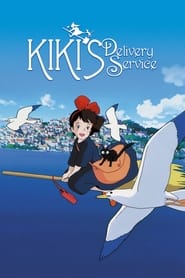
No. 05 · 1989 · Film
Kiki's Delivery Service recap
Kiki's Delivery Service (1989) follows a 13-year-old witch who leaves home, as young witches must, and starts a flying courier business in a seaside city. Hayao Miyazaki wrote, produced and directed this adaptation of Eiko Kadono's novel, Ghibli's first hit on release. Kiki (Minami Takayama) flies off on her mother's broom with her talking black cat Jiji (Rei Sakuma) and lands in Koriko, a port city with no witch. Osono (Keiko Toda), the pregnant owner of a bakery, gives her a room, and Kiki starts delivering by broomstick. An early job goes wrong when she drops a toy cat in a forest, leaving Jiji to pose as the toy until the young painter Ursula helps. Tombo (Kappei Yamaguchi), an aviation-mad local boy, keeps trying to befriend her. Then Kiki falls into a slump and finds she can no longer fly or understand Jiji.
How Kiki's Delivery Service ends
Kiki's Delivery Service ends with Tombo dangling from the mooring rope of a runaway airship. Kiki borrows a deck brush from a bystander, recovers her flight in the panic and catches him as the airship hits a clock tower, in front of a crowd watching on live television. She resumes her deliveries and writes home that she is happy, though Jiji still only meows. The airship rescue does not appear in Kadono's novel; Miyazaki added it.
Post-credits scenes
No. Kiki's Delivery Service has no post-credits scene; the credits show Kiki settling into life in Koriko.
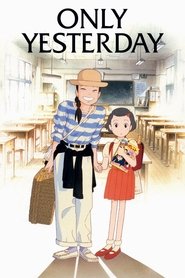
No. 06 · 1991 · Film
Only Yesterday recap
Only Yesterday (1991) follows Taeko Okajima, a 27-year-old Tokyo office worker on a farm holiday in Yamagata, who keeps remembering herself at ten. Isao Takahata wrote and directed this adaptation of the manga by Hotaru Okamoto and Yuko Tone, a surprise hit with adult audiences. In 1982, Taeko (Miki Imai) boards the night train to help with the safflower harvest, and scenes from 1966 come back to her: her first unripe pineapple, a schoolyard crush, the arithmetic of fractions she could not grasp, puberty, and the day her father slapped her. Toshio (Toshirō Yanagiba), a cousin of her brother-in-law who gave up an office job to farm organically, meets her at the station and drives her around. Talking with him, Taeko begins to see how her younger self shaped the adult she became.
How Only Yesterday ends
Only Yesterday ends with Taeko on the train back to Tokyo after the family suggests she marry Toshio. A crowd of her classmates from 1966 appears around her, and her ten-year-old self urges her back. She gets off at the next station and returns to Toshio, who drives her back to the farm as her ten-year-old self looks on, smiling. A 2021 live-action sequel follows Taeko at 64.
Post-credits scenes
No. Only Yesterday has no post-credits scene; the ending plays out under the closing song and credits.
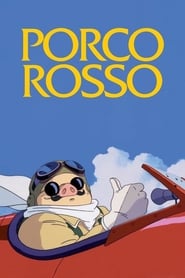
No. 07 · 1992 · Film
Porco Rosso recap
Porco Rosso (1992) follows Marco Pagot, a First World War flying ace cursed with the face of a pig, who hunts air pirates over the Adriatic in 1929. Hayao Miyazaki wrote and directed this adaptation of his own short manga. Porco (Shūichirō Moriyama) rescues kidnapped schoolgirls from a pirate gang, then dines at the hotel run by his old friend Gina (Tokiko Kato), whose three husbands were pilots who all died. The pirates hire the brash American flyer Donald Curtis (Akio Otsuka), who shoots Porco down. Porco takes the wreck to Piccolo's workshop in Milan, where the old engineer's 17-year-old granddaughter Fio (Akemi Okamura) redesigns his plane. Italy's fascist secret police want Porco, so he flies out with Fio aboard. Fio bets her hand in marriage on a rematch with Curtis, and Porco tells her how he survived the war.
How Porco Rosso ends
Porco Rosso ends with the duel turning into a fistfight in the shallows when both planes' guns jam; Porco wins as Gina shouts him on. Porco hands Fio over to Gina and leads the arriving Italian air force away. Fio's narration says Porco was never caught and keeps the rest a secret, leaving open whether he became human and whether he finally met Gina in her garden.
Post-credits scenes
No. Porco Rosso has no mid- or post-credits scene.

No. 08 · 1993 · Film
Ocean Waves recap
Ocean Waves (1993) follows a love triangle between two high school friends in Kōchi and the guarded transfer student from Tokyo who comes between them. Tomomi Mochizuki directed this television film from Saeko Himuro's novel, made by Ghibli's younger staff for Nippon TV. Taku Morisaki (Nobuo Tobita) recalls his last years of school on a flight home. His best friend Yutaka Matsuno (Toshihiko Seki) falls for Rikako Muto (Yoko Sakamoto), bright, athletic and openly unhappy about her parents' divorce. On a school trip to Hawaii, Rikako borrows ¥60,000 from Taku, then uses it to fly to Tokyo, where she hopes to live with her father. Taku goes along, and finds her father has a new girlfriend. Rikako spends the night in his hotel room while he sleeps in the bathtub, then ignores him back in Kōchi.
How Ocean Waves ends
Ocean Waves ends after a slap, a fight in the corridor and a punch from Yutaka break the friendships, and the three go to different universities. At a reunion, Taku learns Yutaka was angry that Taku held back for his sake, and that Rikako stayed in Tokyo to meet "someone who sleeps in bathtubs". Back in Tokyo, Taku sees her across a station platform and runs to her, and she waits.

No. 09 · 1994 · Film
Pom Poko recap
Pom Poko (1994) follows a community of shape-shifting tanuki, or raccoon dogs, fighting the suburb of New Tama as it spreads over the hills outside Tokyo. Isao Takahata wrote and directed this story told partly as a mock documentary. Losing their forest and their food, the tanuki stop fighting each other at the urging of the elder Oroku and relearn their old art of transformation. The aggressive Gonta favours violence, the old master Seizaemon teaches, and young Shoukichi helps lead. Their pranks and sabotage injure and kill builders, but new crews replace the ones who quit. Messengers travel to find legendary elders, and three arrive from Shikoku to stage a huge parade of ghosts through the new town. Then the owner of a theme park claims the parade as his own publicity stunt.
How Pom Poko ends
Pom Poko ends with the resistance splintered: Gonta's fighters die in battle, one elder leads a dancing cult out to sea, and a final illusion briefly restores the old countryside. The tanuki who can transform blend into human society, leaving the rest to scavenge in small parks. Shoukichi, now an office worker, follows a tanuki into a clearing and joins his old friends, before the camera pulls back to reveal a golf course.

No. 10 · 1995 · Film
Whisper of the Heart recap
Whisper of the Heart (1995) follows Shizuku Tsukishima, a bookish girl who sees one name, Seiji Amasawa, on the library cards of every book she borrows. Yoshifumi Kondō directed his only feature from a Hayao Miyazaki script, adapted from Aoi Hiiragi's manga. Shizuku (Yōko Honna) is writing new Japanese lyrics to "Take Me Home, Country Roads" when a boy teases her about them. Following a cat off a train, she finds an antique shop and a cat figurine called the Baron, owned by the elderly Shirō Nishi (Keiju Kobayashi). The teasing boy is Nishi's grandson Seiji (Issei Takahashi), the reader on the library cards, who is training to make violins in Italy. Inspired by his ambition, Shizuku decides to test her own talent by writing a story starring the Baron in two months, while her grades fall.
How Whisper of the Heart ends
Whisper of the Heart ends with Nishi reading Shizuku's finished story and telling her it is raw but real; she sobs with relief, and he tells her how he lost the Baron's partner and the woman he loved in the war. Seiji returns early from Cremona, takes her by bicycle to watch the sunrise, and asks her to marry him one day. The Baron later gets his own spin-off, The Cat Returns (2002).
Post-credits scenes
No. Whisper of the Heart has no mid- or post-credits scene.
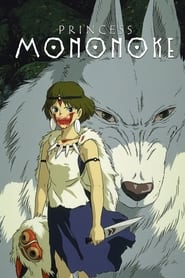
No. 11 · 1997 · Film
Princess Mononoke recap
Princess Mononoke (1997) follows Ashitaka, a prince cursed by a demon boar, who is caught in a war between an iron-making town and the forest gods. Hayao Miyazaki wrote and directed this Muromachi-era fantasy. Ashitaka (Yōji Matsuda) kills a boar god turned demon by an iron ball lodged in its body, and the wound on his arm will spread until it kills him. His search leads to Irontown, run by Lady Eboshi (Yūko Tanaka), who shelters former brothel workers and lepers and is clearing the forest for iron. She is at war with the wolf goddess Moro (Akihiro Miwa) and San (Yuriko Ishida), a human girl raised by wolves. The monk Jigo (Kaoru Kobayashi) is working with Eboshi to take the head of the Forest Spirit for the emperor. Ashitaka tries to stop both sides.
How Princess Mononoke ends
Princess Mononoke ends with Eboshi shooting off the Forest Spirit's head, and its giant headless body spreading death across the land as it searches for it. Ashitaka and San take the head from Jigo and return it. The spirit dies at dawn, but green life returns and Ashitaka's curse fades. Eboshi, who loses an arm, vows to build a better town; San stays in the forest, and Ashitaka stays at Irontown, promising to visit.
Post-credits scenes
No. Princess Mononoke has no mid- or post-credits scene.

No. 12 · 1999 · Film
My Neighbors the Yamadas recap
My Neighbors the Yamadas (1999) follows an ordinary suburban family through a string of short comic episodes about marriage, school, chores and bickering. Isao Takahata wrote and directed this adaptation of Hisaichi Ishii's comic strip, drawn in a sketchy watercolour style unlike any other Ghibli film. The family is salaryman Takashi Yamada (Tōru Masuoka), his scatterbrained wife Matsuko (Yukiji Asaoka), her blunt mother Shige (Masako Araki), teenage son Noboru, ten-year-old daughter Nonoko and their dog Pochi. Each vignette opens with a title and often closes with a haiku. The episodes include Nonoko left behind at a department store, Takashi and Matsuko fighting over the television remote, Noboru's first phone call from a girl, and Shige facing down a gang of bikers. There is no single plot; the through-line is a family that loves each other despite their flaws.
How My Neighbors the Yamadas ends
My Neighbors the Yamadas ends without a climax: after a run of small domestic victories and defeats, the family gathers for a closing musical number, singing "Que Sera, Sera" together. The comic strip has no story arc either, and Takahata keeps its loose, gag-by-gag rhythm. The film was a box office disappointment in Japan, the weakest Ghibli release of its decade, and later found a following abroad through its English dub.
No. 13 · 2001 · Film
Spirited Away recap
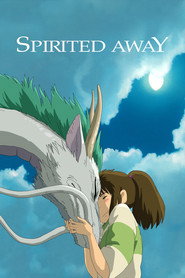
Spirited Away (2001) follows Chihiro Ogino, a ten-year-old who must work in a bathhouse for spirits to free her parents, who have been turned into pigs. Hayao Miyazaki wrote and directed this Academy Award winner, which held the record as Japan's highest-grossing film for almost two decades. On the way to their new home, Chihiro (Rumi Hiiragi) and her parents walk through a tunnel into an empty town, and her parents gorge themselves on food meant for spirits. A boy named Haku (Miyu Irino) tells her to ask for work, and the witch Yubaba (Mari Natsuki), who runs the bathhouse, takes her name and renames her Sen. Chihiro cleans a stinking spirit who turns out to be a polluted river god, and lets in No-Face, a masked spirit who gorges on staff and gold. Haku, a dragon, returns badly wounded after stealing a seal from Yubaba's twin sister Zeniba.
How Spirited Away ends
Spirited Away ends with Chihiro taking the train to Zeniba to return the seal, and riding home on Haku's back. She remembers falling into the Kohaku River as a small child and gives Haku back his name, freeing him from Yubaba. In Yubaba's last test, she sees that none of the pigs are her parents and is released. Haku promises they will meet again, and Chihiro walks back through the tunnel with her restored parents, wearing Zeniba's hair tie.
Post-credits scenes
No. Spirited Away has no mid- or post-credits scene.

No. 14 · 2002 · Film
The Cat Returns recap
The Cat Returns (2002) follows a shy high school girl who saves a cat from a truck and finds herself engaged to the prince of the Cat Kingdom. Hiroyuki Morita directed this spin-off of Whisper of the Heart, his only Ghibli feature, based on Aoi Hiiragi's manga Baron. Haru Yoshioka (Chizuru Ikewaki) rescues Prince Lune, and the cats repay her with catnip, mice and a marriage proposal she accidentally accepts. A voice sends her to the Cat Bureau, where the Baron (Yoshihiko Hakamada), the cat figurine from Whisper of the Heart come to life, works with the grumpy fat cat Muta (Tetsu Watanabe) and a stone raven named Toto. Cats carry Haru and Muta off to the kingdom, where the Cat King (Tetsurō Tamba) throws a feast. Haru begins growing whiskers, ears and a tail; the longer she stays, the more cat she becomes.
How The Cat Returns ends
The Cat Returns ends with the Baron leading Haru through a maze to a tower that opens back to the human world, as the Cat King tries to trap her. Prince Lune arrives, saying he plans to marry the palace cat Yuki, who was the voice that helped Haru repay a childhood kindness. Haru escapes with the Baron and Muta, goes back to her life more sure of herself, and shrugs off news about her old crush.
No. 15 · 2004 · Film
Howl's Moving Castle recap
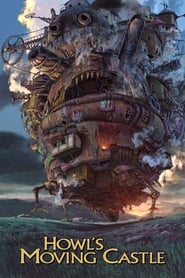
Howl's Moving Castle (2004) follows Sophie, a young hatmaker turned into an old woman by a witch, who finds shelter in a wizard's walking castle during a war. Hayao Miyazaki wrote and directed this adaptation of Diana Wynne Jones's novel. After the vain wizard Howl (Takuya Kimura) saves her in the street, Sophie (Chieko Baisho) is cursed by the jealous Witch of the Waste (Akihiro Miwa) and leaves home. A living scarecrow she names Turnip Head leads her to Howl's castle, powered by the fire demon Calcifer, who promises to break her curse if she breaks his contract with Howl. Sophie installs herself as cleaning lady beside Howl's apprentice Markl. The king wants Howl to fight, and the royal sorceress Madame Suliman strips the Witch of the Waste of her powers. Howl, meanwhile, keeps flying out in a monstrous bird form to disrupt both armies.
How Howl's Moving Castle ends
Howl's Moving Castle ends with Sophie taking Calcifer out of the castle to save Howl, which wrecks it. Through her magic ring she sees young Howl swallow a falling star and give it his heart, and she returns that heart to his chest, freeing Calcifer and breaking her curse. Her kiss turns Turnip Head back into a missing prince, whose return ends the war. The film cuts the novel's trips to Howl's family in modern Wales and gives the war a far larger role than the book does.
Post-credits scenes
No. Howl's Moving Castle has no mid- or post-credits scene.
No. 16 · 2006 · Film
Tales from Earthsea recap
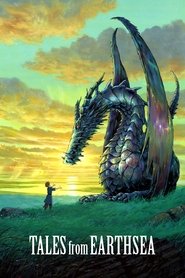
Tales from Earthsea (2006) follows a troubled prince who kills his father and flees, falling in with the archmage Sparrowhawk as the world loses its balance. Gorō Miyazaki, Hayao Miyazaki's son, made his directing debut with this adaptation of elements from Ursula K. Le Guin's Earthsea books. Dragons fight above the clouds, a plague spreads and magic is fading. Prince Arren (Junichi Okada) stabs his father, the king of Enlad, takes his sword, and is saved from wolves by Sparrowhawk (Bunta Sugawara). In Hort Town, Arren rescues the scarred girl Therru (Aoi Teshima) from slavers, but she distrusts him. The two men stay with Sparrowhawk's old friend Tenar, who raised Therru. The sorcerer Cob, seeking eternal life, has opened the door between life and death, and he captures Arren and learns his true name.
How Tales from Earthsea ends
Tales from Earthsea ends with Therru restoring Arren's hope by speaking his true name, Lebannen, and telling him her own, Tehanu. Arren finally draws his sword and cuts off Cob's hand, and Cob strangles Therru, who rises as a dragon and destroys him. Arren goes home to atone. Le Guin said the plot was entirely different from her books and later voiced her disappointment.

No. 17 · 2008 · Film
Ponyo recap
Ponyo (2008) follows a goldfish-girl who escapes her sorcerer father, is rescued by a five-year-old boy, and decides to become human. Hayao Miyazaki wrote and directed this seaside story, loosely inspired by The Little Mermaid. Brunhilde (Yuria Nara) floats away from her father Fujimoto (George Tokoro), once a man, and gets stuck in a jar. Sōsuke (Hiroki Doi), who lives on a cliff with his mother Lisa (Tomoko Yamaguchi) while his father Kōichi captains a cargo ship, frees her and names her Ponyo. When she licks blood from his cut finger, she gains the power to change. Fujimoto takes her home, but she spills his magic elixirs, grows legs and runs back to Sōsuke on the backs of giant waves. The flood that follows swamps the town and throws the moon off course. Lisa leaves to check on the old women at the care home where she works.
How Ponyo ends
Ponyo ends with Sōsuke and Ponyo sailing a toy boat, enlarged by magic, across the flooded town to find Lisa. Ponyo's sea goddess mother Gran Mamare (Yūki Amami) asks Sōsuke whether he loves Ponyo as a fish and as a girl. He says yes, so Ponyo gives up her magic, and when she kisses him she becomes a human girl and the world returns to balance.
Post-credits scenes
No. Ponyo has no mid- or post-credits scene.
No. 18 · 2010 · Film
The Secret World of Arrietty recap
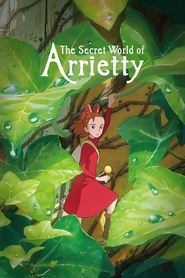
The Secret World of Arrietty (2010) follows a tiny Borrower living under the floor of an old house who is spotted by the sick boy staying upstairs. Hiromasa Yonebayashi made his directing debut on this adaptation of Mary Norton's The Borrowers, scripted by Hayao Miyazaki and Keiko Niwa. Arrietty (Mirai Shida) lives with her careful father Pod (Tomokazu Miura) and anxious mother Homily (Shinobu Otake), secretly taking small things they need from the humans. Shō (Ryunosuke Kamiki), a boy resting before a heart operation at his great-aunt Sadako's house, glimpses her on her first borrowing trip. He leaves her a sugar cube, and she visits to ask him to leave them alone, and they become friends. The housekeeper Haru (Kirin Kiki) grows suspicious, and Pod decides the family must move.
How The Secret World of Arrietty ends
The Secret World of Arrietty ends with Haru capturing Homily and calling pest control, and Arrietty asking Shō for help in freeing her. The family leaves with Spiller, a wild Borrower, floating down a stream in a teapot. Shō gives Arrietty a sugar cube, she gives him her clothes-peg hair clip, and he says her courage has made him want to survive his operation.

No. 19 · 2011 · Film
From Up on Poppy Hill recap
From Up on Poppy Hill (2011) follows two Yokohama high school students in 1963 who campaign to save their school's clubhouse and fall for each other. Gorō Miyazaki directed this adaptation of a manga by Tetsurō Sayama and Chizuru Takahashi, written by his father Hayao Miyazaki with Keiko Niwa. Umi Matsuzaki (Masami Nagasawa) runs her family's boarding house on a hill above the port while her mother studies in the United States, and raises signal flags every morning for her father, a sailor killed in the Korean War. Shun Kazama (Junichi Okada), who sees the flags from his father's tugboat, writes for the school paper and helps defend the Latin Quarter, a ramshackle clubhouse due to be torn down before the Tokyo Olympics. Umi organises a clean-up, and the two grow close until a photo of three young sailors suggests they share a father.
How From Up on Poppy Hill ends
From Up on Poppy Hill ends with the students persuading the businessman Tokumaru, chairman of the school board, to visit the restored Latin Quarter, and he cancels the demolition. Umi's mother returns and explains that Shun's real father was another of the three sailors, who died in 1945. The last surviving friend, now a ship's captain, confirms that Umi and Shun are not related.
No. 20 · 2013 · Film
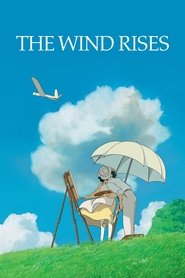
The Wind Rises recap
The Wind Rises (2013) is a fictionalised life of Jiro Horikoshi, designer of the Mitsubishi Zero fighter, from boyhood dreams of flight to the eve of war. Hayao Miyazaki wrote and directed this adaptation of his own manga, mixing in Tatsuo Hori's novel The Wind Has Risen. Jiro (Hideaki Anno), too short-sighted to fly, dreams of the Italian designer Giovanni Caproni (Nomura Mansai), who tells him that planes are beautiful dreams. As a student he helps the young Nahoko Satomi (Miori Takimoto) and her maid during the 1923 Great Kantō earthquake. At Mitsubishi with his friend Honjo (Hidetoshi Nishijima), he designs aircraft that fail, and visits Germany to study Junkers. At a mountain resort he meets Nahoko again; they fall in love, though she has tuberculosis, and marry at the home of his boss while he finishes the prototype.
How The Wind Rises ends
The Wind Rises ends with the test flight of Jiro's prototype, as Nahoko quietly leaves to return to the sanatorium to die. A gust of wind tells him she is gone. In a dream after Japan's defeat, Jiro walks among wrecked planes with Caproni, and Nahoko's spirit tells him to live. Miyazaki announced this would be his last film, then returned with The Boy and the Heron.
Post-credits scenes
No. The Wind Rises has no mid- or post-credits scene.
No. 21 · 2013 · Film
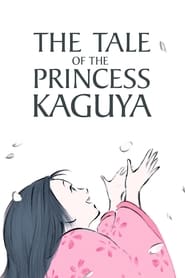
The Tale of the Princess Kaguya recap
The Tale of the Princess Kaguya (2013) follows a girl found in a glowing bamboo stalk who grows from a country child into a reluctant noblewoman. Isao Takahata directed and co-wrote his final film from the 10th-century Tale of the Bamboo Cutter, drawn in charcoal and watercolour. The bamboo cutter (Takeo Chii) and his wife (Nobuko Miyamoto) raise the tiny girl, who grows at unnatural speed and runs with the village children, especially the older boy Sutemaru (Kengo Kora). When gold and silk appear in the bamboo, her father moves them to the capital to make her a princess. Named Kaguya (Aki Asakura), she struggles under a governess and the rules of court. Five noblemen court her, so she sets each an impossible task, and when one dies attempting his, she grows despondent. The emperor then tries to take her by force.
How The Tale of the Princess Kaguya ends
The Tale of the Princess Kaguya ends with Kaguya revealing she came from the Moon and called to it for help when the emperor grabbed her, so it will reclaim her at the next full moon. She finds Sutemaru again and they fly over the countryside in a dream before she is pulled back. A procession of celestial beings descends, an attendant puts the robe of forgetting on her, and she looks back at Earth in tears.
Post-credits scenes
No. The Tale of the Princess Kaguya has no mid- or post-credits scene.

No. 22 · 2014 · Film
When Marnie Was There recap
When Marnie Was There (2014) follows Anna Sasaki, a lonely 12-year-old foster child in Hokkaido, who befriends a mysterious girl from a marsh mansion. Hiromasa Yonebayashi co-wrote and directed this adaptation of Joan G. Robinson's English novel, his last film for Ghibli. Sent away for her asthma, Anna (Sara Takatsuki) stays with relatives of her foster mother Yoriko in a fishing town and feels drawn to the house across the marsh, which seems familiar. At the Tanabata festival she meets Marnie (Kasumi Arimura), who appears only at the mansion and asks that they keep their meetings secret. Marnie invites her to a party, tells her about neglectful parents and cruel maids, and Anna admits she found papers showing her foster parents are paid to keep her. A new family moves into the mansion, and their daughter Sayaka finds Marnie's old diary.
How When Marnie Was There ends
When Marnie Was There ends with an old painter, Hisako, telling Marnie's life story: an unhappy marriage cut short, a daughter named Emily who grew estranged and died in a car crash, and a granddaughter Marnie raised until her own death. Yoriko brings a photo of the mansion that belonged to Anna's grandmother, and Anna sees Marnie's name on the back. She calls Yoriko "mother" for the first time, and sees Marnie waving from the window as she leaves.
No. 23 · 2016 · Film
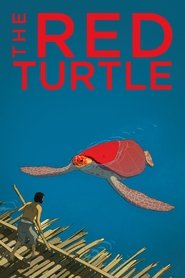
The Red Turtle recap
The Red Turtle (2016) follows a castaway whose rafts keep being smashed by a giant red turtle, and who finds a new life when the turtle becomes a woman. Dutch animator Michaël Dudok de Wit directed and co-wrote this co-production between Studio Ghibli and French companies, the first Ghibli film by a director from outside Japan. There is no dialogue. The man finds fresh water, fruit and bamboo on the island and builds three rafts, and each is broken by something under the sea. When the red turtle crawls ashore, he hits it with a stick and flips it onto its back, then regrets it, but the turtle dies. Its shell splits open to reveal a red-haired woman, and the two fall in love and raise a son, who learns to swim with sea turtles.
How The Red Turtle ends
The Red Turtle ends after a tsunami nearly separates the family and their grown son leaves to swim out to sea with three turtles. The man and woman grow old on the island together. When the man dies one night, the woman lies beside him, then turns back into the red turtle and swims away. The film was nominated for the Academy Award for Best Animated Feature.
Post-credits scenes
No. The Red Turtle has no mid- or post-credits scene.

No. 24 · 2020 · Film
Earwig and the Witch recap
Earwig and the Witch (2020) follows a strong-willed orphan adopted by a witch who only wants an extra pair of hands, and who sets out to beat her. Gorō Miyazaki directed this adaptation of Diana Wynne Jones's novel, Ghibli's first fully 3D computer-animated feature, which premiered on NHK television. Left as a baby at St Morwald's children's home in 1990s England by a witch in a band, Earwig (Kokoro Hirasawa) runs the orphanage to her liking and does not want to leave. Bella Yaga (Shinobu Terajima) and the towering Mandrake (Etsushi Toyokawa) adopt her anyway, and Bella Yaga puts her to work grinding spell ingredients without teaching her magic. Mandrake seals the exits. Earwig befriends the talking cat Thomas (Gaku Hamada) and secretly brews a spell to protect herself from magic, plus one to give Bella Yaga a literal extra pair of hands.
How Earwig and the Witch ends
Earwig and the Witch ends with Bella Yaga's punishments failing against Earwig's protection spell. Exploring Mandrake's room, Earwig learns that Bella Yaga and Mandrake once played in a band called Earwig with her mother as singer. She ends up running the household, invites her friend Custard over at Christmas, and her mother turns up at the door. The story stops there, with no sequel.
No. 25 · 2023 · Film
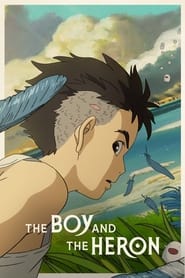
The Boy and the Heron recap
The Boy and the Heron (2023) follows Mahito Maki, a grieving boy who trails a talking heron into a tower and a world below, hoping to find his mother. Hayao Miyazaki wrote and directed this film after coming out of retirement; it won the Academy Award for Best Animated Feature. During the Pacific War, Mahito (Soma Santoki) loses his mother in a hospital fire. His father Shoichi (Takuya Kimura) marries her younger sister Natsuko (Yoshino Kimura), who is pregnant, and they move to her country estate. A grey heron (Masaki Suda) taunts Mahito, who hits himself with a rock after a fight at school. When Natsuko disappears into the forest, Mahito and the maid Kiriko follow the heron into the tower built by her great-uncle. Below, a young Kiriko and a fire-wielding girl named Himi (Aimyon) guide him past pelicans and man-eating parakeets.
How The Boy and the Heron ends
The Boy and the Heron ends with the great-uncle, a wizard balancing stone blocks that hold his world together, asking Mahito to take his place. Mahito refuses, pointing to the scar he gave himself as proof of his own malice. The Parakeet King topples the blocks and the world collapses. Himi, revealed as Mahito's mother when young, returns to her own time knowing her fate, and Mahito leaves with Natsuko, whom he now calls mother. Two years later the family returns to Tokyo.
Post-credits scenes
No. The Boy and the Heron has no mid- or post-credits scene.
Common questions
What is the Studio Ghibli story so far?
Studio Ghibli was founded in Tokyo in 1985 by directors Hayao Miyazaki and Isao Takahata with producer Toshio Suzuki, and this list covers 25 films from Nausicaä of the Valley of the Wind (1984), made just before the studio existed, to The Boy and the Heron (2023). Every film stands alone: Miyazaki's fantasies about flight, war and the damage people do to nature sit beside Takahata's grounded dramas of ordinary Japanese life, with later features from younger directors such as Gorō Miyazaki and Hiromasa Yonebayashi. Spirited Away and The Boy and the Heron both won the Academy Award for Best Animated Feature.
Where did Studio Ghibli leave off?
The Boy and the Heron (2023) is the latest. The Boy and the Heron ends with the great-uncle, a wizard balancing stone blocks that hold his world together, asking Mahito to take his place. Mahito refuses, pointing to the scar he gave himself as proof of his own malice. The Parakeet King topples the blocks and the world collapses. Himi, revealed as Mahito's mother when young, returns to her own time knowing her fate, and Mahito leaves with Natsuko, whom he now calls mother. Two years later the family returns to Tokyo.
Keep reading
 Watch order guideHow to watch the Studio Ghibli movies in order25 titles · 44 hours
 Skip guideWhat can you skip in Game of Thrones?2 titles you can skip
 RecapChainsaw Man recap: the story so far2 titles recapped
 Watch order guideHow to watch the One Piece movies in order8 titles · 498 hours
 Skip guideWhich Star Wars movies can you skip?5 titles you can skip
 Watch order guideHow to watch the Star Trek movies in order26 titles · 735 hours