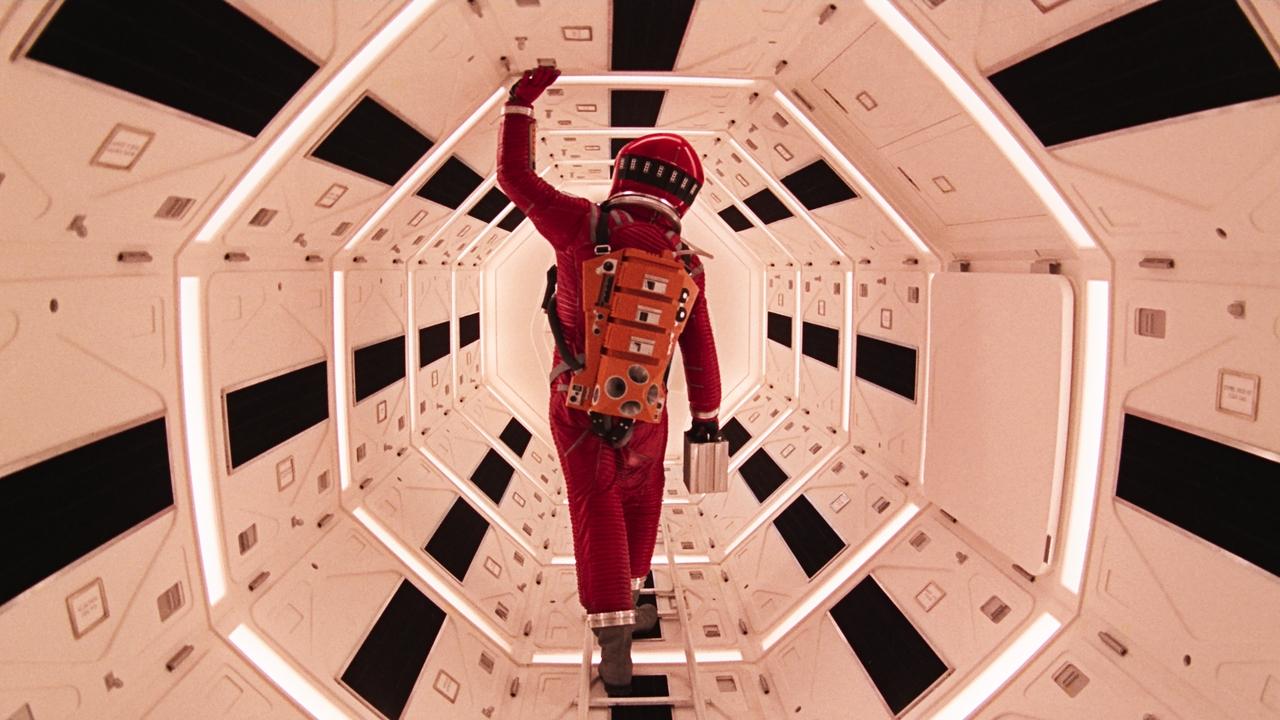
Stanley Kubrick directed 13 feature films between 1953 and 1999, from the low-budget war drama Fear and Desire to Eyes Wide Shut, completed days before his death. Nearly all are adaptations of novels or stories, and they keep circling war, violence and the systems that grind people down, from army tribunals and nuclear doctrine to prisons, boot camps and secret societies. Kubrick shot in England from the 1960s on, worked repeatedly with actors such as Kirk Douglas, Peter Sellers, Sterling Hayden and Philip Stone, and relied for decades on producer Jan Harlan and assistant Leon Vitali.
- Recapped
- 13
- Watch time saved
- 27 hours
- Latest
- 1999
No. 01 · 1953 · Film
Fear and Desire recap
Fear and Desire (1953) strands four soldiers behind enemy lines after their plane crashes in a forest, in a war between two unnamed countries. Stanley Kubrick directed, shot, edited and produced it with a crew of about fifteen, from a script by Howard Sackler. Lieutenant Corby (Kenneth Harp) leads Sergeant Mac (Frank Silvera), Private Fletcher (Steve Coit) and the young Private Sidney (Paul Mazursky), who plan to build a raft and float downriver to their own lines. They raid a hut and kill the enemy soldiers eating there, then spot an enemy general at a nearby house. A peasant girl (Virginia Leith) stumbles on them, and they tie her to a tree with their belts and leave Sidney to guard her. He talks himself into delirium, frees her when he thinks she will embrace him, and shoots her when she runs. Harp and Coit also play the enemy officers. Fear and Desire is Kubrick's first feature and precedes Killer's Kiss.
How Fear and Desire ends
Fear and Desire ends with the raft drifting downstream. Mac takes it alone to draw fire from the general's guards and is wounded, while Corby and Fletcher kill the general, who looks just like Corby, and fly an enemy plane back to their base. Waiting by the river, the two talk about how no one is made for war, until the raft floats into view carrying the dying Mac and the mad Sidney. Kubrick later disowned the film as amateurish and tried to keep it out of circulation.
Post-credits scenes
No. Fear and Desire has no mid- or post-credits scene.

No. 02 · 1955 · Film
Killer's Kiss recap
Killer's Kiss (1955) follows a fading New York boxer who rescues his neighbour, a dance-hall hostess, from her violent boss. Stanley Kubrick directed, photographed, edited and produced it, and co-wrote the story with Howard Sackler. Davey Gordon (Jamie Smith) loses a televised fight and goes home to a call from his uncle urging him back to the family farm near Seattle. Across the courtyard lives Gloria Price (Irene Kane), whose employer Vincent Rapallo (Frank Silvera) watches the fight with her and later attacks her in her flat. Davey runs across the roof to help. Over breakfast Gloria tells him about her dead sister Iris, a ballerina their father favoured, and the two decide to leave for Seattle together once they collect their last pay. Rapallo has other plans, and his thugs, mistaking Davey's manager Albert for Davey, murder him in an alley. Killer's Kiss is Kubrick's second feature, after Fear and Desire and before The Killing.
How Killer's Kiss ends
Killer's Kiss ends with Davey at Penn Station waiting for the Seattle train. Rapallo's men kidnap Gloria, and when Davey forces Rapallo to take him to her, he is overpowered, escapes through a window and is chased over the rooftops. He and Rapallo fight in a mannequin warehouse, Rapallo with an axe and Davey with a pike, and Davey kills him. The police clear him of Albert's murder, and at the station Gloria arrives at the last moment and the two embrace.
Post-credits scenes
No. Killer's Kiss has no mid- or post-credits scene.
No. 03 · 1956 · Film
The Killing recap
Johnny Clay, just out of prison, plans one last job: robbing the cash room of a racetrack on the day of a big race, worth about two million dollars. His crew is made of ordinary men with money problems: a corrupt cop, Randy Kennan, a betting window cashier, George Peatty, a bartender, Mike O'Reilly, and Marvin Unger, who puts up money and a hideout. George is desperate to impress his wife Sherry, who learns about the plan and tells her lover Val, who decides to steal the take. On the day, the plan unfolds in overlapping timelines: a hired wrestler starts a fight at the bar, a sharpshooter, Nikki, shoots the favourite horse during the race, and Johnny walks into the money room in a mask and throws the cash out of a window to Randy. Nikki is shot dead trying to escape.
How The Killing ends
Val's gang bursts into the meeting point and a shootout leaves everyone dead except the wounded George, who goes home and kills Sherry. Johnny, arriving late, takes the money in a cheap suitcase to the airport with his girlfriend Fay. The bag has to be checked, falls off a baggage cart, and the propellers blow the cash across the runway. Johnny doesn't run, and waits for the police.
Post-credits scenes
No. There is no post-credits scene.

No. 04 · 1957 · Film
Paths of Glory recap
Paths of Glory (1957) follows a French colonel defending three of his men at a court-martial after a suicidal attack on the Western Front fails in 1916. Stanley Kubrick directs, adapting Humphrey Cobb's 1935 novel. General Broulard (Adolphe Menjou) dangles a promotion before General Mireau (George Macready) if his division takes a German position called the Ant Hill. Colonel Dax (Kirk Douglas), a former criminal lawyer, leads the attack, which collapses under fire; one company cannot even leave its trench, and Mireau orders his own artillery to shell them. To cover himself, Mireau demands that soldiers be shot for cowardice, and three are chosen: Corporal Paris (Ralph Meeker), picked by an officer with a grudge, Private Arnaud (Joe Turkel), chosen by lot, and Private Ferol (Timothy Carey). Dax defends them at a trial with no indictment and no record. Paths of Glory is Kubrick's fourth feature and his first with Douglas, who also starred in Spartacus.
How Paths of Glory ends
Paths of Glory ends with the three men executed by firing squad, Arnaud tied to his stretcher after a skull fracture. Dax exposes Mireau's shelling order to Broulard, who sacks Mireau and then offers the job to Dax, assuming that was his aim; Dax refuses with contempt. In a tavern, the troops jeer a captured German girl (Christiane Kubrick, credited as Susanne Christian) forced to sing, until her song moves them to tears. Dax lets them have a few more minutes before they return to the front. The film was not shown in France until 1975.
Post-credits scenes
No. Paths of Glory has no mid- or post-credits scene.
No. 05 · 1960 · Film
Spartacus recap
Spartacus (1960) tells the story of a Thracian slave trained as a gladiator who leads a revolt that shakes the Roman Republic. Stanley Kubrick took over direction from Anthony Mann early in the shoot, working from Dalton Trumbo's script of Howard Fast's novel for star and producer Kirk Douglas. Spartacus (Douglas) is bought by Lentulus Batiatus (Peter Ustinov) for his gladiator school in Capua, where he falls for the slave Varinia (Jean Simmons). When Roman visitors demand a fight to the death for their amusement, the gladiators break out and build an army of freed slaves that crosses Italy, joined by Antoninus (Tony Curtis), a poet who fled the household of the patrician Marcus Licinius Crassus (Laurence Olivier). Crassus uses the war to seize power from his rival, the senator Gracchus (Charles Laughton). Spartacus is Kubrick's fifth feature and his only film made without full control, after Paths of Glory and before Lolita.
How Spartacus ends
Spartacus ends with the rebels crushed and Spartacus crucified on the Appian Way. When Crassus offers mercy to the captured slaves if they give up their leader, each stands and claims "I'm Spartacus". Crassus makes Spartacus and Antoninus fight to the death; Spartacus kills his friend to spare him the cross. Gracchus bribes Batiatus to smuggle Varinia and her baby out of Rome, then kills himself. Leaving the city, Varinia shows the dying Spartacus his son, born free. Ustinov won the Oscar for Best Supporting Actor.
Post-credits scenes
No. Spartacus has no mid- or post-credits scene.
No. 06 · 1962 · Film
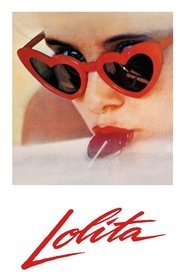
Lolita recap
Lolita (1962) adapts Vladimir Nabokov's novel about a European literature professor who marries a widow to stay near her teenage daughter. Stanley Kubrick directs, with the screenplay credited to Nabokov. The story opens with Humbert Humbert (James Mason) shooting the playwright Clare Quilty (Peter Sellers) in a cluttered mansion, then goes back four years. Humbert rents a room in Ramsdale, New Hampshire, from Charlotte Haze (Shelley Winters) and becomes obsessed with her daughter Dolores, called Lolita (Sue Lyon). He marries Charlotte, who finds his diary and runs into the street, where a car kills her. Humbert takes Lolita from summer camp on a long road trip of motels, then settles in a college town, where she is cast in a school play. Quilty keeps appearing in disguises, including a school psychologist. Lolita comes between Spartacus and Dr. Strangelove in Kubrick's career and is his first film made in England.
How Lolita ends
Lolita ends with the murder shown at the start. Lolita vanishes from a hospital, and years later writes to Humbert asking for money; he finds her married to Dick Schiller, pregnant and poor. She tells him Quilty took her from the hospital and dropped her when she refused to appear in his films. Humbert gives her money, begs her to leave with him, and is refused. He drives to Quilty's house and shoots him. A title card says Humbert died in prison of coronary thrombosis awaiting trial. The novel's Lolita is twelve; the film ages her up to satisfy the censors.
Post-credits scenes
No. Lolita has no mid- or post-credits scene.

No. 07 · 1964 · Film
Dr. Strangelove recap
Dr. Strangelove (1964) is a black comedy in which a deranged American general orders a nuclear strike on the Soviet Union and the government scrambles to stop it. Stanley Kubrick directs, loosely adapting Peter George's thriller Red Alert. General Jack D. Ripper (Sterling Hayden), convinced fluoridation is a communist plot against his "precious bodily fluids", sends his B-52 wing to attack and seals Burpelson Air Force Base. His British exchange officer, Group Captain Lionel Mandrake (Peter Sellers), tries to get the recall code from him. In the War Room, President Merkin Muffley (Sellers again) argues with General Buck Turgidson (George C. Scott) and calls the Soviet premier, while the Soviet ambassador reveals a Doomsday Machine that will destroy all life if their country is hit. Sellers also plays Dr. Strangelove, a wheelchair-bound former Nazi scientist. Aboard one B-52, Major T. J. "King" Kong (Slim Pickens) presses on with a damaged radio. Dr. Strangelove follows Lolita and precedes 2001: A Space Odyssey.
How Dr. Strangelove ends
Dr. Strangelove ends with the world destroyed. Ripper shoots himself as troops storm the base, and Mandrake works out the recall code; every bomber turns back except Kong's. Kong climbs into the bomb bay to fix the jammed doors and rides the bomb down, whooping. In the War Room, Strangelove proposes surviving in mine shafts and suddenly rises from his wheelchair: "Mein Führer, I can walk!" Mushroom clouds bloom to Vera Lynn singing "We'll Meet Again". A custard pie fight in the War Room was shot and cut.
Post-credits scenes
No. Dr. Strangelove has no mid- or post-credits scene.
No. 08 · 1968 · Film
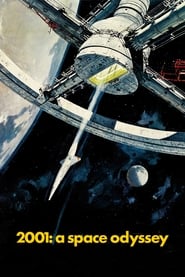
2001: A Space Odyssey recap
Millions of years ago, a black monolith appears among a tribe of starving apes, and soon after one of them learns to use a bone as a weapon. In 2001, Dr. Heywood Floyd travels to the Moon, where a monolith has been dug up in the crater Tycho; when the sun touches it, it sends a piercing signal toward Jupiter. Eighteen months later the ship Discovery One heads to Jupiter with astronauts Dave Bowman and Frank Poole awake, three crew in hibernation and the ship run by the HAL 9000 computer. HAL reports a fault in a communications unit that turns out to be fine. Dave and Frank plan to disconnect HAL if he is wrong, and HAL, reading their lips, kills Frank during a spacewalk and the hibernating crew by switching off their life support.
How 2001: A Space Odyssey ends
Dave gets back aboard and shuts down HAL's higher functions while HAL pleads and sings "Daisy Bell". A recorded message reveals the mission's real purpose: the monolith signal. At Jupiter, Dave finds another monolith and is pulled through a corridor of light into an elegant room, where he sees himself grow old and die. He is reborn as a Star Child, a foetus floating in space above the Earth.
Post-credits scenes
No. There is no post-credits scene.
No. 09 · 1971 · Film
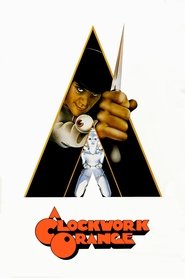
A Clockwork Orange recap
A Clockwork Orange (1971) follows Alex DeLarge, a violent, Beethoven-loving gang leader in near-future Britain, through prison and an experimental cure. Stanley Kubrick adapted Anthony Burgess's 1962 novel. Malcolm McDowell plays Alex, who talks in the slang Nadsat and leads his droogs Dim, Georgie and Pete through a night of beatings and a home invasion where they cripple the writer Frank Alexander (Patrick Magee) and rape his wife. His droogs turn on him during a break-in where Alex kills a woman, and he is jailed for murder. Two years in, he volunteers for the Ludovico Technique, which makes him sick at the thought of violence, sex, and Beethoven's Ninth, whose music played under the films he was forced to watch. Released "cured", he is beaten by his old victims and ends up at Mr. Alexander's door. A Clockwork Orange follows 2001: A Space Odyssey and precedes Barry Lyndon.
How A Clockwork Orange ends
A Clockwork Orange ends with Alex in hospital, cured of his cure. Mr. Alexander recognises him and plays Beethoven until Alex jumps from a window. The government, embarrassed by the scandal, has the Minister of the Interior offer Alex a job in exchange for good press, as photographers crowd the bed. Alex imagines a sex scene before an applauding crowd and says, "I was cured all right." Kubrick followed the American edition, which drops Burgess's last chapter where Alex outgrows violence. Kubrick withdrew the film from British release, and it returned only after his death.
Post-credits scenes
No. A Clockwork Orange has no mid- or post-credits scene.
No. 10 · 1975 · Film
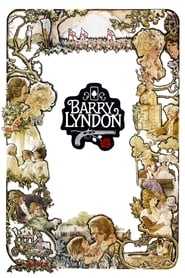
Barry Lyndon recap
Barry Lyndon (1975) charts the rise and fall of Redmond Barry, an Irish adventurer who cheats and marries his way into the English aristocracy. Stanley Kubrick adapted William Makepeace Thackeray's novel, shooting many interiors by candlelight. Ryan O'Neal plays Barry, who in 1750s Ireland duels a British officer over his cousin Nora, flees believing he killed him, and enlists. He fights in the Seven Years' War, deserts, is pressed into the Prussian army and becomes a police spy on the Chevalier de Balibari (Patrick Magee), a gambler he joins instead. Touring Europe as a card cheat, he seduces the wealthy Lady Lyndon (Marisa Berenson), whose sickly husband dies soon after. In the second half, Barry squanders her fortune, cheats on her and abuses her son, Lord Bullingdon (Leon Vitali), while doting on their own boy, Bryan. Michael Hordern narrates. Barry Lyndon falls between A Clockwork Orange and The Shining in Kubrick's career.
How Barry Lyndon ends
Barry Lyndon ends with Barry crippled and exiled. Bryan dies after a fall from a horse Barry gave him, and Lady Lyndon attempts suicide. Bullingdon returns and challenges Barry to a duel. Bullingdon misfires, Barry fires into the ground, and Bullingdon shoots him in the leg, which is amputated. Bullingdon takes over the estate and pays Barry an annuity to leave England for good. Barry goes back to gambling on the Continent. An epilogue shows Lady Lyndon signing his annuity in 1789. The film won four Oscars, including for cinematography.
Post-credits scenes
No. Barry Lyndon has no mid- or post-credits scene.
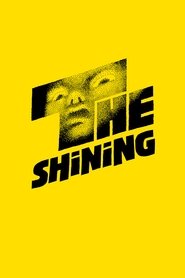
No. 11 · 1980 · Film
The Shining recap
The Shining (1980) follows Jack Torrance, a failed writer who takes the winter caretaker job at the snowbound Overlook Hotel in Colorado with his wife and son. Stanley Kubrick directs Jack Nicholson as Jack, Shelley Duvall as Wendy and Danny Lloyd as Danny, a boy with psychic visions he says come from "Tony", a voice in his mouth. Head chef Dick Hallorann (Scatman Crothers) recognises the gift, calls it the shining, and warns Danny to stay away from Room 237. As the hotel empties, Jack's writing stalls and he drinks with a ghostly bartender, Lloyd, and talks with Delbert Grady, a former caretaker who killed his family. Danny is attacked in Room 237. Wendy discovers Jack's manuscript is hundreds of pages of one sentence: "All work and no play makes Jack a dull boy". Jack sabotages the radio and the snowcat, and Danny sends a psychic call for help to Hallorann in Florida.
How The Shining ends
The Shining ends with Jack frozen to death in the hedge maze. Jack breaks through the bathroom door with an axe, and Hallorann arrives only to be killed by him. Danny leads his father into the maze, backtracks in his own footprints and escapes with Wendy in Hallorann's snowcat. The final shot shows Jack in a 1921 Fourth of July ball photograph on the hotel wall. In the novel, the hotel's boiler explodes and destroys the Overlook, and Hallorann survives; King has long disliked Kubrick's changes.
Post-credits scenes
No. The Shining has no mid- or post-credits scene.
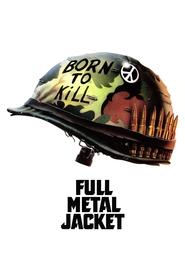
No. 12 · 1987 · Film
Full Metal Jacket recap
Full Metal Jacket (1987) follows a group of US Marine recruits through boot camp on Parris Island and into the Vietnam War. Stanley Kubrick adapted it with Michael Herr and Gustav Hasford from Hasford's novel The Short-Timers. Gunnery Sergeant Hartman (R. Lee Ermey) drills and humiliates the platoon, renaming them Joker (Matthew Modine), Cowboy (Arliss Howard) and, for the overweight, slow Leonard Lawrence (Vincent D'Onofrio), Gomer Pyle. When Hartman punishes the whole platoon for Pyle's mistakes, the others beat him in the night. Pyle becomes an expert rifleman, then on the last night shoots Hartman dead and kills himself in front of Joker. The second half finds Joker in 1968 as a reporter for Stars and Stripes, sent to Huế during the Tet Offensive, where he joins Cowboy's squad and its machine gunner, Animal Mother (Adam Baldwin). Full Metal Jacket follows The Shining and comes before Eyes Wide Shut, Kubrick's last film.
How Full Metal Jacket ends
Full Metal Jacket ends with the squad marching through the burning ruins of Huế at night, singing the Mickey Mouse Club theme. A sniper picks off several men, including the squad leader Cowboy. Joker finds the shooter, a teenage girl, but his rifle jams; Rafterman shoots her. Wounded and praying, she begs to be killed, and after an argument with Animal Mother, Joker shoots her. In voice-over Joker says he is glad to be alive and not afraid. In Hasford's novel, Joker himself kills the wounded Cowboy to stop the sniper.
Post-credits scenes
No. Full Metal Jacket has no mid- or post-credits scene.
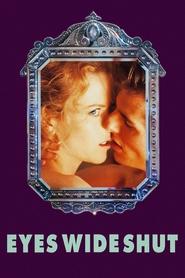
No. 13 · 1999 · Film
Eyes Wide Shut recap
Eyes Wide Shut (1999) sends a Manhattan doctor on a night-long erotic odyssey after his wife confesses she once nearly left him for a stranger. Stanley Kubrick adapted it from Arthur Schnitzler's 1926 novella Traumnovelle, moving it to modern New York at Christmas. Tom Cruise and Nicole Kidman, then married, play Dr. Bill Harford and Alice Harford. At a party thrown by Victor Ziegler (Sydney Pollack), Bill helps a woman named Mandy who has overdosed. Stung by Alice's fantasy about a naval officer, Bill wanders the city: a patient's daughter kisses him, he goes home with a sex worker named Domino, and his old friend Nick Nightingale (Todd Field), a pianist, gives him the password "Fidelio" for a masked orgy at a mansion outside the city. Bill is unmasked there, and a woman offers to "redeem" him. In the following days Nick vanishes and a model is found dead of an overdose. Eyes Wide Shut is Kubrick's thirteenth and last film, following Full Metal Jacket.
How Eyes Wide Shut ends
Eyes Wide Shut ends with Bill and Alice in a toy shop with their daughter. Ziegler tells Bill he was at the orgy, that the threats were staged to scare him off, and that the dead model was Mandy, who died of an ordinary overdose; Bill is not sure he believes him. Bill finds his lost mask on his pillow beside the sleeping Alice and breaks down, telling her everything. In the shop, Alice says they should be grateful to be awake and that there is something they must do as soon as possible. Kubrick died days after showing his cut to the studio.
Post-credits scenes
No. Eyes Wide Shut has no mid- or post-credits scene.
Common questions
What is the Stanley Kubrick story so far?
Stanley Kubrick directed 13 feature films between 1953 and 1999, from the low-budget war drama Fear and Desire to Eyes Wide Shut, completed days before his death. Nearly all are adaptations of novels or stories, and they keep circling war, violence and the systems that grind people down, from army tribunals and nuclear doctrine to prisons, boot camps and secret societies. Kubrick shot in England from the 1960s on, worked repeatedly with actors such as Kirk Douglas, Peter Sellers, Sterling Hayden and Philip Stone, and relied for decades on producer Jan Harlan and assistant Leon Vitali.
Where did Stanley Kubrick leave off?
Eyes Wide Shut (1999) is the latest. Eyes Wide Shut ends with Bill and Alice in a toy shop with their daughter. Ziegler tells Bill he was at the orgy, that the threats were staged to scare him off, and that the dead model was Mandy, who died of an ordinary overdose; Bill is not sure he believes him. Bill finds his lost mask on his pillow beside the sleeping Alice and breaks down, telling her everything. In the shop, Alice says they should be grateful to be awake and that there is something they must do as soon as possible. Kubrick died days after showing his cut to the studio.
Keep reading
 Watch order guideHow to watch the Stanley Kubrick movies in order13 titles · 27 hours
 Skip guideWhat can you skip in Game of Thrones?2 titles you can skip
 RecapChainsaw Man recap: the story so far2 titles recapped
 Watch order guideHow to watch the One Piece movies in order8 titles · 498 hours
 Skip guideWhich Star Wars movies can you skip?5 titles you can skip
 Watch order guideHow to watch the Star Trek movies in order26 titles · 735 hours